
Indoor Plants and Interior Design: Choosing Greenery That Fits Your Space and Routine

Key Takeaways
- Match plants to the actual light your room receives, not the light you wish it had.
- Plant size relative to room scale affects whether greenery feels grounding or cluttered.
- Honest self-assessment of your care routine prevents plant loss and wasted money.
- Grouping plants together raises local humidity and simplifies watering schedules.
- Low-light tolerant plants give renters and north-facing rooms realistic options.
Start with light, not aesthetics
The most common mistake people make when buying houseplants is choosing based on appearance first and light conditions second. A plant that looks perfect on a shelf will decline quickly if that shelf sits eight feet from a north-facing window. Before selecting any plant, spend a day observing how light moves through each room.
Bright, direct light means a south- or west-facing window where sunlight falls directly on a surface for several hours. Bright indirect light describes a spot close to that window but out of the direct beam. Low light is not darkness; it means no direct sun reaches the spot and ambient daylight is limited. Most rooms have a mix of these zones.
For rooms with limited natural light, see our guide on layering natural and artificial lighting to understand how supplemental grow lights can extend your plant options. If you garden outdoors in shady spots, the same principles covered in shade gardening for limited sunlight apply when selecting low-light tolerant varieties indoors.
Scale plants to the room
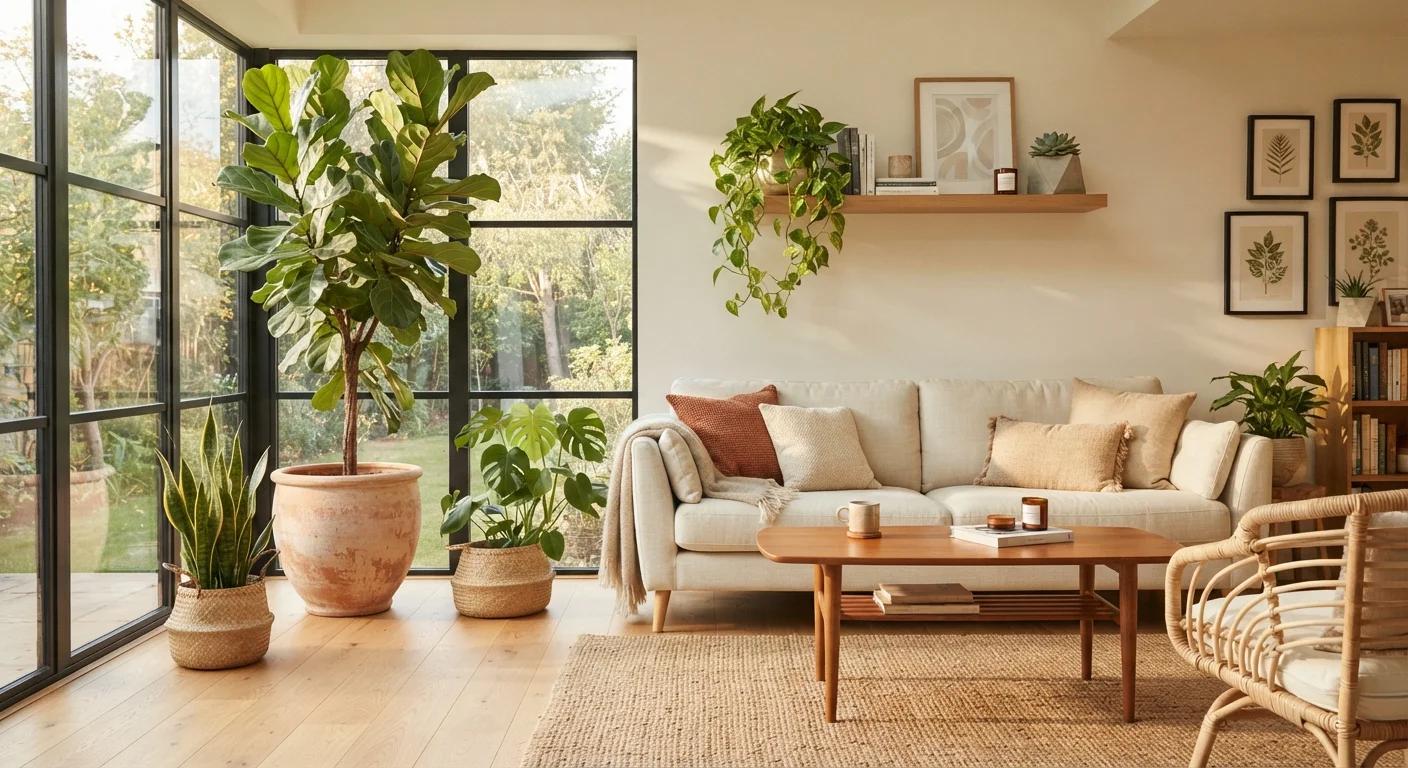
A six-inch succulent on the floor of a large open-plan living area disappears. A five-foot fiddle-leaf fig in a narrow hallway blocks traffic and overwhelms the space. Scale is not about filling every corner; it is about proportion.
In a compact room, one or two well-chosen plants at different heights tend to read better than a crowded collection. A trailing plant on a high shelf draws the eye upward and makes a ceiling feel taller. A single large floor plant in the corner of a small living room can anchor the space without eating square footage. For more on how to manage proportions in a tight room, the article on making every square foot count in small living rooms covers visual scale strategies that apply equally to plant placement.
In larger rooms, groupings work well. Three plants of varying heights placed together create visual weight without looking accidental. Avoid lining plants along a single wall at the same height; variation in elevation is what makes a grouping feel intentional.
Assess your light conditions before selecting any plant
Placing a plant in insufficient light is the most common reason houseplants decline slowly and eventually die. Getting this step right first saves money and effort on every plant you buy afterward.
Choose pot size proportional to the plant's root system, not the room's size
Oversized pots hold excess moisture around roots and can cause root rot. Undersized pots restrict growth and require more frequent watering. The right pot size supports healthy root development.
Select plants whose care requirements match your schedule and attention level
A plant that needs frequent watering and misting will struggle in a home where the owner travels often. Matching care level to lifestyle is a more reliable path to healthy plants than willpower alone.
Consider the mature size of a plant before purchasing
Many plants sold as small specimens grow substantially over time. A plant that fits on a windowsill today may need floor space within two years, which can disrupt a room's layout.
Treat pruning as routine maintenance rather than emergency intervention
Regular light pruning controls size, encourages bushier growth on many varieties, and removes dead or yellowing leaves before they affect the plant's appearance. The same principles from safe pruning techniques for outdoor plants apply to indoor specimens.
Match plants to your actual routine
Houseplant care requirements vary widely. Some plants need water once a week, others once a month. Some need regular misting, fertilizing on a schedule, or repotting every year. Before purchasing, be honest about the time you have and the consistency you can maintain.
If you travel frequently or forget to water, drought-tolerant plants such as snake plants, ZZ plants, and most cacti and succulents are more forgiving. If you enjoy tending plants and can check on them daily, tropical varieties with more specific humidity and moisture needs may suit your routine. The same thinking that applies to watering schedules for backyard gardens holds indoors: irregular watering causes more plant deaths than almost anything else.
Grouping plants together raises the local humidity around each one through transpiration, which benefits moisture-loving tropicals and can reduce how often you need to mist. It also concentrates your care routine to one area, making it easier to build a consistent habit.
Use plants as a design element, not an afterthought
Plants interact with every other element in a room: furniture color, flooring, natural light, and even rug placement. A plant with large, dark green leaves can provide contrast against a light-colored wall. A plant with airy, feathery foliage softens a room with a lot of hard lines and angular furniture.
Consider the pot as part of the design. A terracotta pot suits a warm, earthy palette. A white ceramic pot works in a minimal or Scandinavian-style space. The pot material also affects watering frequency: terracotta is porous and dries faster than glazed ceramic or plastic.
If you are interested in the broader concept of bringing nature into interior spaces intentionally, biophilic design explained for home use covers how plants fit into a larger framework of natural materials, light, and texture. For rooms where a rug already anchors the seating arrangement, consider how a floor plant placed just outside that zone can frame the grouping without competing with it. The article on rug sizing and placement explains how anchor pieces define zones, and a tall plant can reinforce that boundary.