

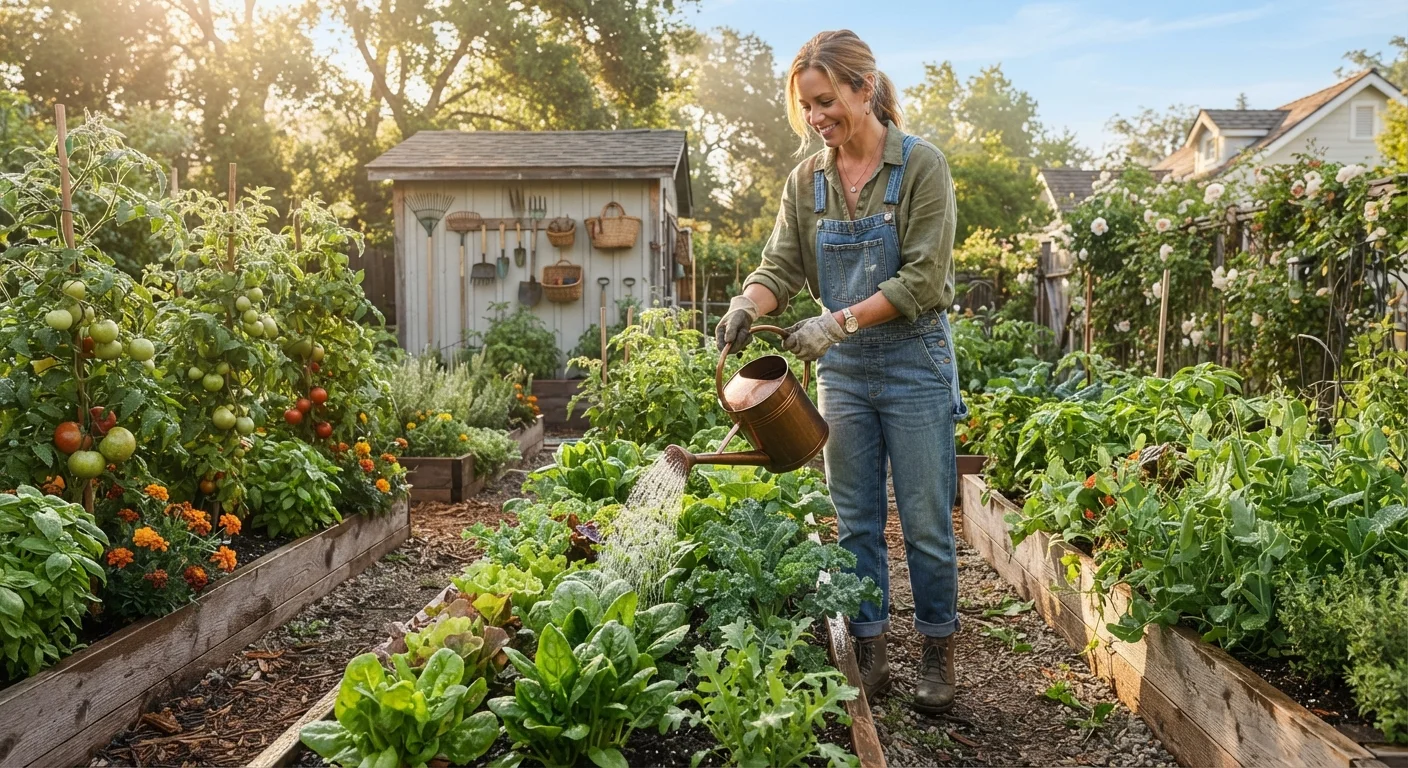
Key Takeaways
- Water deeply and less often to encourage roots to grow downward rather than staying near the surface.
- Morning is the best time to water: foliage dries before nightfall, reducing disease pressure.
- Different plant types have distinct water needs; grouping plants by those needs saves water and effort.
- Soil type determines how fast water drains, which affects how long and how often you should water.
- A simple finger test or inexpensive soil moisture meter removes guesswork from your schedule.
- Mulching around plants slows moisture loss and lets you water less frequently.
Why a fixed watering schedule usually fails
Most gardeners start with a calendar-based routine, watering every Tuesday and Friday because it feels organized. The problem is that plants respond to soil moisture, not dates. A hot, windy week can pull moisture out of the top few inches of soil within a day. A stretch of overcast, cool weather might mean your beds still hold enough moisture four days after you last watered. A fixed schedule ignores both.
Soil type compounds the problem. Sandy soil drains fast and needs water more frequently in smaller amounts. Dense clay holds moisture much longer and drains slowly, so watering too often leads to waterlogged roots. Loam, a mix of sand, silt, and clay, falls in between and is the most forgiving. Before setting any schedule, squeeze a handful of your garden soil. If it clumps and holds its shape without crumbling or dripping, it likely has decent water retention. If it crumbles immediately, it drains fast. If water beads up or puddles linger, drainage is poor.
A better approach treats your schedule as a starting point that you adjust based on what the soil and plants tell you. See our guide to reading plant water signs for help spotting whether your plants are getting too much or too little.
How to water: depth matters more than frequency
Shallow, frequent watering trains roots to stay near the soil surface, where they are vulnerable to heat and drought. Watering deeply, so moisture reaches 6 to 8 inches down for most vegetables and perennials, encourages roots to grow lower, where soil stays cooler and retains moisture longer.
A simple way to check depth: water for your usual amount of time, then push a wooden skewer or screwdriver straight into the soil. It should slide easily to 6 inches in moist soil and meet resistance where it is dry. If resistance starts at 2 inches, water longer. If the bed is soaked all the way through and water is pooling, you are overdoing it.
The general goal for most vegetable gardens is about 1 inch of water per week, combining rain and irrigation. Established shrubs and perennials often need less once their roots are settled, sometimes every 10 to 14 days during mild weather. Annuals and container plants dry out faster because their roots have less room to reach moisture. Containers in full sun may need water daily in summer.
Match your watering method to your plants
Overhead sprinklers work well for lawns and ground covers but can promote leaf disease on vegetables and roses. Drip lines and soaker hoses are more water-efficient and keep foliage dry. If you are deciding which system fits your garden layout, weigh ease of setup and water use together.
Watering method changes how efficiently that water reaches roots. If you want a side-by-side look at drip lines, soaker hoses, and sprinklers, see our comparison of garden irrigation systems.
Timing your watering through the day
Morning watering, roughly between 6 a.m. and 10 a.m., gives water time to reach roots before peak heat and lets any moisture that splashes onto foliage evaporate before nightfall. Wet leaves overnight create conditions where fungal diseases like powdery mildew and botrytis spread more readily.
Evening watering is the second choice if mornings are not practical. Water the base of plants rather than overhead to keep foliage dry. Midday watering wastes the most water to evaporation and can stress some plants when sun is intense, though it will not harm them the way popular myth suggests. That particular myth is addressed in our roundup of common gardening myths.
Drip irrigation and soaker hoses work at any time of day because they deliver water directly to the root zone without wetting leaves, which removes much of the timing concern.
Building a schedule around plant groups
Grouping plants by water needs, sometimes called hydrozoning, keeps you from either neglecting drought-tolerant herbs or drowning moisture-loving vegetables. A simple way to organize a backyard garden is into three informal zones.
- High-water plants: vegetables like tomatoes, cucumbers, and squash, and annuals in containers. Check soil moisture every 1 to 2 days in warm weather; water when the top inch is dry.
- Moderate-water plants: most flowering perennials, roses, and established shrubs. Check every 3 to 4 days; water when the top 2 inches feel dry.
- Low-water plants: lavender, ornamental grasses, native plants, and most succulents. Water deeply but only when the soil is dry several inches down, often once every 1 to 2 weeks in summer.
Mulching with 2 to 3 inches of wood chips, straw, or shredded leaves around plants slows evaporation noticeably, reducing how often each zone needs water. Mulch also moderates soil temperature, which affects how fast moisture is used up.
Adjusting for season and weather
A schedule that works in July will over-water in September as temperatures drop and days shorten. Most backyard gardens need roughly half as much water in early spring and fall compared to midsummer. Rainfall tracking, even a simple rain gauge from a hardware store, prevents you from watering right after rain. One inch of rain counts the same as one inch of irrigation for most plants.
As you head into the end of the growing season, reducing water gradually helps many plants harden off naturally. Our fall garden prep guide covers how end-of-season adjustments, including watering changes, set up beds for a stronger spring.
If you grow indoor plants alongside your outdoor garden, the same depth-over-frequency logic applies inside, though the stakes around soil type and drainage shift. See our guide to choosing and caring for indoor plants for more on that.