

Key Takeaways
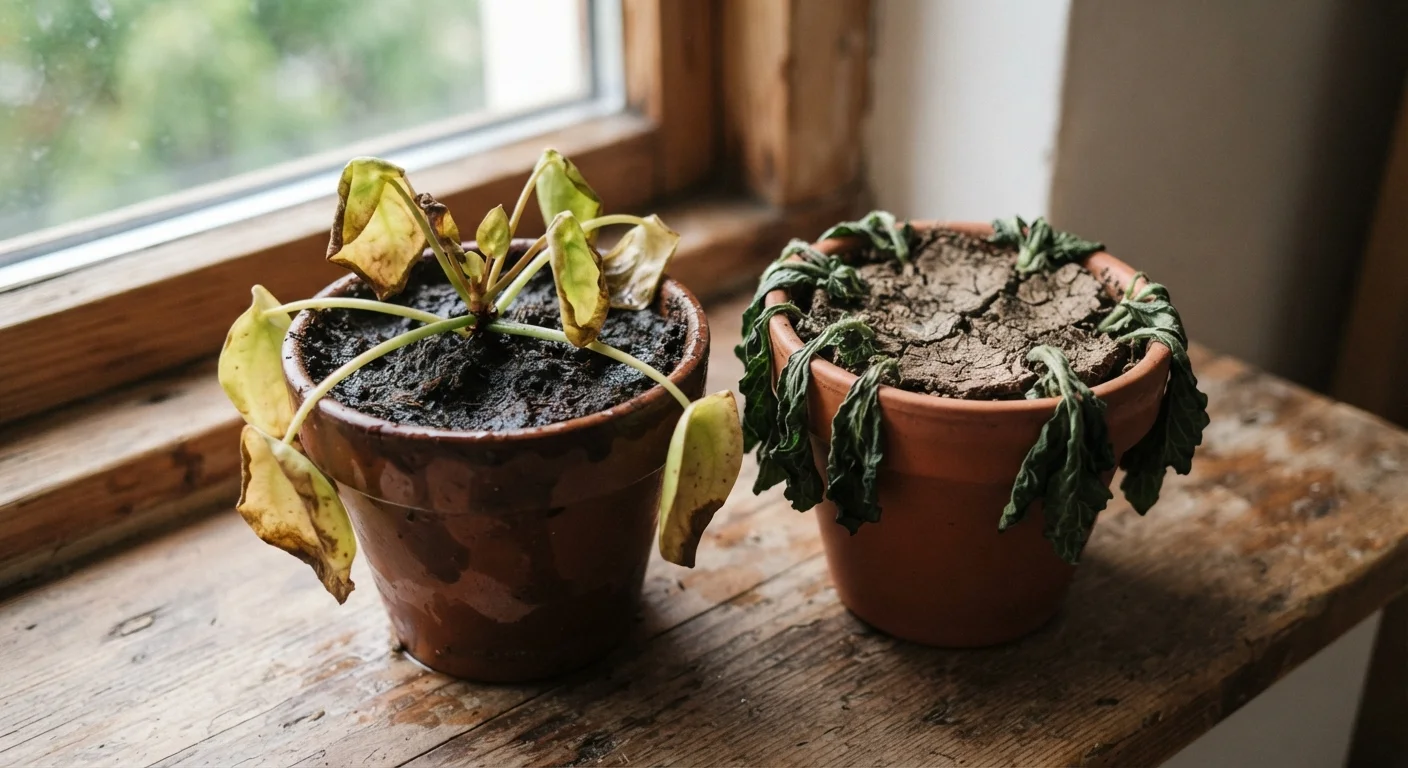
- Overwatered and underwatered plants can both wilt, so soil feel matters more than leaf appearance alone.
- Yellow, mushy, or foul-smelling soil points to overwatering; dry, pulling-away soil points to underwatering.
- Root rot from overwatering requires soil replacement and root pruning; underwatering is often reversed with a slow, thorough soak.
- The finger test, one inch into the soil, is a reliable first check before watering any plant.
- Pot material, drainage holes, and seasonal changes all affect how quickly soil dries out.
Option A
Overwatering
The more-common mistake that mimics drought stress.
Best for: Understanding when saturated soil is suffocating roots rather than feeding them.
Option B
Underwatering
The straightforward shortage that is usually easier to fix.
Best for: Recognizing when a plant genuinely needs more water before permanent damage sets in.
If your plant is wilting but the soil feels damp or wet
Overwatering
Wet soil with a wilting plant almost always means roots are struggling to absorb oxygen. Ease off water, improve drainage, and check roots for rot.
If your plant is wilting and the soil is bone dry and pulling from the pot edges
Underwatering
Dry, shrunken soil is a clear signal. Water slowly and thoroughly until it drains from the bottom, then monitor how quickly the soil dries over the following days.
If you are unsure and want to build a consistent habit
Underwatering
Most common houseplants and garden plants tolerate a brief dry period better than prolonged saturation. When in doubt, wait a day and check the soil again before watering.
Why the two problems look so similar
Wilting is the distress signal most gardeners notice first, but it is not diagnostic on its own. An overwatered plant wilts because its roots are sitting in saturated soil that lacks oxygen, which prevents water uptake even though water is present. An underwatered plant wilts for the obvious reason: there is not enough water to keep cells firm. The result looks nearly identical from a distance.
The fastest way to separate them is to push one finger about an inch into the soil. Wet or cool soil that leaves residue on your finger points toward overwatering. Soil that is dry, pale, and crumbly points toward underwatering. If the soil has also pulled away from the inner walls of the pot, the plant has been dry for some time.
Pot drainage affects everything
A pot without drainage holes traps water at the bottom regardless of how carefully you water. If your plant sits in a decorative outer pot or a container with no drainage, excess water pools below the root zone where you cannot see it. Use a pot with at least one drainage hole and empty the saucer after watering so roots are never sitting in standing water.
Leaf color adds another layer of information. Overwatered plants frequently show yellow leaves that are soft to the touch. Underwatered plants tend to show brown, crispy leaf edges or tips, and older leaves may drop first. Neither symptom alone is definitive, but paired with the soil test, the picture becomes clearer. See common gardening myths debunked for more on why visual cues alone can mislead.
Reading overwatering signs
Beyond wilting and yellow leaves, overwatering produces a set of signs that get more serious the longer it continues. Soil that stays wet for more than a week after watering, a sour or musty smell from the pot, and green algae growing on the soil surface all point to excess moisture. These conditions create the environment for root rot, a fungal condition where roots turn brown, soft, and unable to function.
To check for root rot, gently remove the plant from its pot. Healthy roots are white or tan and firm. Rotten roots are brown or black, soft, and may fall apart when touched. If you find rot, remove the affected roots with clean scissors, let the remaining roots air for an hour, and repot into fresh, well-draining soil. Terra cotta pots help because the material allows moisture to evaporate through the walls, unlike plastic or glazed ceramic.
Going forward, water only when the top inch of soil is dry for most tropical houseplants, or when the top two inches are dry for succulents and cacti. Watering schedules that work for backyard gardens covers outdoor timing in more depth.
Reading underwatering signs
Underwatering is generally more forgiving to correct, but prolonged drought stress weakens a plant's ability to fight pests and disease. The clearest physical signs are soil that has visibly pulled away from the pot edges, leaves that feel thin or papery rather than turgid, and older leaves yellowing and dropping before the plant's normal cycle. In outdoor garden beds, soil that cracks or forms a hard crust is a sign that water is not penetrating deeply enough to reach roots.
To rehydrate a severely dry plant, water slowly rather than dumping a large volume all at once. Bone-dry soil can repel water, causing it to run down the gap between the soil and the pot wall without soaking in. A slow pour, or setting the pot in a shallow basin of water for 20 to 30 minutes (bottom watering), allows the soil to absorb moisture evenly. Repeat if the soil still feels dry an inch down after the first soak.
If you are setting up a more reliable system outdoors, garden irrigation systems compared walks through how drip and soaker options deliver consistent moisture directly to root zones.
Factors that shift the balance
How often a plant needs water changes with the season, pot size, and its environment. Plants grow more slowly in winter and use less water, so schedules that worked in summer will overwater the same plant by December. A small pot dries out faster than a large one. High heat and direct sun accelerate evaporation. Humidity slows it.
For those choosing or placing indoor plants, indoor plants and interior design guide includes practical guidance on matching plant selection to the light and care levels a given room can realistically support, which directly affects watering frequency.
The finger test is a more reliable guide than a fixed calendar. Check the soil before each watering rather than watering on a set day, and adjust as conditions change. Most plant problems attributed to mysterious causes trace back to water: either too much held in the root zone, or too little reaching it.