

Key Takeaways
- Your car has two separate air filters with completely different functions and replacement intervals.
- The cabin filter cleans air entering the passenger compartment; the engine filter protects the combustion system.
- A clogged engine filter can reduce fuel efficiency and, over time, cause engine wear.
- A clogged cabin filter weakens HVAC airflow and can worsen interior air quality.
- Most engine filters need replacement every 15,000 to 30,000 miles; cabin filters every 15,000 to 25,000 miles.
- Both filters are relatively low-cost maintenance items that prevent more expensive problems.
Option A
Cabin air filter
The filter that protects the air you breathe inside the car.
Best for: Drivers who want cleaner air in the passenger compartment, especially those with allergies or sensitivities to dust and pollen.
Option B
Engine air filter
The filter that keeps your engine running cleanly and efficiently.
Best for: Any driver who wants to protect engine performance, fuel economy, and long-term mechanical health.
If you or your passengers have allergies or respiratory sensitivities
Cabin air filter
Prioritize replacing the cabin filter on schedule. A fresh filter traps pollen, dust, and particulates before they circulate through the passenger compartment.
If you want to protect long-term engine health and fuel efficiency
Engine air filter
A clean engine filter keeps the air-fuel mixture balanced. Neglecting it puts extra strain on the engine and can gradually reduce fuel economy.
If you drive frequently in dusty or heavily trafficked areas
Engine air filter
High-dust environments accelerate filter clogging. Check the engine filter more often than the standard interval and replace it before it becomes visibly clogged.
If your car's HVAC system seems weak or produces musty smells
Cabin air filter
A blocked cabin filter restricts airflow through the ventilation system. Replacing it often restores heating and cooling performance without any other repairs.
What each filter actually does
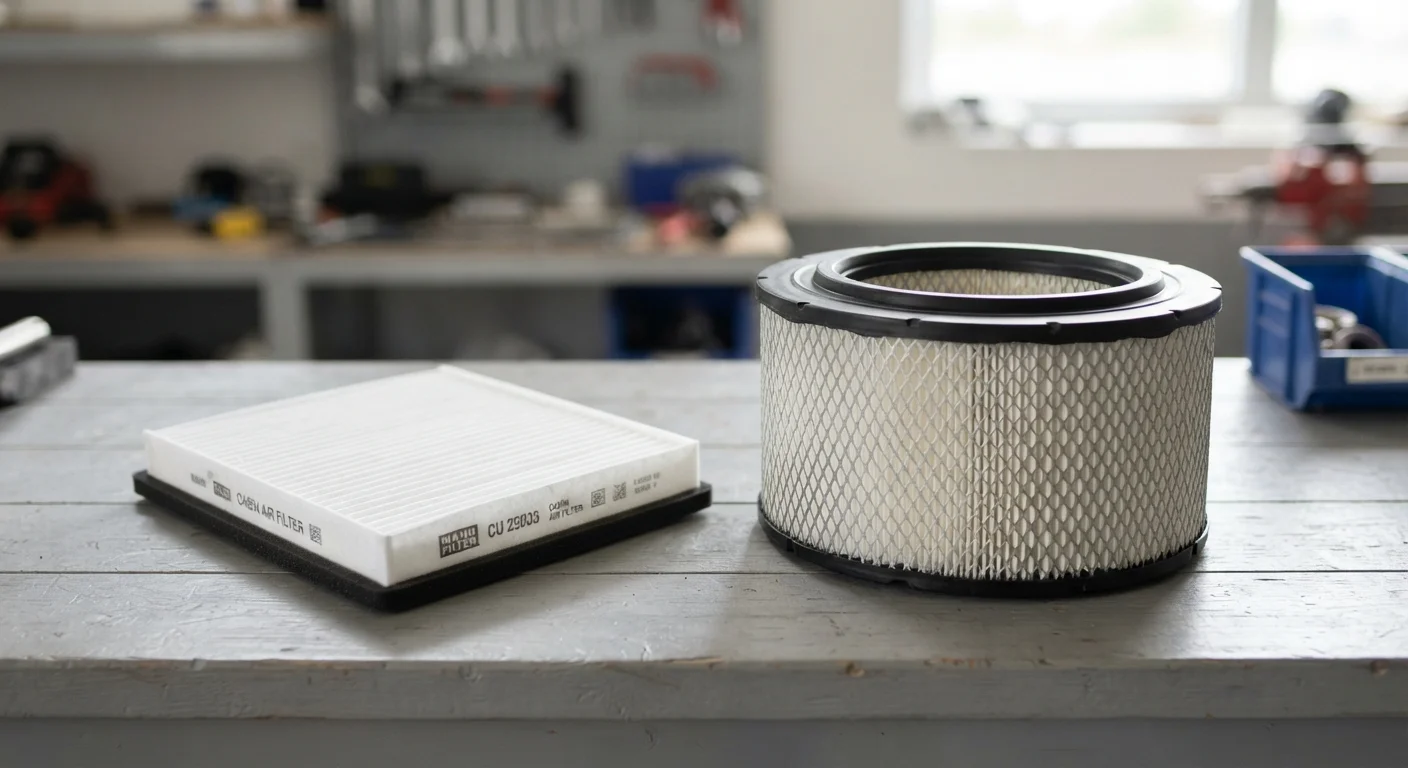
Most drivers know their car has an air filter, but fewer realize there are two of them, each doing an unrelated job. Understanding that distinction is the first step toward maintaining both properly.
The engine air filter sits between the outside air and your engine's intake system. Every internal combustion engine mixes air with fuel to generate power. That air passes through the filter first, which traps dirt, dust, insects, and debris before they reach sensitive engine components. Without this protection, abrasive particles would wear down cylinder walls, pistons, and other internal parts over time.
The cabin air filter cleans air before it enters the passenger compartment through the heating, ventilation, and air conditioning (HVAC) system. It catches pollen, dust, mold spores, and fine particulates. It has no effect on engine performance whatsoever; its job is entirely about interior air quality.
Because the two filters serve separate systems, a clogged cabin filter will not hurt your engine, and a dirty engine filter will not change the air you breathe inside the car. Both need independent attention.
How to compare them side by side
The table below outlines the core differences between the two filters across the factors that matter most for routine maintenance decisions.
| Criterion | Cabin air filter | Engine air filter |
|---|---|---|
| What it protects | Passenger compartment air quality | Engine intake system |
| Location in vehicle | Behind glove box or under dash | Engine bay intake housing |
| Typical replacement interval | 15,000 to 25,000 miles | 15,000 to 30,000 miles |
| Symptoms when clogged | Weak airflow, musty odor | Reduced fuel efficiency, sluggish throttle |
| Effect on engine performance | None | Direct: affects air-fuel mixture |
| DIY replacement difficulty | Generally straightforward | Generally straightforward |
One practical note: neither filter gives a clear warning light in most vehicles. Inspection is the only reliable way to know whether replacement is due.
What happens when each filter gets clogged
A severely restricted engine air filter forces the engine to work harder to draw in enough air. This disrupts the air-fuel ratio, which can reduce fuel efficiency and, in prolonged cases, increase engine wear. You may notice sluggish acceleration or a slight drop in miles per gallon, though these symptoms can have other causes as well.
A clogged cabin filter reduces the volume of air moving through your HVAC system. The blower motor has to work against more resistance, which can shorten its lifespan. Drivers often notice reduced airflow from vents, longer times for windows to defog, or musty odors inside the car. In humid climates, a dirty cabin filter can also allow mold growth within the ventilation housing.
Neither filter will suddenly cause a breakdown. The damage from neglect is gradual, which makes it easy to overlook until it becomes more expensive to fix.
Replacement intervals and inspection tips
General guidelines suggest replacing the engine air filter every 15,000 to 30,000 miles, and the cabin filter every 15,000 to 25,000 miles. These are starting points, not firm rules. Driving in dusty environments, on unpaved roads, or in stop-and-go urban traffic shortens both intervals.
To inspect either filter, remove it and hold it up to light. An engine filter that looks gray or brown and has visible debris packed into the pleats is due for replacement. A cabin filter in similar condition, or one with visible mold or strong odor, should be swapped out immediately.
Both filters are accessible without specialized tools in most vehicles. The cabin filter is typically behind the glove box or under the dashboard on the passenger side. The engine filter is usually in a plastic housing near the top of the engine bay. Your owner's manual gives the exact locations and the manufacturer's recommended intervals for your specific vehicle.
If you are unsure about either inspection or replacement, a qualified mechanic can handle both quickly during a routine service visit.