

Key Takeaways
- Attic insulation slows heat transfer between your living space and the outdoors, affecting comfort in every season.
- R-value measures insulation's resistance to heat flow; higher numbers mean better performance.
- The U.S. Department of Energy recommends R-38 to R-60 for most attics in colder climates.
- A ruler and a flashlight are enough to do a basic assessment of your current insulation depth.
- Work involving air sealing around electrical boxes or gas lines should be done by a licensed contractor.
Start here
Why attic insulation matters
Next
Types of attic insulation
Then
Understanding R-value
Apply it
How to assess your current insulation
When needed
When to call a professional
Why attic insulation matters
Heat moves toward cooler spaces. In winter, warm air inside your home rises and escapes through the ceiling into the attic. In summer, heat absorbed by the roof presses down into your living areas. Attic insulation slows both of those transfers, which affects your heating and cooling costs and how comfortable each room feels.
Many older homes were built with insulation levels that met the standards of their era but fall short of current guidelines. As a first-time homeowner, knowing what you have, and what it would take to upgrade, is a practical early step. It fits into the broader maintenance picture covered in the quarterly home maintenance checklist.
Types of attic insulation
R-value
A number that measures how well insulation resists heat flow. Higher R-values mean better resistance and more effective insulation.
Loose-fill insulation
Insulation made of small fibers or particles (usually fiberglass or cellulose) that is blown into place with a machine, filling gaps and irregular spaces.
Air sealing
The process of closing gaps and cracks in the building envelope so conditioned air cannot escape. It works alongside insulation but is a separate step.
Vapor barrier
A material that slows the movement of moisture through walls or ceilings. Some insulation types include this property; others do not.
Attic floor insulation
Insulation placed on the floor of the attic (on top of the ceiling below), which is the most common approach in homes where the attic is not used as living space.
You will find four main types in residential attics:
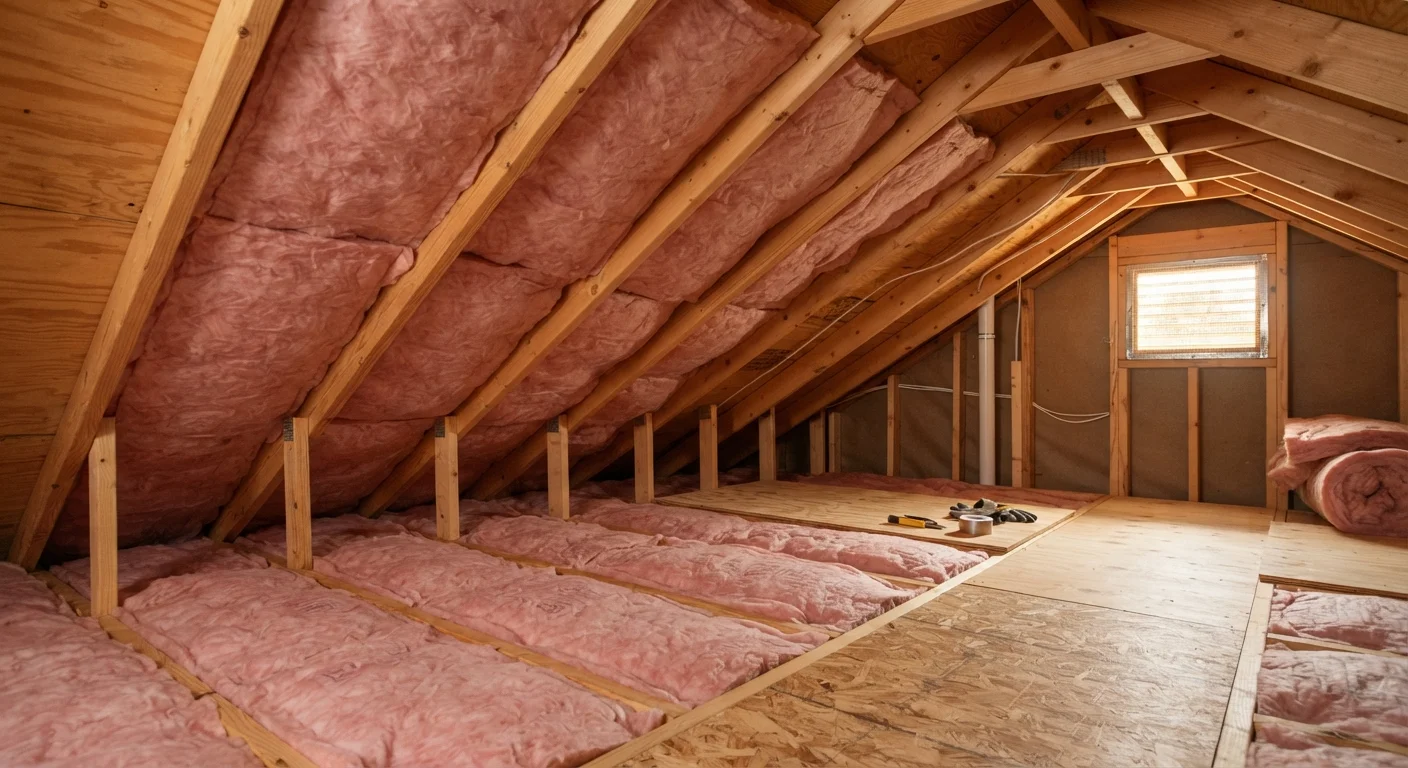
- Fiberglass batts are pre-cut blankets of spun glass fibers. They fit between standard joist spacings and are straightforward to install in an open, accessible attic.
- Blown-in loose-fill (fiberglass or cellulose) is installed with a blower machine. It fills gaps and irregular spaces better than batts and is common when adding insulation over an existing layer.
- Mineral wool batts behave similarly to fiberglass but are denser and more resistant to fire and sound transmission.
- Spray foam is applied as a liquid that expands and hardens. Open-cell foam is used on the underside of roof decking in unvented attics; closed-cell foam provides both insulation and a vapor barrier. Spray foam installation requires a licensed contractor.
Most attics in existing homes use blown-in loose-fill or batts on the attic floor (above the ceiling of the top floor). Spray foam on the roof deck is more common in newer construction or full renovations.
Understanding R-value
R-value is a number that measures how well a material resists heat flow. The higher the R-value, the more effective the insulation. R-values are additive, so laying a new layer on top of an existing one combines their values.
The U.S. Department of Energy publishes climate-zone recommendations. For most of the continental US, attics should reach R-38 to R-60. Warmer climates such as Florida or southern Texas typically need R-30 to R-38. Check the DOE's zip-code tool or your local energy code for the specific target in your area.
As a rough guide: one inch of fiberglass batts or blown-in delivers roughly R-3 to R-4. Spray foam varies more widely, with open-cell around R-3.5 per inch and closed-cell around R-6 to R-7 per inch. These figures vary by product, so check the manufacturer's published data for whatever material you are evaluating.
For more context on what insulation gaps can mean for your budget, see the hidden maintenance costs new homeowners face.
How to assess your current insulation
You need a flashlight, a ruler, and basic protective gear: an N95 or P100 respirator, safety glasses, and gloves. Old insulation, especially vermiculite (which may contain asbestos), should not be disturbed without professional testing first. If you see gray, pebble-like material, stop and contact a licensed inspector before proceeding.
For standard fiberglass or cellulose, the check is straightforward:
- Access your attic hatch carefully, stepping only on joists or a board laid across them, never on the drywall between joists.
- Push a ruler straight down into the insulation until it hits the attic floor. Note the depth.
- Look for gaps, compressed areas, or spots where the joists are fully visible above the insulation surface. Any of those indicate uneven coverage.
- Check for signs of moisture: staining, mold, or wet material. Wet insulation loses R-value and signals a bigger problem that needs fixing first.
If your measurement is below 11 inches for loose-fill or below 10 inches for batts, you are likely below R-38 and worth considering an upgrade. This is also a good time to look at air sealing, since gaps around recessed lights, top plates, and plumbing chases let conditioned air escape regardless of how thick the insulation is. Air sealing is covered in the weatherproofing guide.
When to call a professional
Adding blown-in loose-fill or laying fiberglass batts in a clean, dry, accessible attic is within reach for many homeowners. The work becomes a job for a licensed contractor in several situations:
- You find vermiculite, damaged material, or signs of mold or pest activity.
- The project includes air sealing around electrical junction boxes, gas flues, or chimneys. Improper sealing near combustion appliances is a fire and carbon monoxide risk.
- You want spray foam applied to the roof deck. This requires specialized equipment and training.
- Your attic has limited clearance, unusual framing, or active knob-and-tube wiring, which typically cannot be covered with insulation without an electrician's assessment first.
When getting estimates, ask contractors whether they will also air-seal before installing insulation, and whether the work meets your local energy code. Permits may be required depending on your municipality, so verify with your local building department before any work begins.
If you are renting rather than owning, your responsibilities here may differ. The renter maintenance responsibilities guide outlines what typically falls to tenants versus landlords.