

Key Takeaways
- Inflammation is a normal immune response; chronic low-grade inflammation is linked to disease risk.
- No single food causes or cures inflammation; overall dietary patterns matter more than individual items.
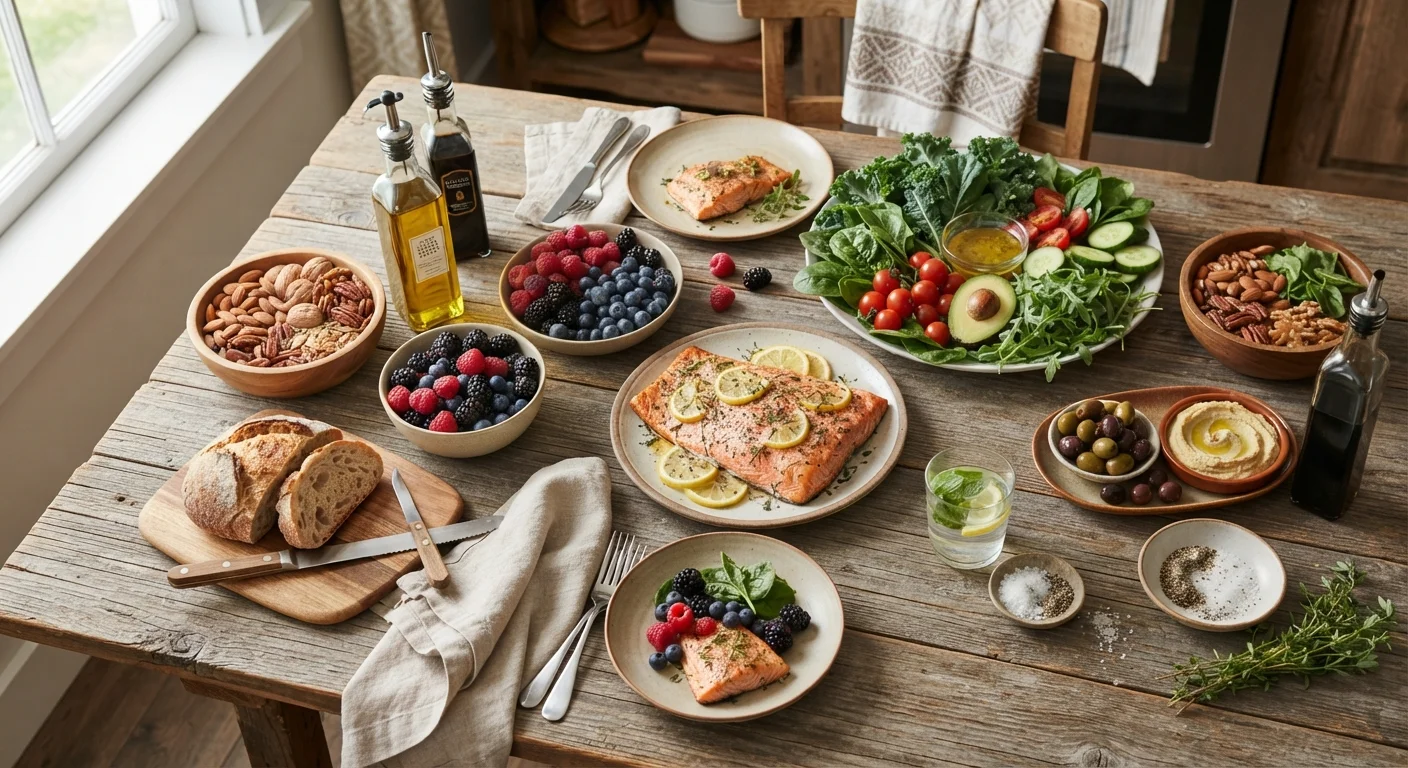
- The Mediterranean dietary pattern has the most consistent research support for reducing inflammatory markers.
- Processed foods high in refined carbohydrates and trans fats are associated with higher inflammatory markers.
- Food affects inflammation, but it is one factor among many including sleep, stress, and physical activity.
What inflammation actually is
Inflammation gets a bad reputation, but the acute version is protective. When you sprain an ankle or fight off a cold, immune cells flood the affected area, generating redness, swelling, and heat as part of the repair process. That response is short-lived and necessary.
Chronic low-grade inflammation is different. It persists at a low level throughout the body without an obvious injury or infection to resolve. Researchers have associated this state with a range of conditions including cardiovascular disease, type 2 diabetes, and certain autoimmune disorders. Blood markers such as C-reactive protein (CRP) and interleukin-6 are commonly used in research to measure this kind of systemic inflammation.
Diet can influence those markers, which is the legitimate basis for anti-inflammatory eating. The phrase itself is not a clinical term; it describes a pattern of food choices that research associates with lower inflammatory activity over time.
Common myths, corrected
The concept of anti-inflammatory eating has attracted a lot of oversimplification. Some claims have a real evidence base; others do not. The distinctions matter if you want to make food choices grounded in what the science actually says.
Myth
Eating 'anti-inflammatory' superfoods like turmeric or blueberries will directly reduce inflammation in your body.
Fact
Individual foods do not switch inflammation on or off. Overall dietary patterns over weeks and months are what research associates with changes in inflammatory markers.
Turmeric and blueberries contain bioactive compounds, including curcumin and various polyphenols, that show anti-inflammatory activity in laboratory and animal studies. Human clinical trials at realistic food quantities have produced mixed or modest results. Eating a small amount of any single food does not produce a measurable shift in systemic inflammatory markers. What does produce measurable shifts is a sustained pattern of eating that includes a wide range of vegetables, fruits, whole grains, and healthy fats while limiting ultra-processed foods.
Myth
Nightshade vegetables like tomatoes and peppers cause inflammation and should be avoided.
Fact
There is no well-controlled clinical evidence that nightshades increase inflammation in people without a specific sensitivity. For most people they are associated with beneficial outcomes.
The nightshade claim appears frequently in popular wellness content but lacks support from rigorous human trials. Tomatoes, for example, contain lycopene, a carotenoid that has been associated with lower cardiovascular risk in observational research. People with certain autoimmune conditions sometimes report symptom changes with nightshade avoidance, but anecdotal reports are not the same as evidence of a causal inflammatory mechanism in the general population. If you suspect a specific food sensitivity, a registered dietitian can help you evaluate it systematically.
Myth
An anti-inflammatory diet means eliminating gluten and dairy.
Fact
Neither gluten nor dairy has been shown to increase inflammatory markers in people without celiac disease, non-celiac gluten sensitivity, or a confirmed dairy intolerance.
For people with celiac disease, gluten does trigger an immune response, and a gluten-free diet is medically indicated. For everyone else, the evidence does not support routine gluten avoidance as an inflammation-reducing strategy. Similarly, some dairy products, particularly fermented ones like yogurt, appear in dietary patterns associated with lower inflammatory markers. Broad elimination of food groups without a diagnosed reason can reduce diet quality and nutrient variety without a corresponding benefit.
Myth
Diet alone controls inflammation, so what you eat determines your disease risk.
Fact
Diet is one of several factors that influence chronic inflammation. Sleep, physical activity, body weight, stress, smoking, and genetics all contribute independently.
Chronic sleep restriction, for instance, has been shown in controlled studies to raise CRP and other markers within days. Excess adipose tissue, particularly visceral fat, produces pro-inflammatory cytokines regardless of diet quality. A person eating a well-constructed Mediterranean-style diet but sleeping five hours a night and under sustained psychological stress will still carry elevated inflammatory load. This does not diminish the value of dietary choices; it places them accurately within a broader picture of how lifestyle affects immune function.
Myth
If a food is 'natural' or 'whole,' it is automatically anti-inflammatory.
Fact
The natural or whole-food label does not predict inflammatory effect. Quantity, preparation method, and individual health context all matter.
Coconut oil is often marketed as a health food, but it is high in saturated fat, which some research associates with higher LDL cholesterol and modest pro-inflammatory effects at high intake. Honey is a whole food but is still a concentrated source of sugar. The absence of processing is not a reliable proxy for anti-inflammatory benefit. Research-supported dietary patterns are defined by their overall composition, not by a simple natural-versus-processed binary.
What the research does support
The Mediterranean dietary pattern has the most consistent body of evidence. It emphasizes vegetables, legumes, whole grains, fish, olive oil, and nuts, with limited red meat and ultra-processed foods. Multiple large observational studies and several randomized controlled trials have found it associated with lower CRP and other inflammatory markers.
The PREDIMED trial, a large Spanish randomized study, found that participants assigned to a Mediterranean diet supplemented with olive oil or nuts had significantly lower cardiovascular event rates than those on a low-fat control diet. Inflammatory markers were part of the measured outcomes. This does not mean the diet is a treatment for any condition, but it is meaningful evidence.
Ultra-processed foods consistently appear on the other side of that ledger. Products high in refined carbohydrates, added sugars, and industrially produced trans fats are associated with elevated inflammatory markers in multiple study designs. Reducing them is the clearest actionable point from the current literature.
30%
Lower cardiovascular event risk observed
The PREDIMED trial found a roughly 30% reduction in major cardiovascular events among participants following a Mediterranean dietary pattern compared to a low-fat control diet.
~57%
Of U.S. calorie intake from ultra-processed foods
A National Health and Nutrition Examination Survey analysis estimated that ultra-processed foods account for more than half of the average American adult's daily caloric intake.
This article is for general informational purposes only and is not medical or dietary advice. Consult a qualified healthcare provider or registered dietitian before making significant changes to your diet, particularly if you have a diagnosed health condition.