

Key Takeaways
- A rug that is too small is the single most common mistake in living room layouts.
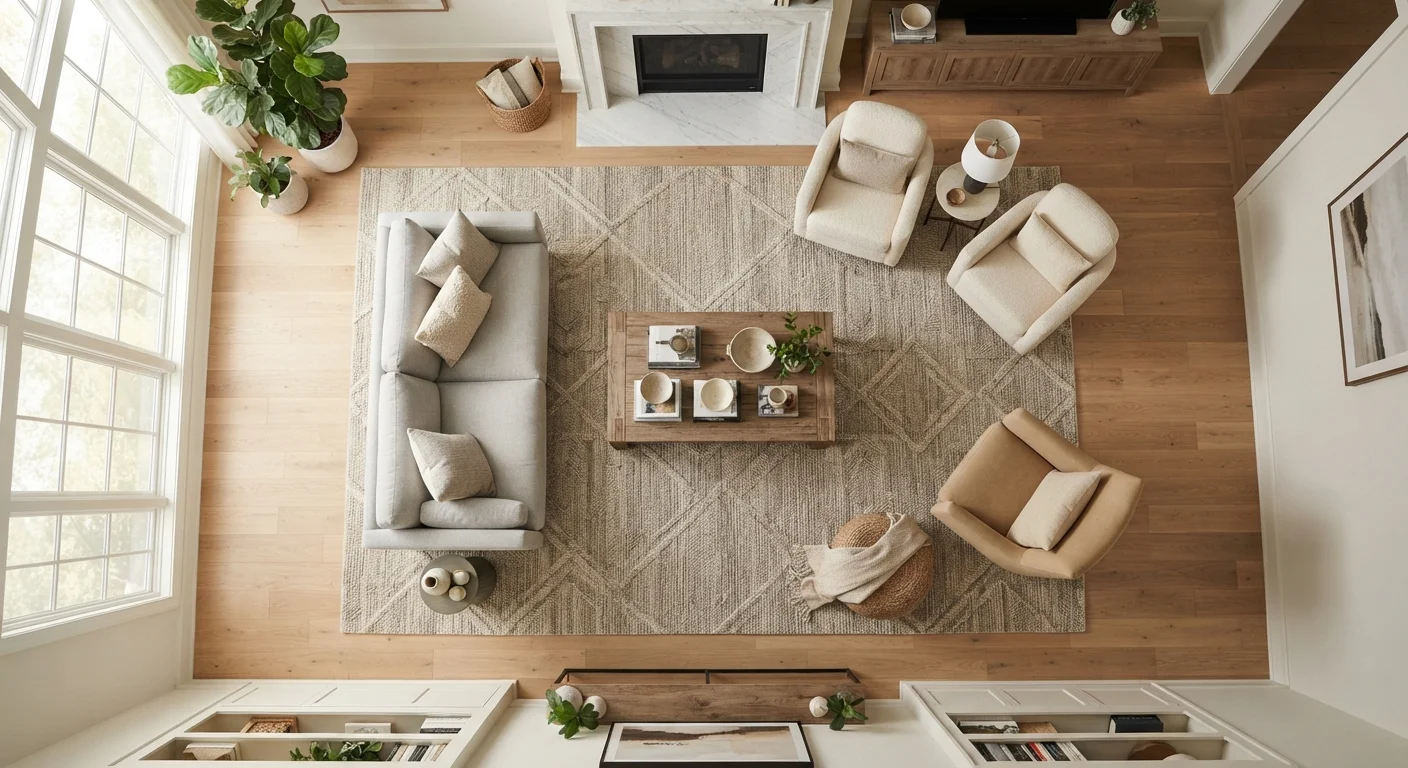
- Front legs of all major furniture pieces should rest on the rug to unify a seating group.
- In dining rooms, the rug must extend at least 24 inches beyond the table on every side.
- Rug shape should follow room geometry: rectangular rooms call for rectangular rugs in most cases.
- Measuring the floor before purchasing prevents costly sizing errors.
Why rug sizing and placement matter more than you might expect
A rug does more than cover floor space. It visually defines a zone in an open-plan area, absorbs sound, and ties disparate furniture pieces into a single arrangement. When the size or position is off, the room reads as disconnected even when the furniture and colors are well chosen.
The effect is similar to how furniture placement shapes the way a room feels to move through and use. The relationship between spatial layout and how you feel in a room is well documented in interior design research: zones that lack a clear anchor tend to feel unsettled. A correctly sized rug is one of the most affordable tools for creating that anchor.
The mistakes below are worth knowing before you buy, because returning a large rug is inconvenient and sometimes impossible with custom or non-standard sizes.
The most common rug mistakes and how to fix them
The errors that follow apply to living rooms, dining rooms, and bedrooms, which are the three spaces where rug decisions have the most visible effect. Several of them occur together, so correcting one often means revisiting the others.
Choosing a rug that is too small for the room or seating arrangement.
Why it happens: Shoppers often select rugs based on what looks proportionate in a large showroom or online thumbnail, without measuring their actual floor space first.
Pushing all furniture against the walls and floating the rug alone in the center.
Why it happens: Many people believe pulling furniture to the perimeter makes a room feel larger, but it actually creates a dead zone in the middle and disconnects the rug from the seating.
Using a round rug in a strongly rectangular room without purpose.
Why it happens: Round rugs are visually appealing in photos and can seem like a fresh choice, but they often fight the geometry of a standard rectangular room rather than working with it.
Placing a dining room rug too small for the table and chairs.
Why it happens: People measure the table footprint but forget that chairs pull out during use, often by 18 to 24 inches per side.
Centering the rug on the room rather than on the furniture grouping.
Why it happens: Centering on the room feels geometrically tidy, but furniture arrangements rarely match the room's exact center, so the rug ends up misaligned with the seating.
Skipping a rug pad and allowing the rug to shift or bunch.
Why it happens: Rug pads feel like an optional extra cost, and their absence is not obvious until the rug starts creeping or a corner curls up as a trip hazard.
In smaller rooms, these mistakes can feel even more pronounced. Compact living rooms benefit from deliberate rug placement because a well-sized rug can make the room read as larger, while an undersized one makes it feel cramped. If you are in a rental and concerned about floor protection, renter-friendly decorating approaches include using a proper rug pad rather than tape or adhesive, which can damage floors.
Measure twice before you order
Rug return policies vary widely, and many retailers charge restocking fees or do not accept returns on large rugs at all. Custom sizes are almost never returnable. Spend time with a tape measure and painter's tape on your actual floor before committing to a purchase. A few minutes of measuring can prevent a costly mistake.
Before any rug purchase, sketch your room dimensions on paper, mark the furniture footprint, and calculate the rug size you actually need. Painter's tape on the floor takes about five minutes and eliminates guesswork entirely.