

Key Takeaways
- Removable adhesive products let you hang art and add pattern without damaging walls or paint.
- Furniture arrangement and area rugs dramatically change a room's feel at zero risk to your deposit.
- Temporary lighting swaps, such as plug-in sconces, work without any electrical work.
- Document the apartment's condition with photos before and after decorating to protect yourself.
- Always read your lease before making any changes, including those marketed as removable.
What you will need
Know your lease before you touch anything
Your lease is the single most important document in this process. Some leases prohibit any wall alterations, including small nail holes, while others explicitly allow minor hanging. Read yours before buying a single product. If a clause is unclear, ask your landlord in writing and keep the response.
It also helps to understand your general responsibilities as a tenant. The responsibilities renters typically carry often include returning walls to their original condition, which means spackling and repainting can cost you real money if you skip that step at move-out. Knowing this upfront shapes every decorating choice you make.
Once you have read the lease, photograph every wall, floor, fixture, and surface in each room before you bring in a single item. Date-stamp the photos. This record is your best defense if a landlord later claims damage that existed before you moved in.
Take photos the day you move in
Walk through every room with your phone and photograph existing scuffs, stains, and holes before unpacking anything. Email the photos to yourself or your landlord immediately so they carry a timestamp. This record can prevent deposit disputes over damage you did not cause.
Walls: adding personality without nails or paint
The most common renter fear is blank, white walls. The good news is that several product categories address exactly this without involving paint or hardware.
Removable adhesive strips and hooks are rated for specific weights. Check the package weight rating against your artwork before hanging anything. Apply them to a clean, dry wall and press firmly for the time the instructions specify. When you remove them, pull the tab slowly and parallel to the wall, not outward. Rushing this step causes the damage renters get charged for.
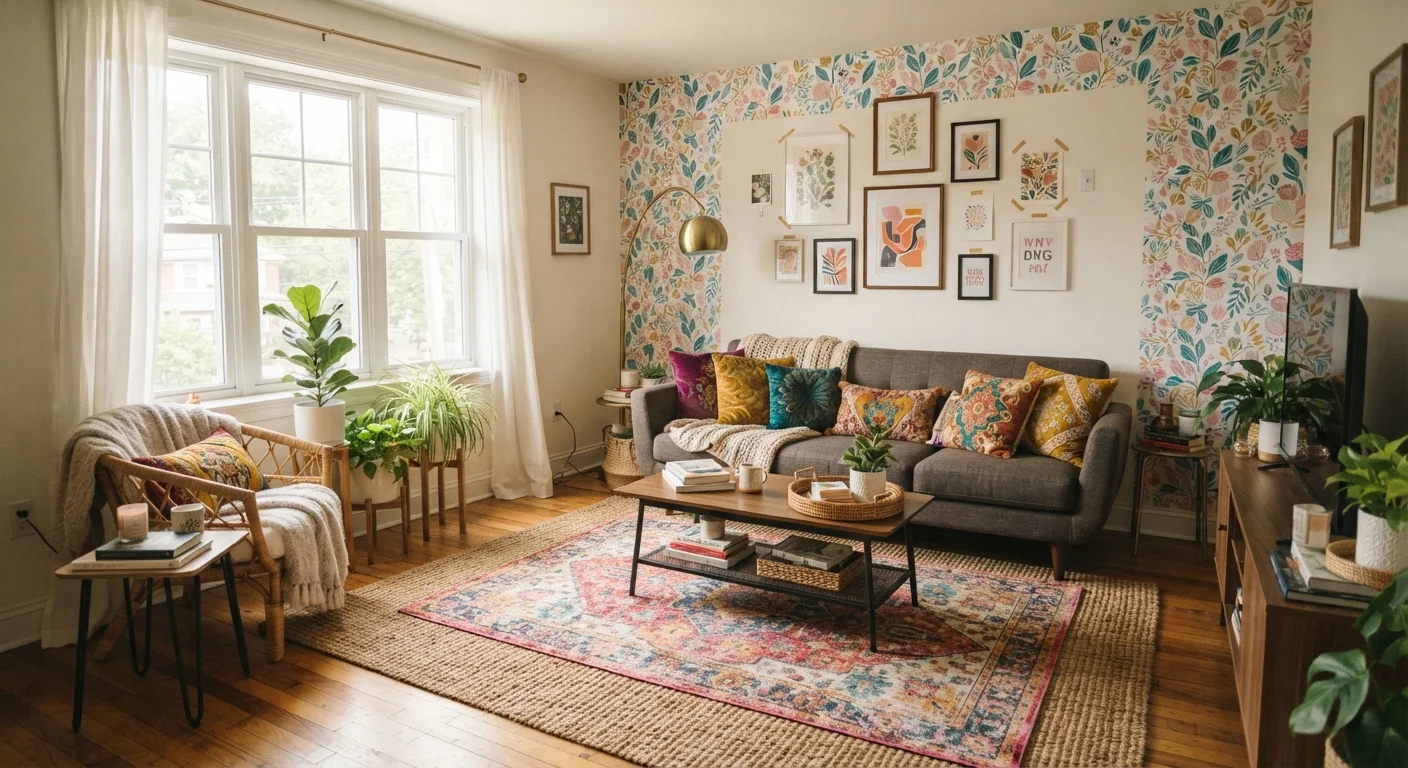
Peel-and-stick wallpaper and fabric wall panels are worth considering for larger accent areas. Both products are designed to remove cleanly from smooth, painted drywall. Test a small corner after 24 hours before committing to a full wall, because paint type and age affect how reliably they release.
For art that is too heavy for adhesive strips, a single small nail through a picture hook causes minimal wall damage and is straightforward to patch with spackling paste at move-out. That approach is far less disruptive than many renters expect. See the wall preparation guide for context on how spackling and touch-up painting actually work.
Floors, furniture, and rugs
Area rugs are the fastest way to change a room's character, define zones, and protect flooring you did not choose and may not love. A rug that is sized correctly anchors furniture and makes a space feel intentional rather than assembled. The common rug sizing and placement mistakes are worth reviewing before you buy, because an undersized rug often makes a room feel smaller rather than larger.
Furniture arrangement costs nothing and has a large visual impact. Moving a sofa away from the wall and floating it toward the center of a room, for example, typically makes the space feel more considered and livable. If you are working with limited square footage, the space-saving strategies for small living rooms offer practical layout guidance worth reading before you rearrange. For a more structured approach to layout decisions, the room-planning checklist walks through the decisions in order.
Use felt pads under every furniture leg. They prevent scratches on hardwood and vinyl, and they make it easier to shift pieces without help. Avoid rubber-backed mats on hardwood floors for extended periods; the backing can react with finish and leave a stain that is difficult to reverse.
Lighting and ambiance
Overhead lighting in rental apartments is often harsh and fixed. You cannot rewire a fixture without a licensed electrician and landlord approval, but you can work around the existing setup effectively.
Plug-in pendant lights and plug-in wall sconces run on a cord that you route along the wall or behind furniture. They require no electrical work and screw into a standard wall anchor or adhesive hook. Swapping out a bare-bulb overhead fixture for a paper lantern shade that clips onto the bulb socket is another low-commitment change that softens the light in a room immediately.
Lamp placement has more influence on a room's atmosphere than many people expect. Floor lamps in corners and table lamps at seated eye level distribute light more evenly than a single overhead source. Warm-temperature bulbs (around 2700K on the color temperature scale) read as cozier than the cool-white bulbs common in rentals.
If you set up a work area within your living space, consider how task lighting integrates with your overall lighting plan. The guide to home office setups in shared spaces addresses lighting as part of carving out a functional work zone.
Move-out: leaving no trace
The goal at move-out is to return the unit in the same condition it was in when you arrived, accounting for what your lease defines as normal wear and tear. Small nail holes typically fall within normal wear and tear in most states, but landlord interpretations vary. Patch anything you are uncertain about.
Remove adhesive products slowly and according to their instructions. Use a plastic scraper or your fingernail at the edge, never a metal blade, which can gouge paint. If a small paint patch lifts with a strip, note the original wall color, buy a small sample pot of a close match, and touch up the spot. Your move-in photos will confirm whether the wall was already scuffed before you arrived.
Return all furniture, lamps, and rugs to the positions documented in your move-in photos if you altered the original layout significantly. Clean under and behind furniture before you move it back out, because landlords often inspect those areas.