

Key Takeaways
- Bag choice depends on trip length, transport type, and whether you need to check luggage.
- A written packing list built around your itinerary prevents both over-packing and forgotten essentials.
- Toiletries and liquids have specific airport security rules that catch first-timers off guard.
- Leaving space in your bag for return items saves stress at checkout time.
- Medications and documents need special handling that goes beyond standard packing advice.
Start here
Choosing the right bag for your trip
Next
What actually needs to come with you
Then
How to pack so nothing gets forgotten
Finally
Common first-timer mistakes and how to avoid them
Choosing the right bag for your trip
The bag you choose shapes every other packing decision. Before you open a closet, answer three questions: How many nights are you away? Will you be checking luggage or carrying on? And will you be moving between locations or staying in one place?
A standard carry-on suitcase (typically 22 x 14 x 9 inches) fits most overhead bins on US domestic flights and works for trips up to about a week. A personal item, such as a backpack or tote that fits under the seat, adds extra capacity without extra fees. For longer trips or travel that requires gear like hiking equipment or formalwear, a checked suitcase in the 25- to 29-inch range is practical.
Soft-sided bags flex more easily into tight overhead bins. Hard-sided bags resist crushing and protect fragile items. Neither is universally better; the right choice depends on what you are packing and how you travel.
Carry-on bag
A bag small enough to fit in an airplane's overhead bin or under the seat in front of you. Most US airlines have specific size and weight limits, and carry-ons typically avoid baggage fees.
Personal item
A smaller bag, such as a backpack or tote, that fits under the seat in front of you. Most airlines allow one personal item in addition to a carry-on.
3-1-1 rule
A TSA security rule requiring that all liquids, gels, and aerosols in carry-on bags be in containers of 3.4 oz (100ml) or less, placed in a single clear quart-sized zip-top bag.
Checked baggage
Luggage that is handed over to the airline at check-in and stored in the cargo hold of the plane. It usually incurs a fee on US domestic flights and is not accessible during the flight.
Packing cubes
Small fabric organizers that zip closed around grouped items of clothing or gear. They fit inside a larger bag to keep contents organized and compressed.
If you plan to travel frequently, it is worth reading the full guide to packing efficiently for a deeper look at building a bag system that scales across trip types.
What actually needs to come with you
Overpacking is the most common first-timer error, and it usually happens because people pack for hypothetical scenarios rather than their actual itinerary. Before you start pulling things from your closet, write down what you will be doing each day: transit, sightseeing, a dinner out, beach time. Then pack to those activities.
The categories that belong in almost every bag are:
- Documents: passport or ID, boarding passes, hotel confirmations, and any visas required. Keep these in one accessible pouch, never scattered through the bag.
- Clothing: enough for the trip, with one spare outfit. Plan outfits, not individual pieces.
- Toiletries: travel-sized containers that comply with TSA rules if flying. Our article on toiletries and TSA liquids rules covers what trips up most travelers at security.
- Medications: bring enough supply plus a small buffer, in original or labeled containers. For specifics on traveling safely with prescriptions, see packing medications and medical supplies.
- Electronics and chargers: phone, charger, any adapters needed for international outlets.
Health preparation beyond packing, such as understanding vaccination recommendations before departure, is covered in the guide on travel health prep.
How to pack so nothing gets forgotten
A written list is the single most reliable tool. Build it from your itinerary categories above, then check off items as they go into the bag, not before. Checking things off as you pull them from drawers leads to packed items you forgot to actually put in the bag.
Pack heavier items close to the wheels or the back panel (the side that sits against your back in a backpack). Lighter, frequently-needed items go on top or in outer pockets. This keeps the bag stable and means you are not digging through everything to find your headphones.
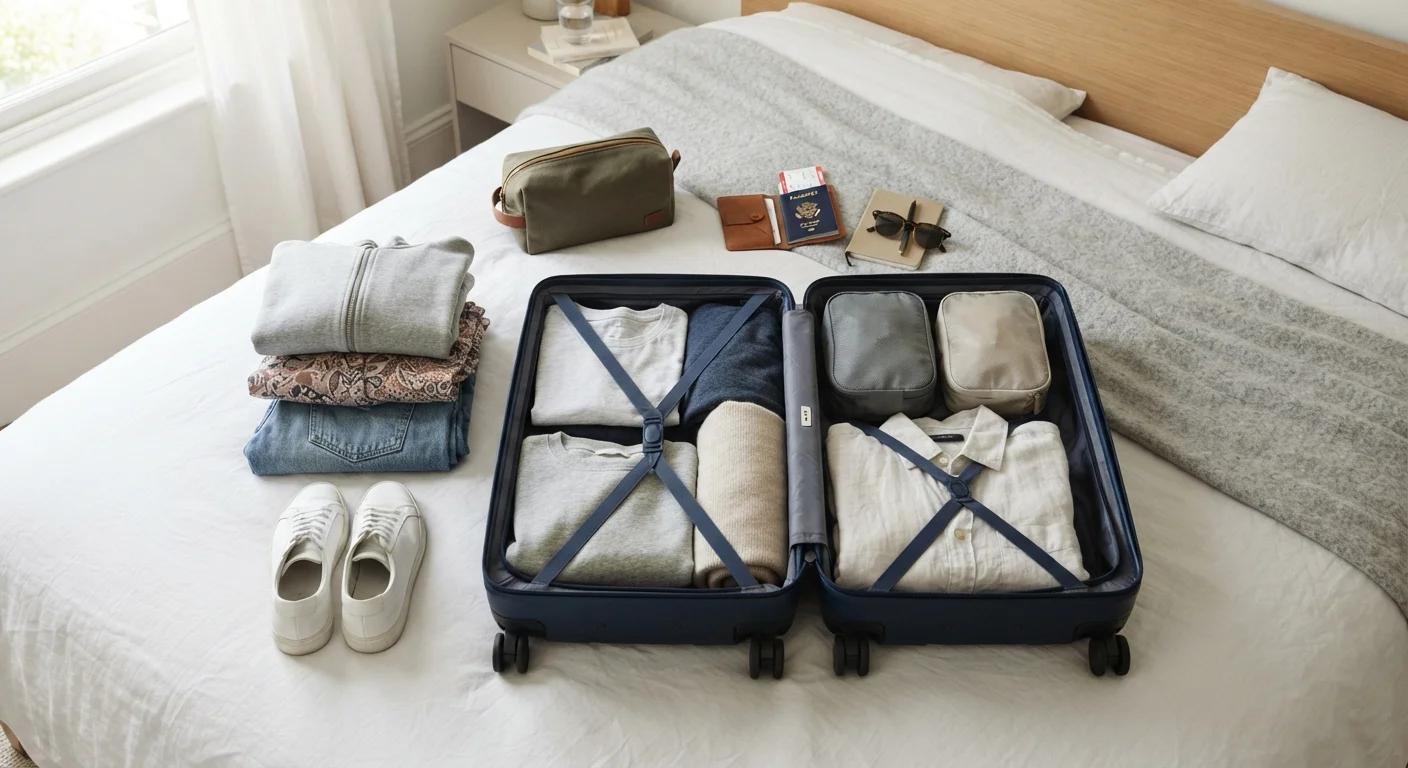
Rolling clothes takes less space than folding for most casual garments. Structured items like blazers fold better. If you want a more organized system, packing cubes have real benefits and some drawbacks worth knowing before you commit to them.
Leave about 20 percent of your bag empty before you leave. This space absorbs souvenirs, purchases, or items you need to pick up at your destination, and it makes repacking at checkout easier.
Do a dry run the night before
Pack your bag completely the evening before departure, then lift it and carry it for a few minutes around your home. If it is too heavy or awkward to manage comfortably, remove items until it feels manageable. What feels acceptable in your bedroom often feels much heavier after an hour in an airport.
Common first-timer mistakes and how to avoid them
Packing too many shoes is a consistent problem. Shoes are heavy, take up space, and most trips only require two pairs: one for walking and one for any dressier occasion. A third pair for a specific activity (hiking, beach) is the practical ceiling for most trips.
Forgetting that security lines check your liquids bag catches many travelers off guard. Packing toiletries in an accessible outer pocket of your carry-on, rather than buried in the middle, saves time and avoids repacking at the checkpoint.
Another common gap is not accounting for the return trip. If you plan to shop or collect items along the way, build that into your packing plan from the start rather than trying to stuff a full bag further at checkout.
If you are traveling with others, the guide to family travel packing addresses how to distribute loads and reduce redundancy when multiple bags are involved.
For a complete picture of the planning that surrounds packing, the trip planning starter guide walks through every stage before you reach the bag-packing step.