

Key Takeaways
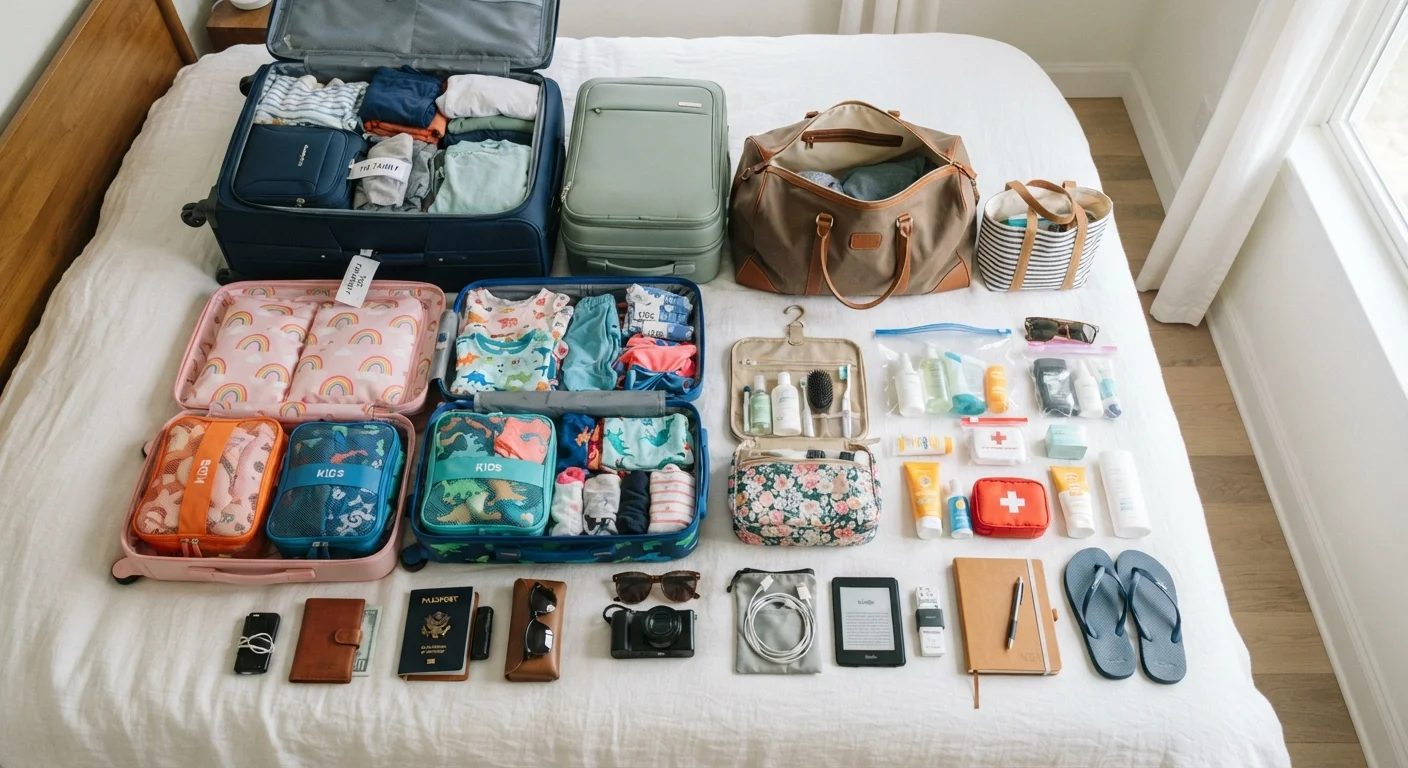
- Distribute gear across multiple bags so one lost bag does not strand the whole family.
- Give each child a personal bag with their own carry-on essentials to build ownership and reduce adult load.
- A shared toiletries system with one set of consolidated items cuts weight significantly.
- Accessible snacks, documents, and comfort items in a single top-of-bag layer prevent frantic digging mid-travel.
- Plan for the return trip: leave room in bags for souvenirs or purchased items before you leave home.
Why family packing is a different problem
Packing for two adults is a logistics puzzle. Add children and the puzzle doubles in pieces while the available time and patience shrinks. Every extra person multiplies decisions: what each child needs per day, what can be shared, what must stay accessible during transit, and what happens if a checked bag is delayed.
The goal is not to pack perfectly light (that standard belongs to solo carry-on trips). The goal is a system where nothing critical is unreachable, no single bag is catastrophic to lose, and the adults are not the only ones who know where anything is. A broader packing framework helps, but family travel adds layers that solo and couples packing rarely address.
Core practices for packing with kids
The practices below apply across trip types, whether the family is flying, road-tripping, or taking a cruise. Adjust the specifics to your children's ages and the trip length.
Distribute essentials across multiple bags rather than consolidating into one
If a single checked bag is delayed or lost, every family member still has a change of clothes, basic toiletries, and their medications. Spreading items prevents one logistical failure from cascading into a crisis for the whole group.
Assign each child their own carry-on bag with age-appropriate responsibility
Children who carry their own bag with snacks, a comfort item, and an activity feel less passive during travel. It also shifts a portion of the load off the adults and teaches children to track their own belongings.
Consolidate toiletries into one shared kit rather than individual sets per person
Four people each bringing their own shampoo, sunscreen, and toothpaste quadruples the liquid weight and volume. A single shared toiletry bag, sized to what the family actually uses per day, reduces bulk and passes TSA screening faster.
Create a dedicated top-of-bag access layer for transit items
Documents, snacks, headphones, a small first-aid kit, and any item needed before reaching the destination should sit at the top or in an outer pocket of the bag you carry on. Digging through packed layers with children waiting is a common source of frustration.
Use a packing list built per person, not per category
Category-based lists (all clothes, all toiletries) make it easy to forget that a specific child needs a specific item. Per-person lists catch individual needs: one child's inhaler, another child's prescribed glasses, a particular comfort item that only one family member uses.
Pack clothing in coordinated neutral colors that mix and match across family members
When shirts, shorts, and layers can be shared or swapped between family members of similar size, the total number of garments drops without anyone going without. It also makes laundry sorting faster mid-trip.
For medication, medical supplies, or any special health items children need while traveling, verify rules with official sources before you pack. See guidance on traveling with medications for general planning steps.
Keeping transit manageable
Transit hours, airports, train stations, long drives, tend to be when family packing either pays off or falls apart. The bag you cannot open quickly while holding a toddler is the bag that causes a scene. A few structural choices before you leave make transit hours far less stressful. For a full picture of keeping the family safe and prepared during travel, family travel safety planning covers preparation and in-transit precautions worth reading alongside this guide.
Planning for the return trip
Most families pack outbound and forget that they are returning with more. Souvenirs, items purchased at the destination, worn-down shoes swapped for new ones: the volume going home is almost always larger. Before leaving home, leave roughly 20 percent of bag volume unfilled, or pack a flat, empty tote bag inside checked luggage. Children's bags are a good place to build in this slack, since kids rarely fill their packs to capacity on the way out. Trip planning resources cover logistics from a broader angle if you want to coordinate packing decisions with your itinerary structure.