

Key Takeaways
- Match bag size to trip length first, then adjust what you pack to fit that bag.
- A written packing list built before every trip cuts both overpacking and forgotten items.
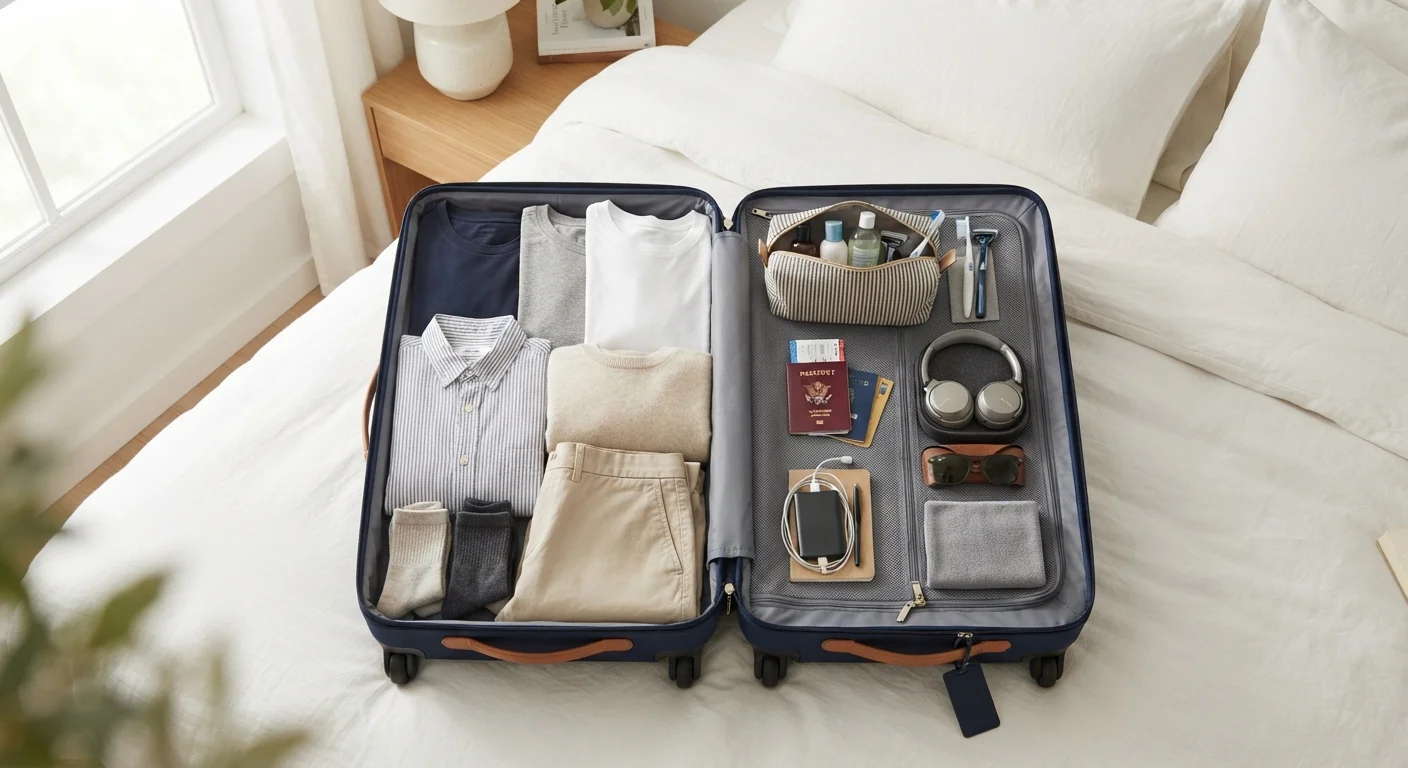
- Rolling clothes and using packing cubes together gives more usable space than folding alone.
- Weight and size rules differ between airlines, so verify them with your carrier before you travel.
- Family and first-time travelers benefit most from distributing loads across bags rather than centralizing them.
Choosing the right bag for your trip
The bag you choose sets a hard limit on everything else. A weekend trip rarely needs more than a 30-40 liter backpack or a small rolling carry-on. A two-week trip can work with a mid-size checked bag, especially once you apply the space techniques below. Overestimating how much room you need is one of the most common reasons people overpack.
Carry-ons save time at the airport and eliminate checked baggage fees on many routes. Checked bags make sense when you are traveling with fragile gear, formal attire, or sports equipment that simply cannot compress. If you are new to deciding between these options, this introduction to packing basics walks through the tradeoffs clearly.
Soft-sided bags compress and squeeze into overhead bins better than hard shells. Hard shells protect fragile contents and hold their shape when stacked. Neither is universally better; the choice depends on what you are carrying.
Building a packing list that actually holds up
Write your list at least two days before you pack. Memory alone misses things, and a list written the night before often reflects anxiety rather than actual need. Start with fixed categories: clothes, toiletries, documents, electronics, medications, and any trip-specific gear.
Under clothes, count outfits by day and then subtract. Most travelers wear items more than once, particularly pants, outerwear, and shoes. Three pairs of shoes is almost always too many. One pair for walking and one for any formal occasion covers most trips. Fitting a week of clothes into a single carry-on is achievable once you plan outfits around two or three shared base colors.
Documents deserve their own checklist sub-section: passport, visas, booking confirmations, travel insurance details, and any health documentation your destination requires. Verify entry requirements with official government sources before travel; rules change and no article can substitute for that check.
Leave room for the return trip
Pack with roughly 20 percent empty space if you plan to shop or collect anything during your trip. A bag that is completely full at departure gives you no flexibility, and souvenir overflow in a carry-on can push you over size limits at the gate.
Maximizing space without overpacking
Rolling clothes instead of folding them reduces wrinkles and takes up less volume for most garment types. Packing cubes compress rolled items further and make it easy to find things without disturbing the whole bag. Heavy items like shoes go at the bottom near the wheels or the back panel, which keeps the bag balanced when you carry it.
Stuff socks inside shoes. Nest smaller items inside hats. Fill every cavity. These are not tricks so much as habits that become automatic once you practice them on one or two trips.
Organizing what goes where
Group by how often you will need access. Toiletries, a change of clothes, and any transit snacks go in the most reachable pocket or the top of the bag. Formal wear or items you will only use at your destination can go at the bottom.
For family trips, distributing each person's clothing across multiple bags protects against a single lost bag stranding someone without clothes. Packing for family travel with kids covers load distribution and keeping essentials accessible when you need them fast.
Airline weight and size rules you need to verify
Weight allowances and size limits vary between carriers, routes, and fare classes. A carry-on that fits one airline's overhead bin may be checked at the gate on another. How bag weight limits work across airlines explains the structure of these rules in plain terms.
Weigh your bag at home before you leave. A luggage scale costs very little and saves the stress of repacking at a check-in counter. If you are on a multi-leg trip with different carriers, check the rules for each one separately.
Adjusting your system for different trip types
Business travel often requires specific garments that do not compress well. A garment bag or a folding board keeps dress shirts and blazers wrinkle-free. Beach or outdoor trips swap formal wear for bulkier gear like sandals and towels, which respond well to compression bags.
Whatever the trip, the same logic applies: decide on the bag size first, build the list against it, then use space techniques to make it fit. Solid trip planning starts well before you open the suitcase, and the packing step works best when it follows a clear travel plan rather than trying to anticipate every unknown. For safety-related items to include regardless of trip type, travel safety fundamentals is worth a read before you finalize your list.