

| TSA liquid medication limit | No size cap for medically necessary liquids; declare at checkpoint (TSA.gov carry-on rules) |
| Original container requirement | Recommended for all prescription medications; required by some countries (General customs guidance) |
| Controlled substance documentation | Original prescription printout plus physician letter strongly advised (DEA and State Department guidance) |
| Medical devices in carry-on | Permitted by TSA; verify with airline for storage rules (TSA.gov) |
Why medication packing requires its own checklist
Packing medications is different from packing clothes. Airport security, customs agencies, and foreign governments each have separate rules, and those rules do not always match. A prescription that is legal in the US may be a controlled or prohibited substance in another country. Liquid medications interact with TSA's 3-1-1 liquids policy in ways that catch travelers off guard. Medical devices require documentation that most people never think to request until they are standing at a checkpoint.
This article covers the general frameworks you should understand before you travel. Because rules change and vary by destination, always verify current requirements with the TSA, the US embassy or consulate of your destination country, and your prescribing provider before your trip. See also the general travel health prep guide for a broader overview of pre-trip health steps.
Controlled substance
A drug regulated under the US Controlled Substances Act due to its potential for dependence or misuse. Traveling internationally with controlled substances may require special documentation or be prohibited in the destination country.
3-1-1 liquids rule
TSA's carry-on policy limiting standard liquids, gels, and aerosols to containers of 3.4 oz or less, packed in a single quart-sized clear bag. Medically necessary liquids are exempt but must be declared.
Original pharmacy container
The dispensing bottle or package bearing the pharmacy's printed label with the patient's name, prescriber's name, medication name, and dosage. Traveling with medications in their original containers helps document legitimacy at checkpoints.
Schedule II substance
A category of controlled substances under US federal law that have a high potential for dependence, such as certain stimulants and opioid pain relievers. These require more documentation when carried across borders.
Documentation: what to gather before you leave
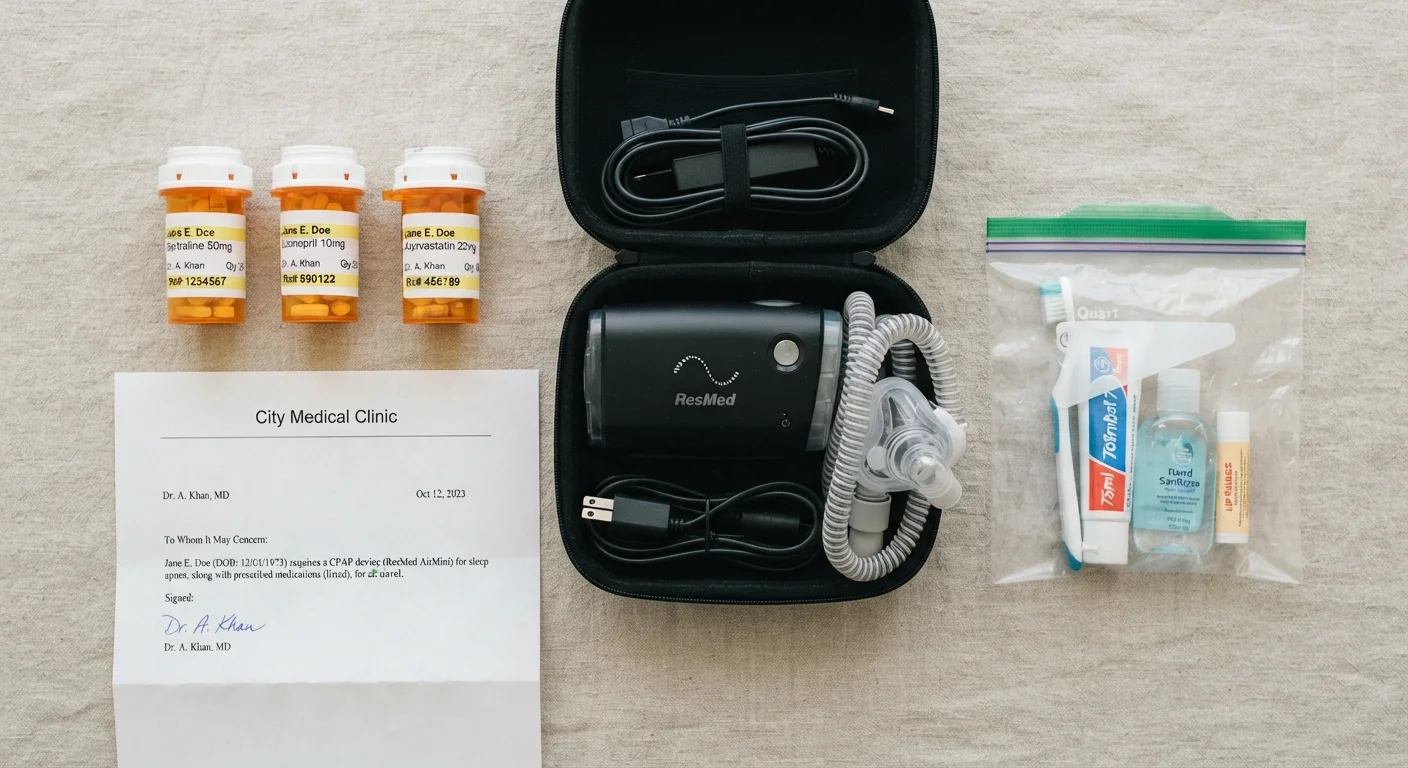
Carry all prescription medications in their original pharmacy-labeled containers. The label connects the drug to you by name and ties it to a licensed prescriber. A pharmacist can usually print a duplicate label or a travel letter on request.
For international trips, ask your doctor for a signed letter on clinic letterhead that states your name, the diagnosis being treated in general terms, the medication name, dosage, and that the drug is medically necessary. Some countries require this letter to be notarized or translated; check the destination country's embassy website for specifics.
If you carry a controlled substance, such as a Schedule II stimulant or opioid analgesic, carry the original prescription printout as well. US Customs and Border Protection and foreign customs officers may ask for it. The US Drug Enforcement Administration (DEA) and the State Department both publish guidance on traveling internationally with controlled substances; consult those official sources directly.
Airport security and liquid medications
TSA allows prescription medications in liquid form in quantities exceeding 3.4 oz (100 ml) in carry-on bags, provided they are declared at the checkpoint and screened separately from other liquids. You do not need to place them in a quart-sized bag. TSA officers may conduct additional screening, including opening containers to test them. Non-prescription liquid medications follow the same exception when medically necessary.
Gel packs and ice packs used to keep insulin or other temperature-sensitive medications cold are allowed in carry-on bags; declare them at the checkpoint. Frozen gel packs must be fully frozen when presented, or they may be treated as standard liquids.
For a broader look at how the 3-1-1 rule applies to other items in your bag, see common TSA liquids mistakes.
Medical devices and equipment
Devices such as CPAP machines, nebulizers, and insulin pumps are permitted in carry-on bags and do not count against your personal item or carry-on allowance under TSA policy, though individual airlines may apply their own rules for overhead bin space. Carry the device's documentation (prescription or physician's letter) in the same bag.
Needles and syringes are allowed when accompanied by the medication they are used to administer and, ideally, a labeled vial or pharmacy printout. Lancets and auto-injectors follow similar rules. When traveling internationally, verify that the destination country permits these items, since some have strict restrictions on sharps even for medical use.
If you need to pack a first-aid kit alongside prescription items, the travel first-aid kit packing guide covers what general guidance recommends including. For emergency contacts and document copies to keep with your medical paperwork, see emergency contacts and documents reference.
This article provides general travel information only and is not medical or legal advice. Rules and regulations change frequently and vary by destination. Always verify current requirements with TSA, your destination country's embassy or consulate, your airline, and a qualified healthcare provider before traveling with medications or medical equipment.