

| Recommended kit format | Waterproof, labeled, zipper pouch or hard case |
| Carry-on liquid limit (TSA) | 3.4 oz per container, one quart-sized bag (TSA 3-1-1 rule; verify current rules at TSA.gov) |
| Medications in carry-on | Generally exempt from 3-1-1, but must be declared at screening (TSA.gov) |
| Kit review frequency | Before each trip; replace expired or depleted items |
| Key guidance source | CDC Travelers' Health (wwwnc.cdc.gov/travel) (Centers for Disease Control and Prevention) |
| Prescription additions | Only with a provider's recommendation and valid prescription |
Why a travel first-aid kit matters
Minor injuries and sudden headaches do not wait for a convenient location. A pharmacy may be miles away, closed, or stocked with unfamiliar products when you need something fast. Carrying your own supplies means you can handle small problems without disrupting your itinerary or relying on local availability.
General health guidance from organizations like the Centers for Disease Control and Prevention (CDC) recommends that travelers assemble a basic first-aid kit before every trip, adjusting the contents for the destination, trip length, and any personal health needs. This article covers what that guidance typically includes. It is general health information, not medical advice. Consult a qualified healthcare professional about supplies specific to your health situation.
For a broader look at smart packing strategy, see the full traveler's packing resource.
| Recommended kit format | Waterproof, labeled, zipper pouch or hard case |
| Carry-on liquid limit (TSA) | 3.4 oz per container, one quart-sized bag (TSA 3-1-1 rule; verify current rules at TSA.gov) |
| Medications in carry-on | Generally exempt from 3-1-1, but must be declared at screening (TSA.gov) |
| Kit review frequency | Before each trip; replace expired or depleted items |
| Key guidance source | CDC Travelers' Health (wwwnc.cdc.gov/travel) (Centers for Disease Control and Prevention) |
| Prescription additions | Only with a provider's recommendation and valid prescription |
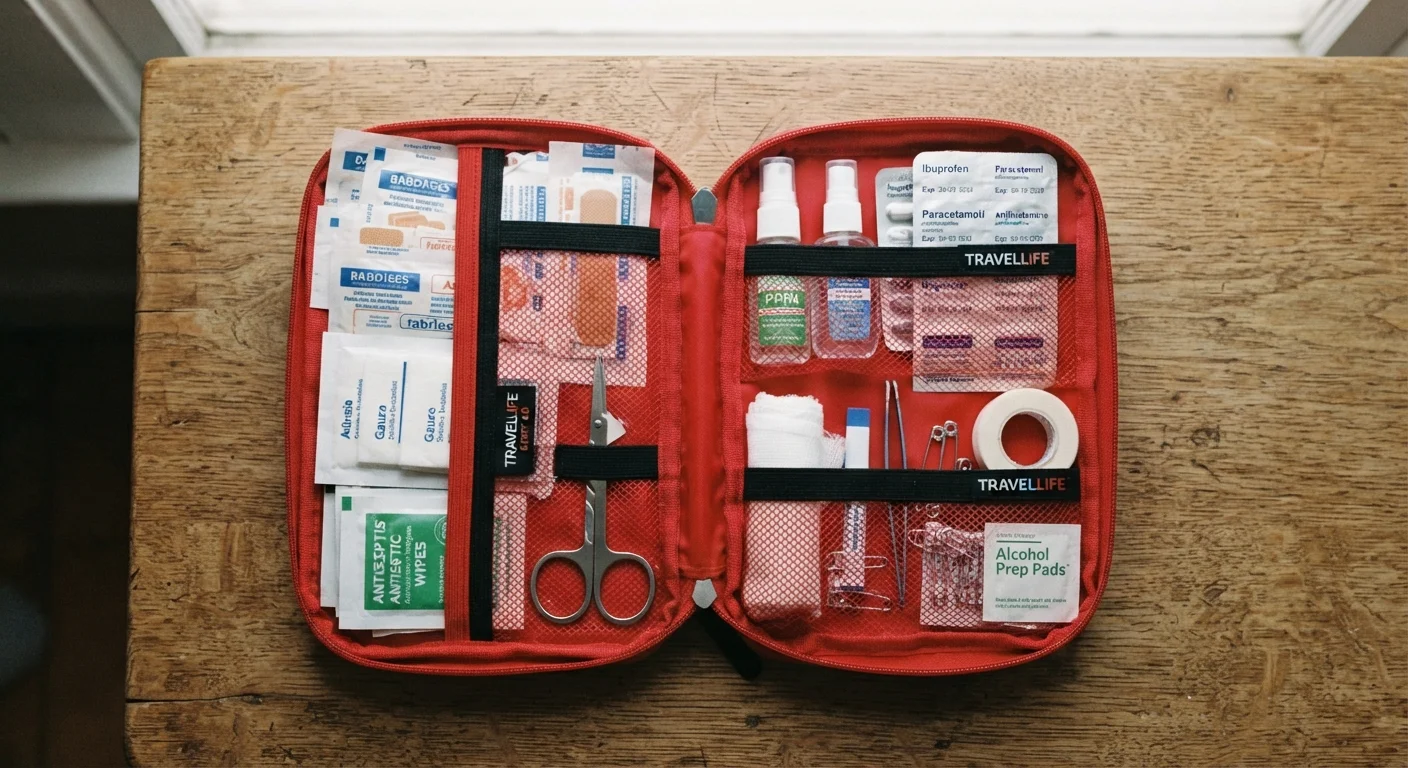
Core supplies most kits should include
General health guidance tends to organize first-aid kit contents into a few functional categories.
Wound care
- Adhesive bandages in several sizes
- Sterile gauze pads and a roll of gauze
- Medical tape
- Antiseptic wipes or a small bottle of antiseptic solution
- Antibiotic ointment (single-use packets travel well)
- Tweezers for splinter or debris removal
- Small, blunt-tip scissors
Pain and fever management
- Acetaminophen or ibuprofen (over-the-counter, for adults; dosing for children should be confirmed with a pediatrician)
- Antacid tablets
- Antihistamine for mild allergic reactions or hay fever
Gastrointestinal support
- Oral rehydration salts, especially for destinations with elevated risk of traveler's diarrhea
- An anti-diarrheal medication (such as loperamide)
Skin and eye care
- Sunscreen (SPF 30 or higher)
- Insect repellent appropriate for your destination
- Sterile eye wash or saline solution
- Moleskin or blister pads for foot care
If you travel with prescription medications or medical equipment, the considerations are different. See packing medications safely and legally for guidance on documentation, storage, and regulations.
Adapting your kit for different trip types
A weekend city trip and a two-week hiking itinerary call for different kits. The baseline supplies above suit most short, urban trips. Longer trips, remote destinations, or outdoor adventures typically require additional items.
For outdoor or backcountry travel, consider adding a SAM splint, a compression bandage, a blister treatment kit, and water purification tablets. The CDC Travelers' Health section and the Wilderness Medical Society both publish destination-specific and activity-specific guidance that goes beyond a standard kit.
Travelers with specific health conditions should speak with their doctor before departure. A healthcare provider can recommend whether to carry items like an epinephrine auto-injector, altitude sickness medication, or antimalarials. Never add prescription items to your kit without a provider's recommendation and a valid prescription.
Business travelers often have tighter packing constraints. The business trip packing guide covers how to fit essentials into carry-on-sized luggage, which applies to first-aid supplies too.
Oral rehydration salts (ORS)
A mixture of salts and sugars dissolved in water, used to replace fluids and electrolytes lost through diarrhea or vomiting. Pre-packaged ORS packets are compact and widely recommended for international travel kits.
SAM splint
A lightweight, moldable aluminum and foam splint used to immobilize injured limbs in the field. It is a common addition to backcountry and outdoor first-aid kits.
Antihistamine
A medication that reduces the body's response to allergens. In a travel kit, it addresses mild allergic reactions, hay fever, and sometimes motion sickness, depending on the specific product.
3-1-1 rule
The TSA guideline requiring that carry-on liquids be in containers of 3.4 ounces or less, all fitting in one quart-sized clear bag, with one such bag allowed per passenger. Prescription medications are generally exempt but should be declared.
Traveler's diarrhea
A gastrointestinal illness common among international travelers, typically caused by consuming contaminated food or water. Oral rehydration salts and anti-diarrheal medication are standard kit additions for destinations with higher risk.
Packing, storing, and traveling with your kit
Keep supplies in a clearly labeled, waterproof bag or hard case. A zipper pouch with clear compartments makes it easy to find items without emptying the whole bag. Check contents before each trip: expired medications and depleted supplies should be replaced.
If you carry liquids (antiseptic solution, eye wash), remember TSA's 3-1-1 rule for carry-on bags: liquids must be in containers of 3.4 ounces or less, packed in a single quart-sized clear bag. Medications are generally exempt from the 3-1-1 rule but must be declared at screening. Always verify current TSA rules directly with the TSA website before you fly, as rules can change.
When traveling internationally, check whether any items in your kit are restricted at your destination. Some countries regulate certain over-the-counter medications or antiseptics differently than the US does. Your destination country's embassy or a travel health clinic can clarify what is permissible to bring in.
For first-time travelers still building their overall packing system, the introduction to packing well explains how to think about what genuinely needs to come with you on any trip.
This article is for general informational purposes only and is not medical advice. Consult a qualified healthcare professional before making decisions about medications, medical supplies, or health needs specific to your situation or destination.