

Key Takeaways
- Carry physical and digital copies of every critical document before you leave home.
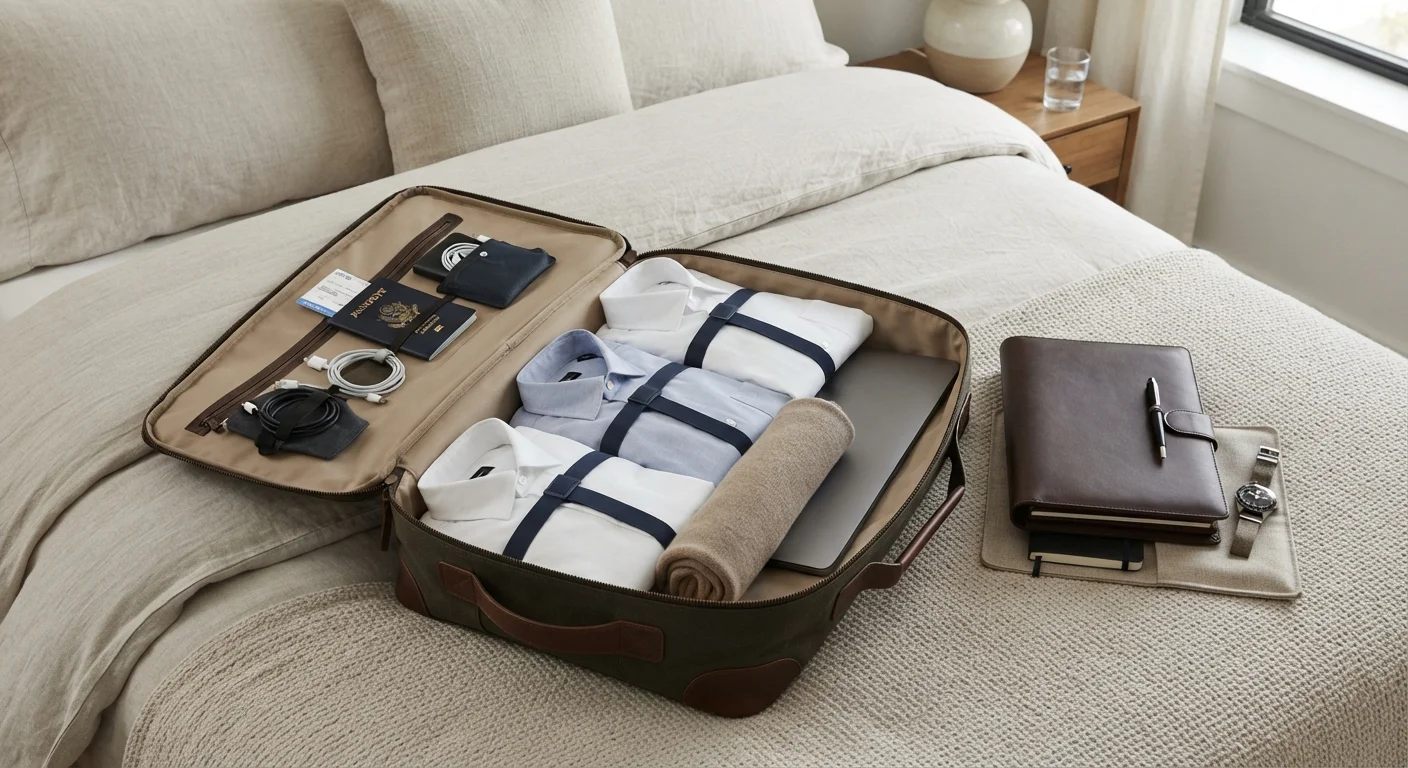
- A single carry-on with wrinkle-resistant clothing covers most two- to four-day business trips.
- Tech gear failures are more disruptive on business travel than on leisure trips, so redundancy matters.
- Verify entry requirements and any employer travel policies with official sources before departure.
- Packing cubes and a garment folder reduce wrinkles without adding weight.
Summary
22 items · 30 to 60 minutes
Why business travel packing is different
Leisure packing allows for rough edges. A wrinkled shirt or a missing adapter is inconvenient. On a business trip, the same problems can affect a presentation, a client meeting, or a flight connection. The goal here is not to pack everything, but to pack the right things so your focus stays on the work, not on what you forgot.
This checklist covers three categories: documents, technology, and wardrobe. Use it to audit your bag the night before departure. For a broader pre-departure review, see the complete pre-trip packing checklist that applies to any trip type.
Verify entry requirements before every trip
Visa rules, vaccination requirements, and border procedures vary by destination and change without much notice. Always check the U.S. Department of State travel website and your destination country's official immigration site before you depart. Your employer's travel policy may also specify required documentation for reimbursement or duty-of-care purposes.
The full packing checklist
Work through each group below. Items marked must are non-negotiable for most trips. Items marked should are strongly recommended. Items marked nice to have depend on your specific itinerary.
Documents
Technology
Wardrobe
If your trip includes a presentation, the workplace presentation checklist covers content and delivery prep that goes beyond what you pack.
A few packing decisions worth making deliberately
Carry-on vs. checked bag: for trips under four days, a carry-on is almost always the better choice. Checked luggage adds retrieval time, raises the risk of delays, and forces you to pack more conservatively with liquids. The guide to fitting a week's clothes into one bag shows how to make a carry-on work even for longer trips.
Clothing color discipline: packing in one or two neutral base colors means every garment pairs with every other, which reduces the number of items without reducing your options.
Document security: carry physical copies of your passport photo page, travel insurance details, and hotel confirmation in a separate compartment from your originals. For a full breakdown of what to carry in case of emergencies, see emergency contacts and documents every traveler should carry.
Traveling with prescription medication requires additional planning. General guidance on packing medications safely and legally is covered in the medication and medical supplies travel guide.
TSA rules apply to business gear too
Laptops and large electronics must typically come out of your bag at U.S. security checkpoints. Keep them in an accessible outer compartment rather than buried under clothing. Liquids in carry-ons still follow the standard 3-1-1 rule, which affects toiletries and any liquid-format medications. Confirm current Transportation Security Administration guidelines at tsa.gov before travel.