

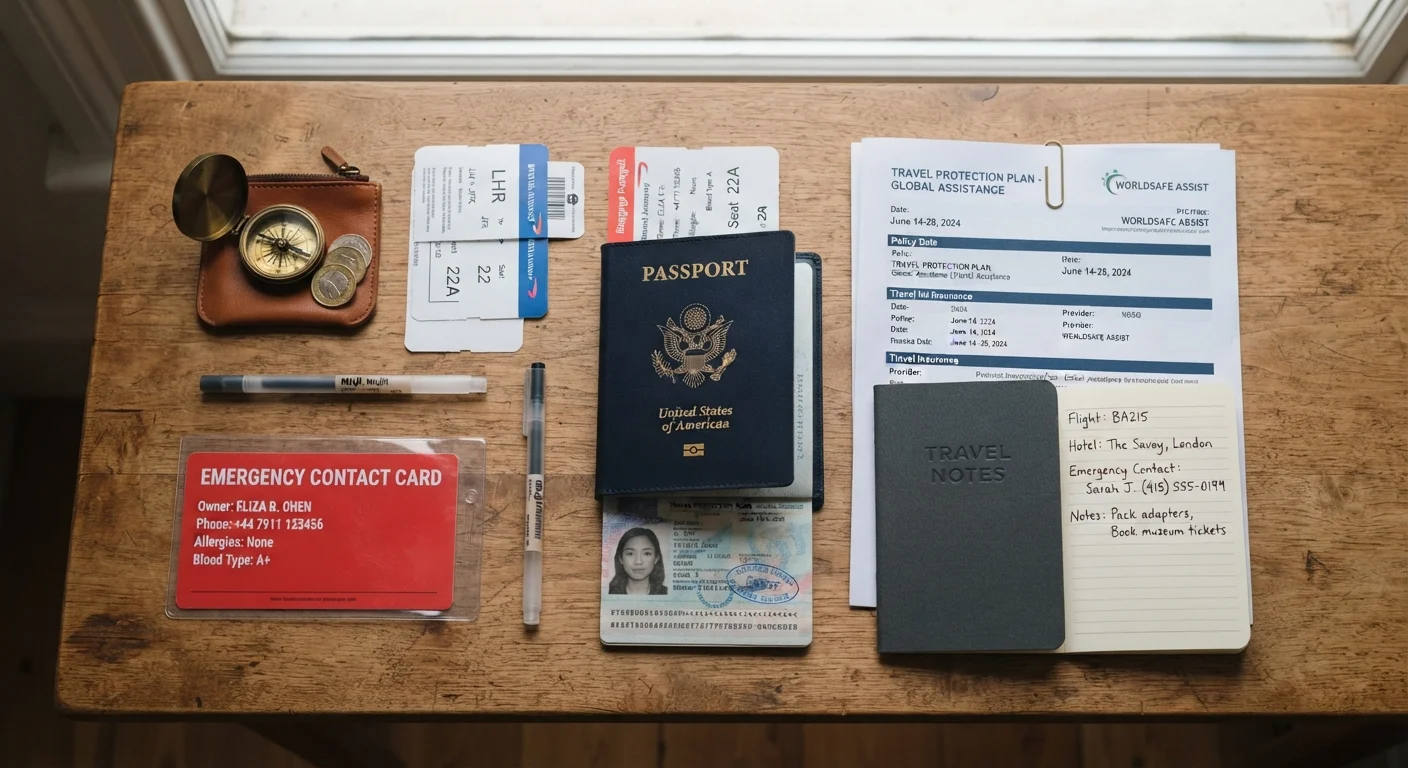
Why a physical document backup still matters
Digital records on your phone are convenient until your phone is stolen, the battery dies, or you lose cell service in an unfamiliar country. A printed or handwritten backup of your most important contacts and document numbers costs almost nothing and can get you out of serious trouble fast.
Before any trip, spend 30 minutes assembling a small emergency reference card and a set of photocopies. Store originals securely (a hotel safe or a hidden money belt), keep photocopies in a separate bag, and leave a third set with someone trusted at home. This approach is part of a broader pre-departure habit covered in the travel safety preparation checklist.
Documents to carry originals of
Certain documents must travel with you as originals because copies are not accepted at borders or by airlines.
- Passport (valid for at least six months beyond your return date in most destinations; verify entry requirements with official government sources before departure)
- Visa or entry permits, if required by your destination
- Government-issued photo ID (a US driver's license for domestic travel)
- Travel insurance policy summary, including the 24-hour emergency assistance number
- Any required vaccination certificates or health documentation (check official destination requirements close to departure, as rules change)
For travelers carrying prescription medication, documentation requirements vary by country. The guide to traveling with medication explains what to prepare and why verifying rules with official sources matters.
What to photocopy or photograph
Make two physical copies and one digital copy stored in a cloud service or emailed to yourself for each of the following:
- Passport photo page and any visas
- Travel insurance card and policy number
- Credit and debit cards (front only; record the issuer's international collect number from the back separately)
- Driver's license
- Flight itineraries and hotel confirmation numbers
- Any prescription medication labels with the prescribing doctor's contact information
A complete packing run-through using the pre-trip packing checklist is a good prompt to gather these copies before you pack your bag.
Emergency contact numbers to write down
Do not rely on memory or a locked phone for these numbers. Write them on a physical card that fits in your wallet.
- US Embassy or Consulate in your destination country. Find the official number at travel.state.gov before you leave.
- Travel insurance emergency line. Most policies include a 24-hour collect number for medical emergencies, evacuation, and trip interruption; this number is different from the general customer service line.
- Card issuers' international collect numbers. Visa, Mastercard, and individual banks each publish numbers to call collect from abroad to report a lost or stolen card. Record the number from the back of each card you carry.
- Local emergency number at your destination. It is not always 911. Research the equivalent police, fire, and ambulance numbers for each country on your itinerary.
- Your accommodation's front desk number, including the country code.
- A trusted contact at home who has access to your photocopied documents and knows your itinerary.
Business travelers who carry additional company documents and tech should also review the business trip packing guide for document-specific prep steps.
Enrolling in STEP before international travel
The US Department of State's Smart Traveler Enrollment Program (STEP) is a free service that registers your trip with the nearest US Embassy or Consulate. Enrollment lets the Embassy contact you in a security emergency and helps family members reach you if communication is disrupted. You can enroll at step.state.gov. This takes about five minutes and is worth doing for any international trip.
Combine this with the document prep above and the pre-trip planning checklist to cover all your bases before departure.
This article provides general travel information only. Entry requirements, visa rules, health documentation requirements, and emergency procedures vary by destination and change over time. Always verify current requirements with official government and embassy sources before you travel.