

Travel Tips

Before You Leave: The Travel Safety Preparation Checklist

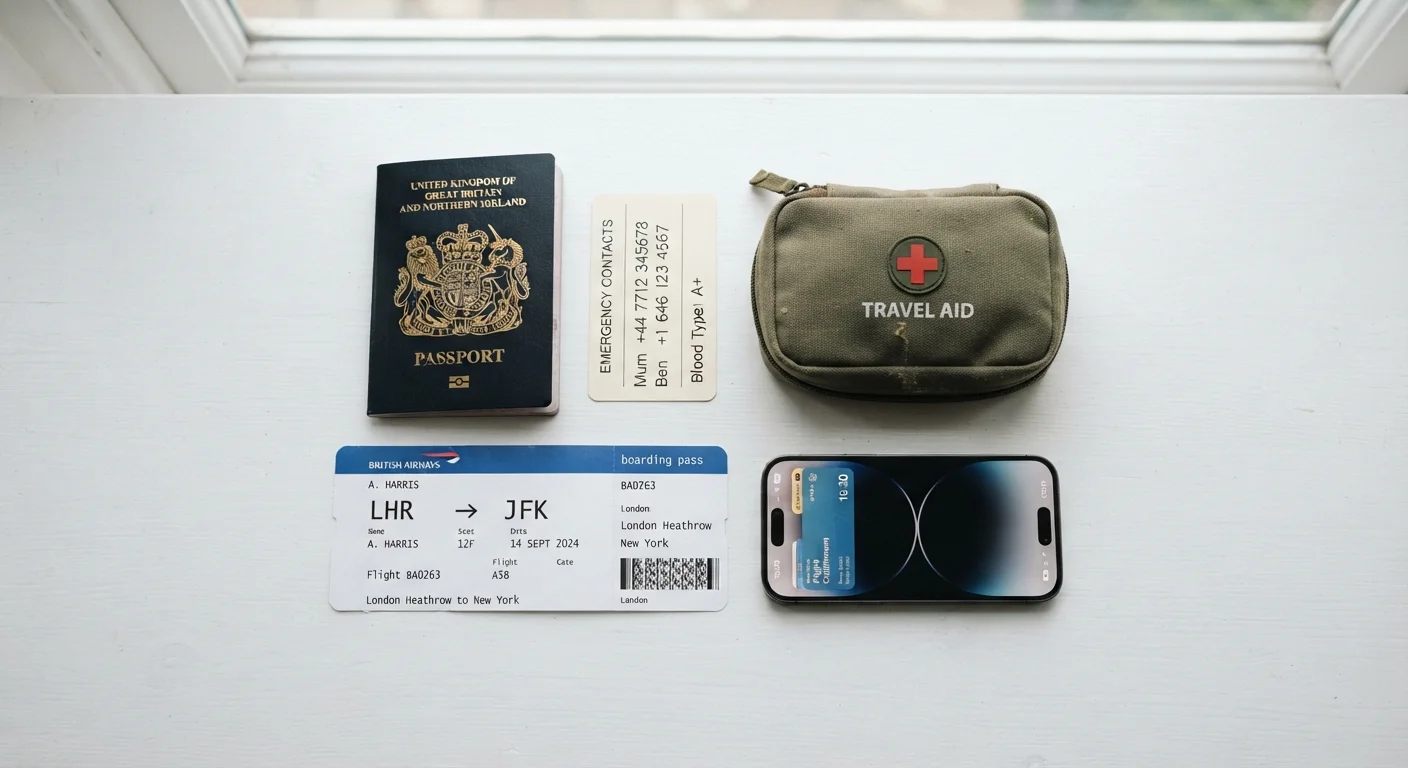
Passport, boarding pass, emergency contact card, first-aid kit, and phone laid out on a white surface.

Key Takeaways

  • Carry physical and digital copies of every critical document before departing.
  • Register with the U.S. State Department STEP program when traveling internationally.
  • Verify your health coverage applies abroad and understand the gaps before you go.
  • Secure your devices with VPN access, two-factor authentication, and offline map downloads.
  • Leave a complete itinerary and emergency contacts with a trusted person at home.
  • Check entry requirements, travel advisories, and vaccination recommendations well in advance.
45–90 min

Summary

20 items · 45 to 90 minutes

Why this checklist matters

Most travel problems are not unpredictable. Lost documents, missed medication, compromised bank accounts, and unreachable family members are common, and nearly every one of them has a straightforward fix that works only if you act before you leave. This checklist covers four preparation areas: documents and identity, health and insurance, digital security, and emergency communication. Work through each group at least 72 hours before departure so you have time to act on anything you find.

For families traveling with children, the planning steps below apply, but additional considerations around supervision, medical consent, and child identification documents are worth reviewing separately. See safety planning for families with children for a dedicated overview.

Verify requirements from official sources

Entry requirements, visa rules, and health mandates change. Always check the U.S. Department of State country information page and the CDC destination page for your specific destination before you travel. Do not rely on third-party summaries as your sole source, since those may not reflect current conditions.

The preparation checklist

Work through each group in order. Mark items complete only when the action is fully done, not just planned.

Documents and identity

Make two physical copies and one secure digital copy of your passport, driver's license, visa, and any travel insurance policy. Store physical copies separately from the originals. Must
Check that your passport is valid for at least six months beyond your return date, and confirm whether your destination requires a visa before arrival. Must
Register your trip with the U.S. State Department's Smart Traveler Enrollment Program (STEP) at step.state.gov so the nearest embassy can reach you in an emergency. Must
Write down your credit card customer service numbers (the international collect-call numbers, not just the 800 numbers) and store them apart from your wallet. Should

Health and insurance

Confirm whether your health insurance covers medical care abroad and, if not, review what a supplemental travel medical or evacuation policy would cover before your departure date. Must
Carry a supply of any prescription medications sufficient for the full trip plus a few extra days, in original labeled containers, along with a written prescription from your doctor. Must
Check the U.S. Centers for Disease Control and Prevention (CDC) destination page for any vaccination recommendations or requirements, and schedule any needed appointments well in advance. Must
Pack a basic first-aid kit including adhesive bandages, antiseptic wipes, blister care, any OTC medications you rely on, and a list of your allergies and blood type. Should
If you have a chronic condition or require regular medical monitoring, ask your doctor for a brief medical summary letter in English and, where possible, the local language of your destination. Should

Digital security

Enable two-factor authentication on your email, banking, and travel booking accounts before you leave, and confirm you can receive codes via an app rather than only by SMS. Must
Set up a VPN on your phone and laptop so you can use public Wi-Fi without exposing your credentials or browsing. Should
Download offline maps for your destination through a mapping app so you can navigate without mobile data if your connection drops. Should
Turn on automatic device lock and, for international travel, notify your bank and credit card providers of your travel dates to avoid card freezes. Must
Store digital copies of your key documents in a password-protected cloud folder you can access from any device. Should

Emergency communication

Leave a complete itinerary, including accommodation names, addresses, phone numbers, and a daily travel schedule, with at least one trusted contact at home. Must
Save the local emergency number for each country you visit (not all countries use 911) and the nearest U.S. embassy or consulate phone number in your phone contacts. Must
Agree on a regular check-in schedule with your home contact and decide in advance what steps they should take if they do not hear from you. Should
If traveling internationally, confirm your phone plan includes calls and data abroad or purchase a local SIM or international data plan before you need it. Should
Write your home contact's name and phone number on a card you keep in your bag separately from your phone, in case your phone is lost or out of battery. Should
Photograph the contact information and addresses for your accommodations so you can show them to a driver or local even without mobile data. Nice to have

For a broader look at what to pack alongside these safety items, a complete pre-trip packing checklist covers the full range of travel essentials.

Using this checklist with your full trip plan

Safety preparation does not sit separate from the rest of your trip logistics. Your itinerary copy, accommodation addresses, and transportation confirmations are both planning documents and emergency reference materials. Keeping them in one organized file, shared with a contact at home, means anyone helping you in a crisis has the full picture.

The pre-trip planning checklist covers bookings, home prep, and confirmations that pair directly with the safety steps here. For the document and contact side in more detail, emergency contacts and documents every traveler should carry is a quick-reference companion to this list.

Health preparation has its own depth. Vaccination timelines, prescription requirements for international travel, and assembling a first-aid kit each deserve attention before the day of departure. what general health precautions look like before a trip walks through those steps in full.

This article provides general travel safety information for educational purposes. Verify all entry requirements, travel advisories, and health recommendations with official U.S. government sources and qualified professionals before traveling.

Travel Tips Editorial Team is the collective byline for our editorial team and contributor network. Articles published under this byline or an editorial pen name are researched, written, and reviewed according to our editorial standards for clarity, consistency, and independence before publication.

View all articles by Travel Tips Editorial Team →
Disclaimer: The content on this site is for informational purposes only and is not a substitute for professional advice. Always consult a qualified professional for guidance specific to your situation.