

Key Takeaways
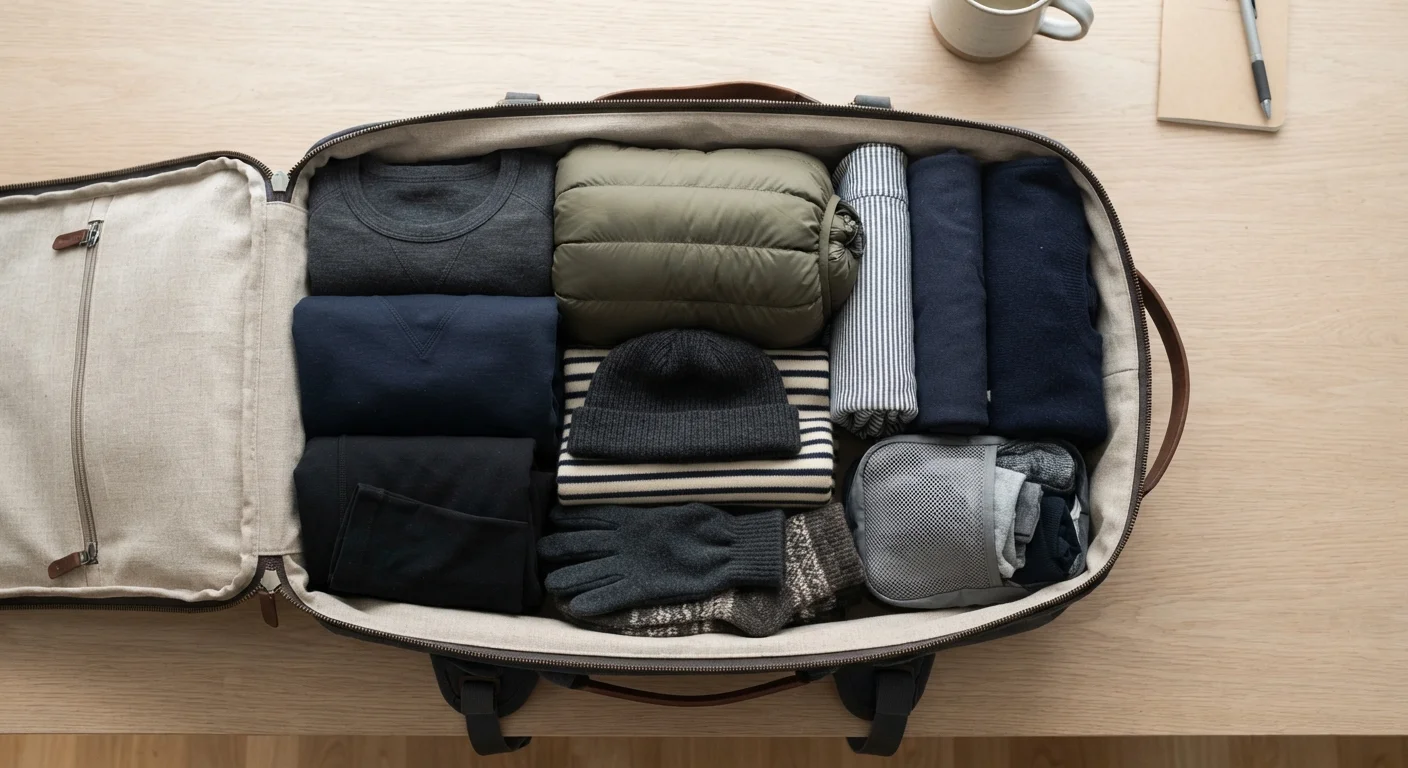
- Layering with lightweight base, mid, and outer pieces replaces bulky single-purpose cold-weather garments.
- Merino wool and synthetic insulation fabrics offer warmth at a fraction of the weight and volume of cotton.
- Accessories like hats, gloves, and scarves fill warmth gaps without significant bag space.
- Choosing one neutral color palette lets fewer pieces cover more outfit combinations.
- A packable down or synthetic jacket compresses to near-nothing and handles a wide temperature range.
Why cold-weather packing goes wrong
Most travelers overpack for cold trips because they think warmth requires volume. They roll in a thick wool sweater, a heavy fleece, a down coat, and a pair of jeans for each day, and suddenly a week-long trip fills a checked bag before toiletries are even added.
The real problem is single-purpose clothing. A bulky cable-knit sweater is warm, but it does only one job. A heavy parka does two: blocks wind and traps heat. A lightweight layering system, by contrast, does all of that with pieces that each weigh less and compress flat. Understanding this shift is the starting point for packing cold weather gear without bulk.
For a broader look at fitting more into less space, see the full traveler's packing resource which covers bag selection and general packing systems.
Build a three-layer system instead of packing thick garments
A layering system works because each layer handles a specific job: the base layer moves moisture away from skin, the mid layer traps warm air close to the body, and the outer layer blocks wind and precipitation. You can add or remove pieces as conditions change, which means fewer total garments for a wider range of temperatures.
Base layer: Look for a lightweight merino wool or synthetic moisture-wicking top and bottom. Merino regulates temperature well, resists odor longer than cotton, and packs into a small roll. One or two base layer sets usually cover a full week because they can be hand-washed and dried overnight.
Mid layer: A fleece or lightweight down vest does the insulating work. A 100-weight fleece jacket weighs under a pound and compresses to the size of a water bottle. A down vest adds core warmth without restricting arm movement and folds into its own pocket.
Outer layer: A packable shell, either waterproof or wind-resistant depending on your destination, goes over both layers in cold or wet conditions. Many packable shells weigh under 10 ounces and stuff into a palm-sized pouch.
Choose a packable synthetic or down jacket as your primary outer layer
A jacket that compresses into its own pocket gives you serious warmth without taking up fixed bag space. Hung on a hook or stuffed in a day bag, it adjusts to your day without adding fixed bulk to your luggage.
Pack merino wool base layers instead of cotton
Merino wool regulates temperature across a wider range than cotton, wicks moisture effectively, and resists odor long enough to wear multiple days before washing. This cuts the number of pieces you need to pack.
Use compression packing cubes for mid layers and base layers
Fleece and synthetic insulation contain a lot of air when loosely folded. Compression cubes squeeze that air out, reducing the volume of your mid layers by roughly half without affecting how they perform when worn.
Wear your bulkiest layer on travel days
The coat, boots, and heaviest mid layer do not need to fit in your bag if you are wearing them. Putting them on during flights or long transit legs keeps bag weight and volume lower without leaving anything behind.
Limit shoes to two pairs maximum
Shoes are the single heaviest and least compressible category in any bag. Two pairs, one for outdoor cold conditions and one lighter option for interiors, cover nearly every cold-weather scenario without duplicating function.
Fabric choices that change the math
Cotton is comfortable at home but performs poorly for travel in cold weather. It absorbs moisture, dries slowly, and loses its insulating ability when damp. Swapping cotton for merino wool or synthetic fabrics (polyester, nylon, or blends) cuts weight, dries faster after washing, and typically compresses better.
For pants, a slim-fit wool-blend trouser or a lightweight hiking pant works in cities and on trails. Either can be layered over a base layer bottom for colder days. Avoid heavy denim entirely. One pair of these pants can wear for three to four days before needing a wash, which reduces the number of pairs you need.
Accessories deserve attention too. A merino beanie, thin liner gloves, and a lightweight neck gaiter together weigh less than a pound and tuck into a jacket pocket or the top of a bag. They add meaningful warmth without consuming bag space the way a thick scarf or heavy mittens would.
If your cold-weather destination also involves outdoor activity, the gear selection guide for outdoor adventures covers multi-use gear choices in more detail.
Color coordination reduces total pieces
Pack a single neutral color palette: two or three colors that all work together. Navy, gray, and black, for example, let every top and bottom combine into a different outfit. Add one or two accent accessories if variety matters to you. This approach means you carry fewer individual pieces without repeating the same exact look each day.
The same logic applies to shoes. Cold weather usually calls for one pair of waterproof walking shoes or boots that handle a range of activities, plus one compact pair of lighter shoes for indoor settings. Two pairs are almost always enough.
If you are fitting a cold-weather work trip into a carry-on, the business trip packing guide addresses how to integrate professional clothing into a small bag, which pairs well with the layering approach here.
For those fitting an entire week into one bag, the week-in-one-bag guide provides a practical step-by-step framework that complements these cold-weather strategies.