

Key Takeaways
- A lien means a lender has a legal interest in the vehicle until the underlying debt is paid in full.
- Buying a car with an active lien requires extra steps to ensure the lien is released before or at the time of sale.
- Full coverage insurance is typically required by lenders while a lien is active on a vehicle.
- The lien release document is what converts a car to a clean title, and you must record it with your state DMV.
- Private-party sales involving liens carry more risk than dealer transactions and require careful handling of funds.
Lien on a car title
A lien is a legal claim that a lender holds against a vehicle until the loan used to purchase or refinance it is fully paid off. When a lien exists, the lender's name appears on the title alongside the owner's name. The vehicle cannot be sold or transferred cleanly until the lien is resolved.
In most U.S. states, the lienholder is listed directly on the certificate of title; in electronic title states, the lender may hold the title record digitally with the DMV until the debt is satisfied.
What a lien means on a vehicle title
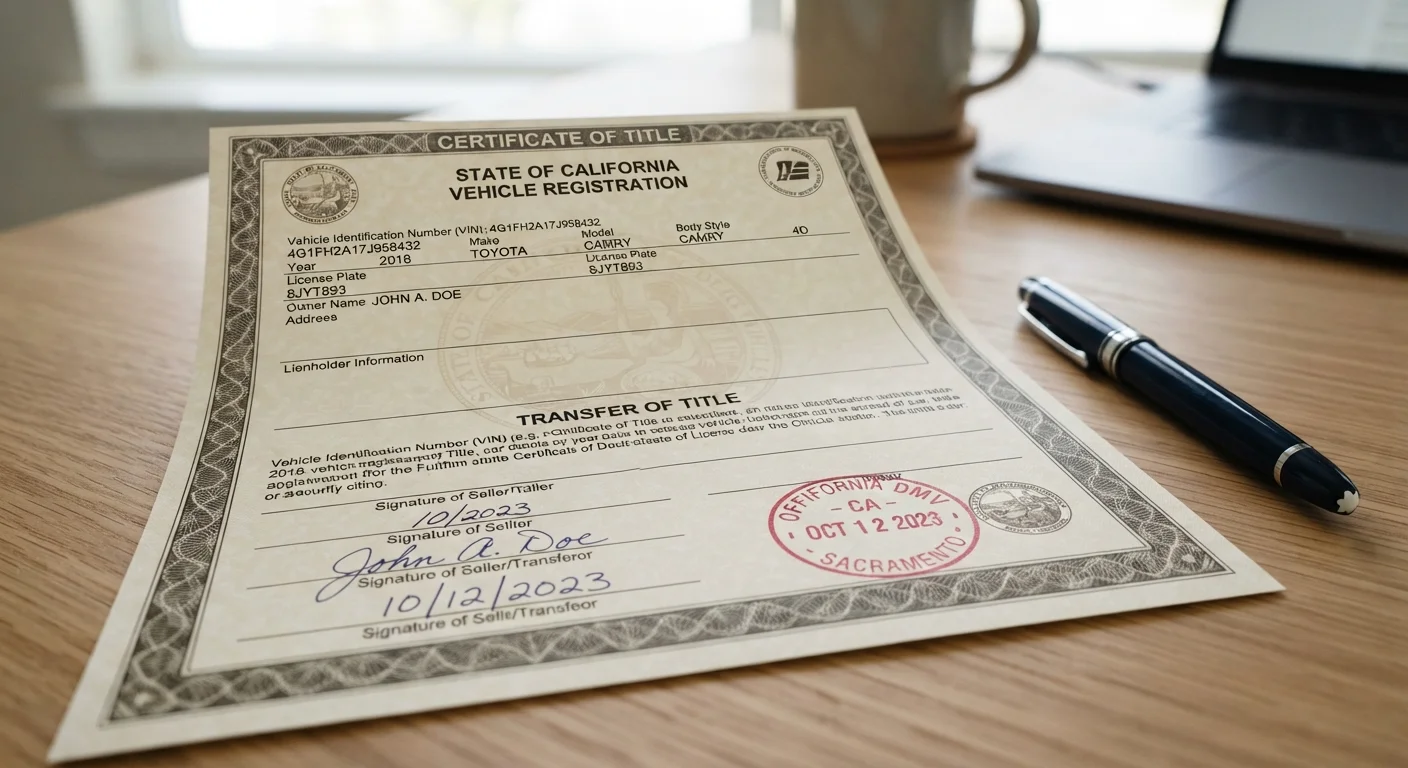
When someone finances a car purchase, the lender does not simply hand over money and walk away. The lender becomes a lienholder, meaning it holds a security interest in the vehicle until the borrower repays the loan. This interest is recorded on the title, the legal document that establishes who owns the car.
A title showing a lienholder is sometimes called an "encumbered title." The borrower is listed as the registered owner, but the lender's name also appears, signaling that full legal transfer of the asset is contingent on paying off the debt. Until that happens, the owner cannot sell the car freely or transfer the title without involving the lender.
This arrangement protects lenders: if a borrower stops paying, the lender has legal grounds to repossess the vehicle because its interest is recorded on the public record. From the owner's perspective, the lien is a reminder that the car is collateral, not a free-and-clear asset.
Always read the full title before signing
Before any sale, inspect the physical title document or request a DMV title status report by VIN. Look for any lender name listed alongside the owner's. If a lienholder is shown, confirm the payoff process in writing before money changes hands.
How liens affect a private sale
Buying a car with an active lien from a private seller involves more complexity than a straightforward title transfer. The core issue is that the seller's lender must be paid before a clean title can be issued to you.
There are two common ways to handle this. In the first, the seller pays off the loan before the sale, receives the lien release from the lender, and then transfers a clean title to you. In the second, you and the seller agree that part of the purchase price goes directly to the lender at closing to satisfy the payoff amount, and the release is issued shortly after.
The riskier path is paying the seller in full and trusting them to forward the funds to their lender. If they do not, the lien stays on the title and follows the vehicle to you. In a worst case, the lender could repossess a car you have already paid for, leaving you to pursue the seller for recovery.
For guidance on what happens once the lien is cleared, see how the title transfer process works and what documents you will need.
Liens, insurance, and what lenders require
An active lien changes your insurance obligations. Lenders require borrowers to carry comprehensive and collision coverage, not just state-minimum liability insurance, for the life of the loan. This requirement exists because the lender's collateral is the car itself, and the lender needs that collateral protected against damage or total loss.
If you reduce your coverage below what the loan agreement requires, the lender can purchase force-placed insurance on your behalf and bill you for it. Force-placed policies are typically more expensive than policies you would buy on your own and may cover only the lender's interest rather than yours.
To understand the trade-offs between coverage types in practical terms, this overview of liability versus full coverage walks through when each level makes sense.
~85%
New vehicles financed at purchase in the U.S.
Federal Reserve data has consistently shown that the large majority of new vehicle purchases involve financing, meaning most new-car titles carry an active lien at the time of sale.
10-30 days
Typical lender timeline to issue a lien release
Most auto lenders process lien releases within this window after final loan payoff, though state DMV processing times vary separately.
Getting a lien released and updating your title
Once a loan is paid off, the lender must issue a lien release. This is a written statement confirming the debt is satisfied and the lender's claim on the vehicle is removed. Without it, the title still shows the lender's name.
Most lenders send the lien release by mail within 10 to 30 days of the final payment clearing. Some states use electronic title systems where the lender notifies the DMV directly, and the DMV updates the record without mailing a paper document. Either way, confirm with your lender what their process is so you know what to expect.
Once you have the lien release, submit it to your state DMV along with the current title and any required fees. The DMV will issue a new title showing you as the sole owner with no lien recorded. Keep both the lien release and the updated title in a secure place.
After the title is clear, make sure your registration stays current as well. Deadlines and fees for vehicle registration vary by state and missing them adds penalties.
Verifying lien status before you buy
Before committing to any vehicle purchase, check whether a lien is recorded on the title. The title document itself is the primary source: review it carefully for any lender or lienholder name listed alongside the seller's.
A vehicle history report using the VIN can surface lien and title information as well. Many state DMVs also offer a title status lookup by VIN, which shows whether the title is clear or encumbered. Asking the seller for a current payoff statement from their lender is another practical step: it shows the exact balance due and who holds the lien.
If you are financing your own purchase, your lender will typically require a clear title or coordinate lien payoff as part of the closing process. In a dealer transaction, the dealership usually handles the existing lien payoff, but it is still worth confirming the title status and requesting documentation that the prior lien was released.
For a broader picture of the administrative responsibilities that come with ownership from day one, this guide covers insurance, registration, and upkeep together.