

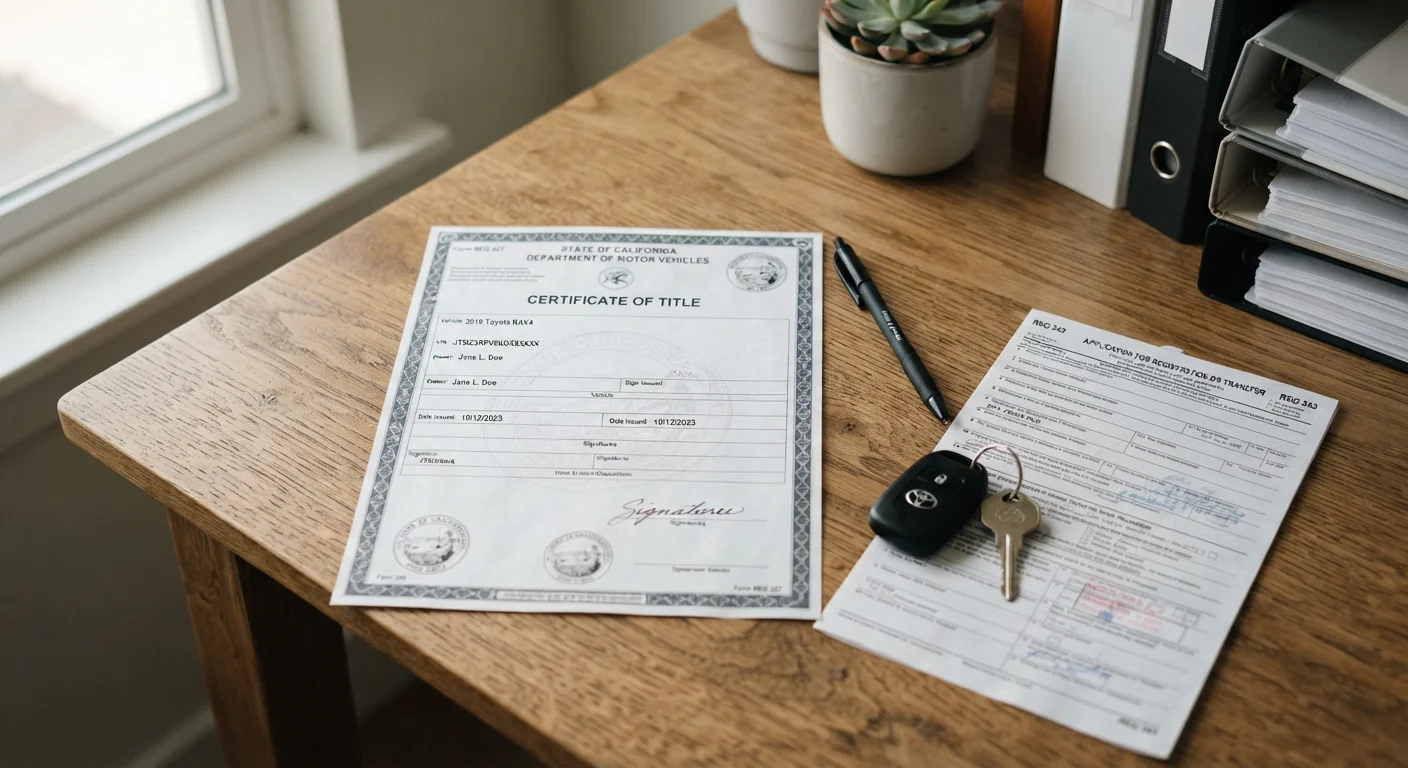
Key Takeaways
- Both buyer and seller must sign the title for a transfer to be legally valid.
- Most states require title transfer within 10 to 30 days of the sale date.
- An odometer disclosure and bill of sale are commonly required alongside the signed title.
- Lien holders must release their interest before a clean title can transfer to a new owner.
- Transfer fees vary by state but typically range from $15 to $100 or more.
What you will need
Why transferring the title matters
The car title is the legal document that establishes who owns a vehicle. Until a title is properly transferred into your name, you do not have full legal ownership, regardless of whether you have the keys or have been driving the car for weeks. That gap in documentation can create problems with insurance coverage, resale, and liability if the vehicle is involved in an accident or a legal dispute.
Sellers face equal exposure. If a seller does not complete the transfer process and the buyer later accumulates unpaid tolls, parking tickets, or is involved in an accident, the registered owner of record can be drawn into proceedings. Completing the transfer protects both parties.
For anyone managing the broader financial side of vehicle ownership, see strategies for controlling car ownership costs to understand how administrative steps like title transfer fit into the larger picture.
What you need before you start
Gather these items before visiting your state's Department of Motor Vehicles (DMV) or equivalent agency. Missing even one document typically means a return trip.
What you will need
State DMV title transfer form
The official application form required by your state's motor vehicle agency to record the ownership change.
Bill of sale
Documents the terms of the sale and protects both buyer and seller in case of a dispute.
Odometer disclosure statement
Records the vehicle's mileage at the time of sale as required by federal law for most vehicles.
Lien release letter
Confirms that a previous lender has released its financial interest in the vehicle, clearing the title.
Step-by-step transfer process
The steps below reflect the general process across most US states. Individual states vary on form names, fee amounts, and specific deadlines, so confirm the exact requirements with your state's motor vehicle agency before you go.
Verify the title is clean and matches the seller
Before money changes hands, confirm that the seller's name on the title matches their government-issued ID exactly. Check the title for any lienholder listed in the designated field. If a bank or finance company is listed, the seller must obtain a lien release before the transfer can proceed. Also check the Vehicle Identification Number (VIN) on the title against the VIN plate on the dashboard and the door jamb sticker to confirm they match.
Complete the title assignment section
The back of most titles includes an assignment section for private-party sales. The seller fills in the buyer's full legal name, the sale price, the sale date, and the current odometer reading. All recorded owners on the title must sign. The buyer also signs where indicated. Use a ballpoint pen and print clearly. Do not leave any required field blank, as the DMV will reject an incomplete title.
Prepare supporting documents
Write up a bill of sale that includes the vehicle year, make, model, VIN, sale price, sale date, and the full names and addresses of both buyer and seller. Both parties should sign it and retain a copy. Complete a separate odometer disclosure form if your state requires one outside of the title itself. Attach any lien release documentation if applicable.
Submit to your state's motor vehicle agency
Bring the completed title, bill of sale, odometer disclosure, your photo ID, proof of insurance, and payment for fees to your local DMV office or submit through your state's online portal if that option is available. Some states allow title transfers by mail. The agency will process the transfer and issue a new title in the buyer's name, typically within two to six weeks.
Confirm receipt of the new title
Once the new title arrives by mail, verify that your name is spelled correctly, the VIN matches, and there are no lienholder entries unless you financed the purchase. If you financed, your lender's name will appear as the lienholder and the lender will hold the physical title until the loan is paid off. Store the title in a secure location separate from the vehicle.
Once the title transfer is complete, registration is your next immediate obligation. Registering a car after purchase carries its own deadlines and fees, and missing them adds penalties.
Common problems and how to avoid them
Title transfers go wrong in predictable ways. A seller who has an outstanding auto loan cannot legally transfer a clean title until the lender releases its lien. If you are buying a vehicle with a lien still recorded on the title, read what a lienholder on a title means for you before completing any transaction.
Other frequent issues include missing signatures (the title must be signed by all recorded owners), incorrect odometer readings, and titles that have been altered or contain correction fluid. Many states reject altered titles outright and require a court-ordered replacement, which takes weeks. If you receive a title that looks tampered with, stop and contact the DMV before proceeding.
Private-party sales where the seller's name does not match the title are also a red flag. Ask the seller to correct the title through the DMV in their name first before you agree to any purchase. For first-time buyers managing all of these responsibilities at once, the guide on car ownership from day one covers registration, insurance, and upkeep in a single walkthrough.