

Key Takeaways
- Insurance must be active before you drive the car off the lot in most states.
- You typically have a short window of 15 to 30 days to register a newly purchased vehicle.
- A car title is the legal proof of ownership; errors on it can delay transfers and sales.
- Routine maintenance like oil changes and tire rotations prevents far more expensive repairs.
- Total ownership costs go well beyond the car payment and should be budgeted in advance.
Start here
What happens immediately after you take ownership
Next
Understanding auto insurance basics
Then
Registering your vehicle and handling the title
Build your routine
Ongoing maintenance you cannot skip
Plan ahead
Budgeting for the real cost of ownership
What happens immediately after you take ownership
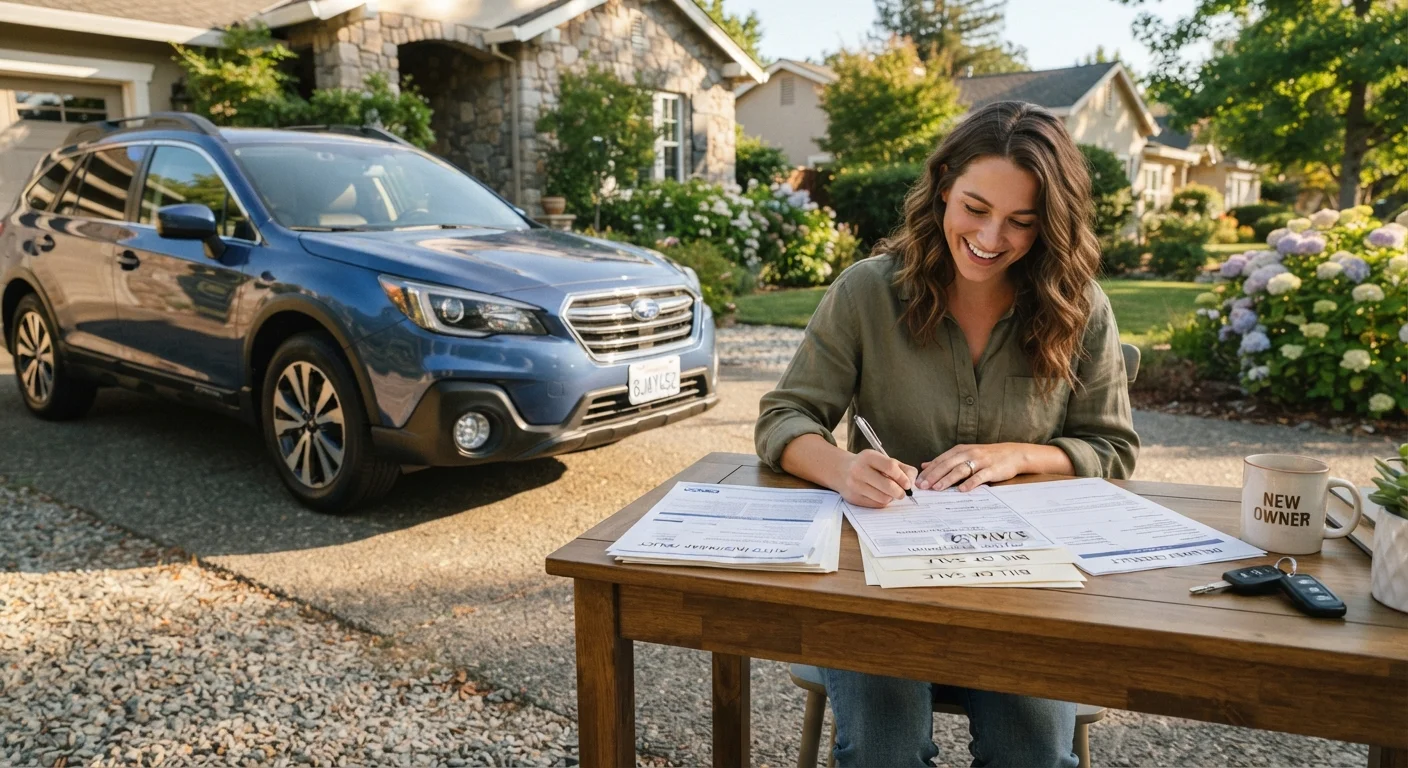
The moment a vehicle title changes hands, a short but firm set of legal obligations begins. Most states require you to have valid insurance before the car moves, register the vehicle within a set number of days, and keep all documentation in the car from that point forward.
Collect and organize these documents right away: the signed title or dealer paperwork, the bill of sale, any loan agreement, and the temporary operating permit if the dealer issued one. Store copies digitally and keep originals in a secure place at home, not in the glove box, where they could be lost in a theft.
If the car came with a loan, the lender holds an interest in the title until the debt is paid off. This is called a lien. Understanding how that affects your ownership rights and insurance requirements matters from the start. See our article on what a lienholder on a title means for you for a full breakdown.
Liability coverage
Auto insurance that pays for injuries or property damage you cause to other people in an accident. It does not cover damage to your own vehicle.
Lien
A lender's legal claim against a vehicle used as collateral for a loan. The lien is removed from the title once the loan is fully paid off.
Vehicle title
The official document issued by the state that identifies the legal owner of a vehicle. It must be transferred whenever the car is sold.
Deductible
The amount you agree to pay out of pocket on an insurance claim before your insurer covers the remainder. A higher deductible typically lowers your monthly premium.
Registration
A state-issued authorization that allows you to legally drive a vehicle on public roads, renewed periodically and tied to license plates.
Comprehensive coverage
An optional insurance coverage that pays for damage to your vehicle caused by events other than collisions, such as theft, hail, or flood.
Understanding auto insurance basics
Auto insurance is not a single product. It is a package of coverages, and each state sets a minimum requirement for what you must carry. Most states require liability coverage, which pays for injuries or property damage you cause to others. It does not pay for your own vehicle damage.
Beyond the state minimum, drivers can add collision coverage, comprehensive coverage, uninsured motorist protection, and medical payments coverage. If you financed the car, your lender will almost certainly require both collision and comprehensive until the loan is paid off.
Several factors affect your premium: your driving history, the vehicle's make, model, and age, where you garage the car, and the deductible amounts you choose. A higher deductible lowers your monthly premium but means you pay more out of pocket before insurance covers a claim.
For general guidance on how insurance fits into your broader financial picture, the Insurance and Credit hub covers the foundational concepts. Coverage terms, exclusions, and premiums vary by provider and by state, so read any policy document carefully before signing, and consult a licensed insurance agent for advice tailored to your situation.
Registering your vehicle and handling the title
Registration makes your vehicle legal to operate on public roads in your state. You file with your state's Department of Motor Vehicles (DMV) or equivalent agency, pay a registration fee, and receive license plates and a registration card. Most states require renewal annually, sometimes tied to a vehicle safety or emissions inspection.
The title is a separate document that proves legal ownership. When you buy from a dealer, they typically handle the title transfer paperwork. In a private sale, both buyer and seller must sign the title, and you then file for a new title in your name at the DMV. Errors on a title, such as a misspelled name or incorrect odometer reading, can delay registration and complicate any future sale, so review every line before signing.
If your car has a lien, the title may be held by the lender or marked with the lender's name as a lienholder. Once the loan is paid off, you must request the lien release and update the title to reflect sole ownership.
Ongoing maintenance you cannot skip
A maintenance routine is the most direct way to avoid large, unexpected repair bills. The owner's manual is the authoritative source for your specific vehicle's service intervals, and following it also preserves any warranty coverage.
The tasks that matter most are oil and filter changes, tire rotations and pressure checks, brake inspections, air filter replacements, and fluid level checks (coolant, brake fluid, transmission fluid, windshield washer fluid). Tires also need periodic alignment to prevent uneven wear and to maintain safe handling.
Many of these items are easy to overlook because a car can seem to run fine while a problem develops slowly. Our guide on annual vehicle maintenance tasks most owners overlook covers the service items that frequently get skipped. For drivers who are new to the whole concept of car care, car care basics for new drivers is a practical starting point for building the right habits.
Use your owner's manual as your schedule
Every vehicle has a maintenance schedule printed in its owner's manual, organized by mileage or time intervals. Following that schedule, rather than relying on generic advice, gives you the most accurate service timeline for your specific engine and drivetrain. If the manual is missing, most automakers publish them online through their official websites.
Budgeting for the real cost of ownership
A monthly car payment is only one part of what owning a vehicle actually costs. Fuel, insurance, registration renewal, routine maintenance, and occasional repairs add hundreds of dollars per year beyond the loan payment. Depreciation, the reduction in the car's resale value over time, is a real cost even though it is not a bill you pay monthly.
A practical approach is to calculate your annual ownership costs and divide by 12 to get a true monthly figure. Set aside a dedicated amount each month for maintenance and repairs, even if the car currently needs nothing. This prevents a single repair bill from disrupting your broader budget.
For structured strategies on managing fuel, insurance, and repair costs over time, see keeping car ownership costs under control. The Car Maintenance hub also has practical guidance on keeping the vehicle in good condition, which directly reduces the likelihood of expensive repairs. If the car purchase is part of your first major financial commitment, building credit from scratch explains how responsible loan management connects to your broader credit profile.
This article is for general informational purposes only and does not constitute legal, financial, or insurance advice. Coverage requirements, registration rules, and fees vary by state. Consult a licensed professional for guidance specific to your situation.