

Key Takeaways
- Most major car repairs are preceded by smaller, catchable warning signs that routine checks reveal.
- Your owner's manual sets the authoritative schedule for oil changes, tire rotations, and other service intervals.
- Tire pressure, fluid levels, and brake behavior are the three areas new drivers should monitor most closely.
- Keeping a simple maintenance log protects resale value and helps mechanics diagnose problems faster.
- Some tasks are safe for a new driver to do; others need a qualified mechanic, especially brake and suspension work.
Start here
Why maintenance habits matter early
Next
The checks you can do yourself
Then
Following your vehicle's service schedule
When you're ready
Warning signs you should not ignore
Finally
Keeping records and managing costs
Why maintenance habits matter early
A car is a collection of systems that degrade on predictable schedules. When those systems are serviced on time, they usually last to or beyond their designed lifespan. When they are not, smaller failures create stress on neighboring components, and repair bills compound. New drivers who learn this early spend significantly less money over the life of their vehicles than those who treat the car as a black box that either works or does not.
The habits that prevent big repairs are not complicated. Most take less than five minutes a month. The payoff is avoiding the kind of breakdown that leaves you stranded and facing a four-figure repair estimate. See our Car Ownership Basics hub for context on the broader financial picture of vehicle ownership.
Owner's manual
The booklet (or digital file) that comes with your vehicle and specifies maintenance intervals, fluid types, tire pressures, and other requirements set by the manufacturer.
OBD-II scanner
A small device that plugs into a port under your dashboard and reads the fault codes your car's computer stores when something goes wrong.
Tread depth
The measurement of the grooves in a tire that channel water away from the contact patch. Lower tread depth means longer stopping distances on wet roads.
Service interval
The mileage or time period after which a specific maintenance task should be performed, as defined by the vehicle manufacturer.
Coolant
A fluid that circulates through the engine and radiator to regulate temperature and prevent overheating or freezing.
The checks you can do yourself
Several routine checks require no tools and no mechanical experience.
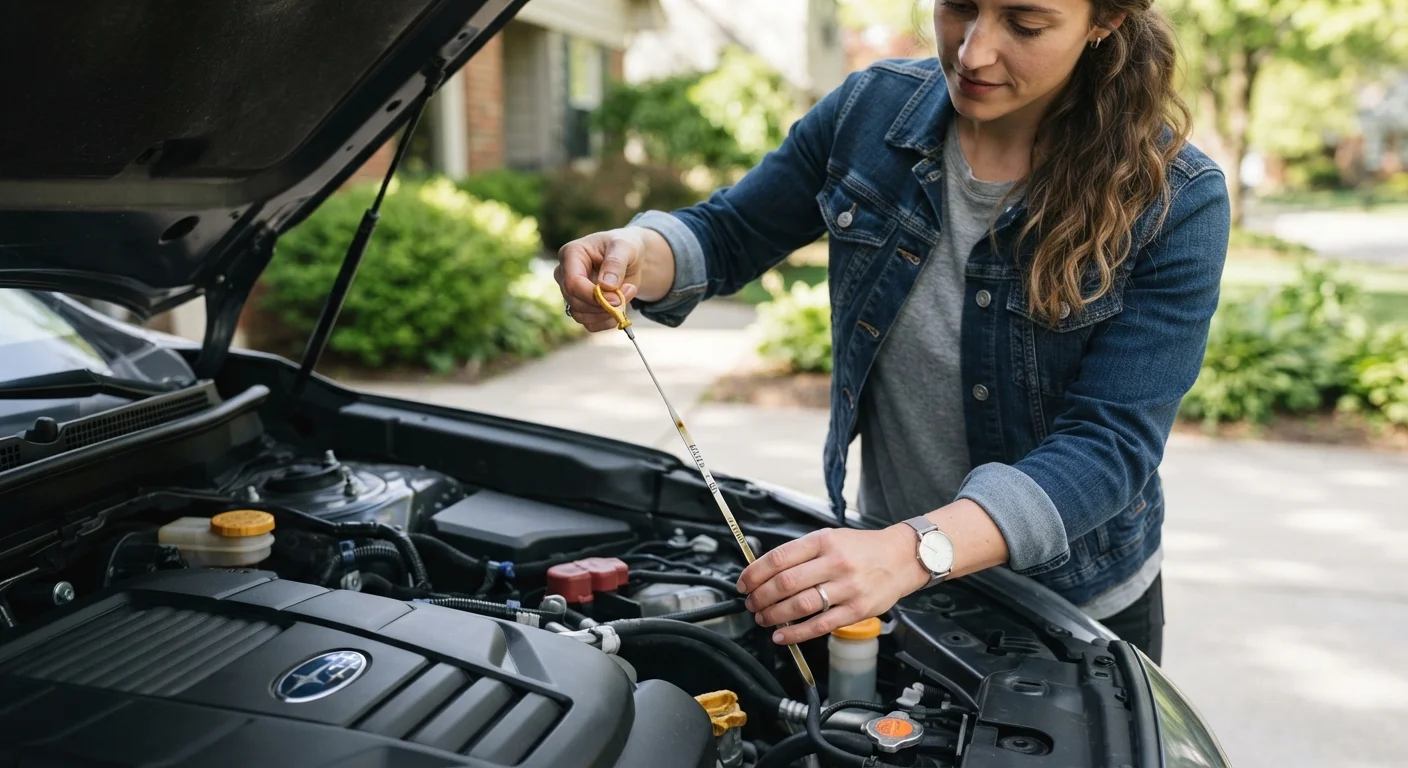
- Engine oil: Check monthly with the engine off and cool. The dipstick shows a safe range; oil below the minimum line or that looks black and gritty needs attention.
- Tire pressure: Check with a gauge when tires are cold, before driving more than a mile. The correct pressure is printed on a sticker inside the driver's door jamb, not on the tire sidewall. Tire safety basics covers what the numbers mean and how pressure affects stopping distance.
- Coolant reservoir: The translucent plastic tank near the radiator has a MIN and MAX line. Check it visually when the engine is cold. Never open the radiator cap on a hot engine.
- Windshield washer fluid: Low cost to top up; high cost to drive without visibility in winter or after a truck kicks up grime.
- Lights: Walk around the car once a week or ask someone to stand outside while you cycle through headlights, brake lights, and turn signals.
Store your owner's manual somewhere accessible
The glove box is the traditional spot, but a photo of the key pages on your phone works too. The manual answers most basic questions about fluid types, tire pressure, and warning light meanings without a trip to a shop.
Following your vehicle's service schedule
Your owner's manual lists every service task and the interval at which it applies to your specific vehicle. The most common scheduled items are oil and filter changes, tire rotations, air filter replacement, and spark plug replacement. Some vehicles also have a timing belt with a strict replacement interval; skipping it can cause catastrophic engine damage.
Manufacturer intervals vary by vehicle
Generic advice such as 'change oil every 3,000 miles' does not apply to all vehicles. Many modern engines using full synthetic oil go 7,500 to 10,000 miles between changes. Your owner's manual, not a rule of thumb, is the correct reference.
If you bought a used car without a full service history, a qualified mechanic can inspect the vehicle and tell you which items are overdue. Common car parts lifespan reference gives a useful overview of typical service intervals for belts, batteries, brakes, and filters. For tasks that go beyond oil and filters, annual maintenance tasks most owners overlook covers what often gets missed.
Warning signs you should not ignore
Dashboard warning lights exist for a reason. The oil pressure and temperature lights are the two that demand you pull over promptly. Continuing to drive with low oil pressure or an overheating engine can destroy the motor in minutes.
Never ignore brake changes
Squealing, grinding, or a spongy pedal are signs that brakes need professional inspection immediately. Brake repairs are not DIY territory for new drivers; incorrect work can cause brake failure. Have a qualified mechanic evaluate any change in braking feel before the next long trip.
Beyond lights, pay attention to changes in how the car feels or sounds. Vibration through the steering wheel often points to tire balance or alignment issues. A pulling sensation when braking suggests uneven brake wear. Clicking when turning can indicate a worn CV joint. None of these are emergencies in the immediate moment, but each one will get worse and more expensive the longer it goes unaddressed. Safe driving fundamentals addresses how vehicle condition connects to on-road safety.
Keeping records and managing costs
A simple log, either a notebook in the glove box or a phone app, recording the date, mileage, and work done at each service visit pays dividends in two ways. It helps a mechanic understand the vehicle's history when diagnosing a problem, and it supports the resale value of the car when you eventually sell it.
Routine maintenance does cost money, but the cost is predictable and spread out. Deferred maintenance concentrates costs unpredictably. Strategies for keeping car costs under control goes into more detail on budgeting for fuel, insurance, and repairs without cutting corners on safety. For new drivers also working through the administrative side of car ownership, registering a car you just bought and transferring a car title cover the paperwork that often catches first-time owners off guard.