

Key Takeaways
- Most states give you 10 to 30 days after purchase to register a vehicle before penalties apply.
- You typically need the signed title, proof of insurance, a valid ID, and payment for fees.
- Fees vary by state and are based on factors such as vehicle weight, value, or model year.
- Buying from a dealer and buying from a private seller involve different paperwork steps.
- Missing the registration deadline can result in fines and make the vehicle illegal to drive.
What you will need
Why the deadline and paperwork matter
Buying a vehicle is a financial and legal transaction, and registration is the step that makes your ownership official in your state's records. Without it, you cannot legally operate the vehicle on public roads, and your ability to prove ownership in a dispute is limited.
Missing the deadline is not just an inconvenience. Late registration typically triggers fines that grow the longer you wait. In some states, law enforcement can cite you for driving an unregistered vehicle even if you just purchased it and are on your way to the DMV. Some states tie registration to emissions compliance, meaning an unregistered vehicle may also be an uninspected one, which carries its own penalties.
For a broader look at the administrative and financial responsibilities that begin on day one of ownership, see car ownership from day one.
What you will need
What to expect at the DMV
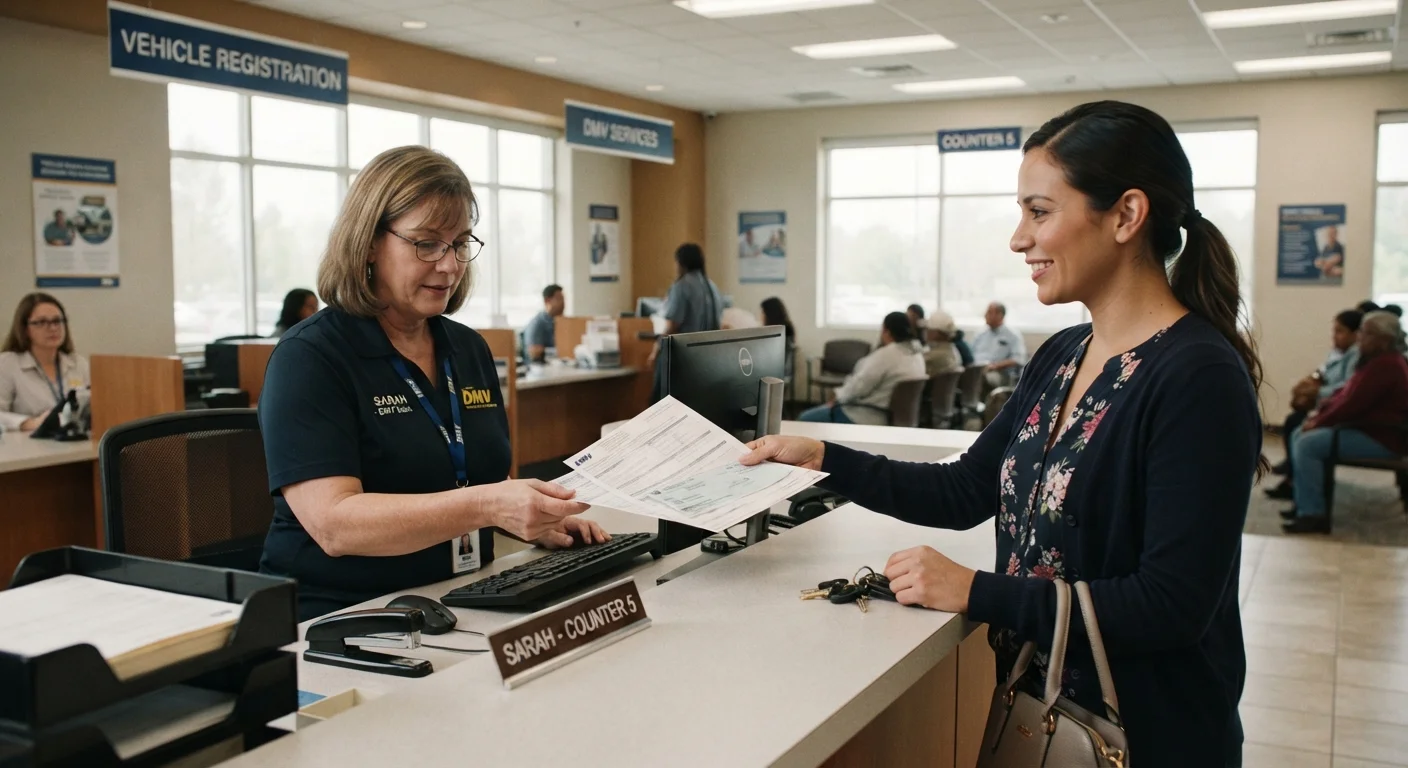
Most DMV visits for a new registration take 20 to 45 minutes if your documents are complete. Incomplete paperwork is the most common reason for delays or a second trip. An agent cannot process your registration without a valid, properly signed title, so double-check that the seller's signature is in the correct field and that no required lines are blank before you leave the sale.
If your state allows online registration for private-party purchases, you will upload images of your documents and pay fees digitally. Plates and a registration certificate are then mailed to you, typically within two weeks. Online processing is not available in every state or for every transaction type, so confirm eligibility on your DMV's site.
State DMV website
Look up your state's exact deadline, required forms, and current fee schedule before your appointment.
Bill of sale
Documents the purchase price and terms for private-party transactions; some states require it for registration.
Temporary operating permit
A short-term document issued by a dealer or DMV that lets you drive the vehicle legally while permanent registration is processed.
This article is for general informational purposes only. Registration requirements, deadlines, and fees vary by state and are subject to change. Verify current rules with your state's DMV before completing any transaction.