

Key Takeaways
- Soil pH controls nutrient availability, not just nutrient presence.
- Most vegetables and lawn grasses grow best in slightly acidic soil, around pH 6.0 to 7.0.
- A soil test is the only reliable way to know your pH before making any changes.
- Lime raises pH in acidic soil; sulfur lowers pH in alkaline soil.
- Adjusting pH takes months and must be verified with follow-up testing.
Soil pH
Soil pH is a measure of how acidic or alkaline your soil is, rated on a scale from 0 to 14. A reading of 7.0 is neutral; anything below that is acidic, and anything above is alkaline. The pH level controls how well plants can pull nutrients from the soil, even when those nutrients are physically present.
pH stands for 'potential of hydrogen' and reflects the concentration of hydrogen ions in the soil solution. Small numerical changes represent large real-world differences because the scale is logarithmic.
What the pH scale actually means for soil
The pH scale runs from 0 to 14. Soil readings below 7.0 are acidic, readings above 7.0 are alkaline (also called basic), and 7.0 itself is neutral. Because the scale is logarithmic, a soil with a pH of 5.0 is ten times more acidic than one at 6.0 and one hundred times more acidic than one at 7.0. That jump matters: a seemingly small change in the number can significantly alter what your plants can absorb.
Most garden plants prefer a pH between 6.0 and 7.0. In that range, essential nutrients including nitrogen, phosphorus, potassium, calcium, and magnesium are soluble enough for plant roots to take up. Move outside that window and the chemistry shifts. Iron and manganese become locked up in alkaline soil above pH 7.5, causing yellowing leaves even in fertile ground. At very low pH, aluminum and manganese can reach levels that are toxic to many plants.
How pH controls nutrient availability
Nutrients do not disappear when pH is off. They are still in the soil, but they form chemical compounds that roots cannot absorb. Think of it as a locked cabinet: the food is inside, but the plant has no key.
Phosphorus is a clear example. It is most available between pH 6.0 and 7.0. In acidic soil below pH 5.5, phosphorus bonds tightly with iron and aluminum. In alkaline soil above pH 7.5, it bonds with calcium. Either way, the plant gets little of it. Adding more phosphorus fertilizer does not help if the pH is the underlying problem. For a deeper look at how fertilizer nutrients behave in the soil, see the N-P-K label explained.
Test before you amend
Never add lime or sulfur without a soil test result in hand. Guessing the amount can push pH in the wrong direction or overshoot the target. An extension lab test typically costs less than $20 and gives you a specific amendment rate for your soil type and target crop.
Soil biology also responds to pH. Beneficial bacteria that break down organic matter and release nitrogen are most active near neutral pH. Acidic soils below 5.5 suppress those bacteria, which slows the natural nutrient cycle even further.
How to test your soil before making changes
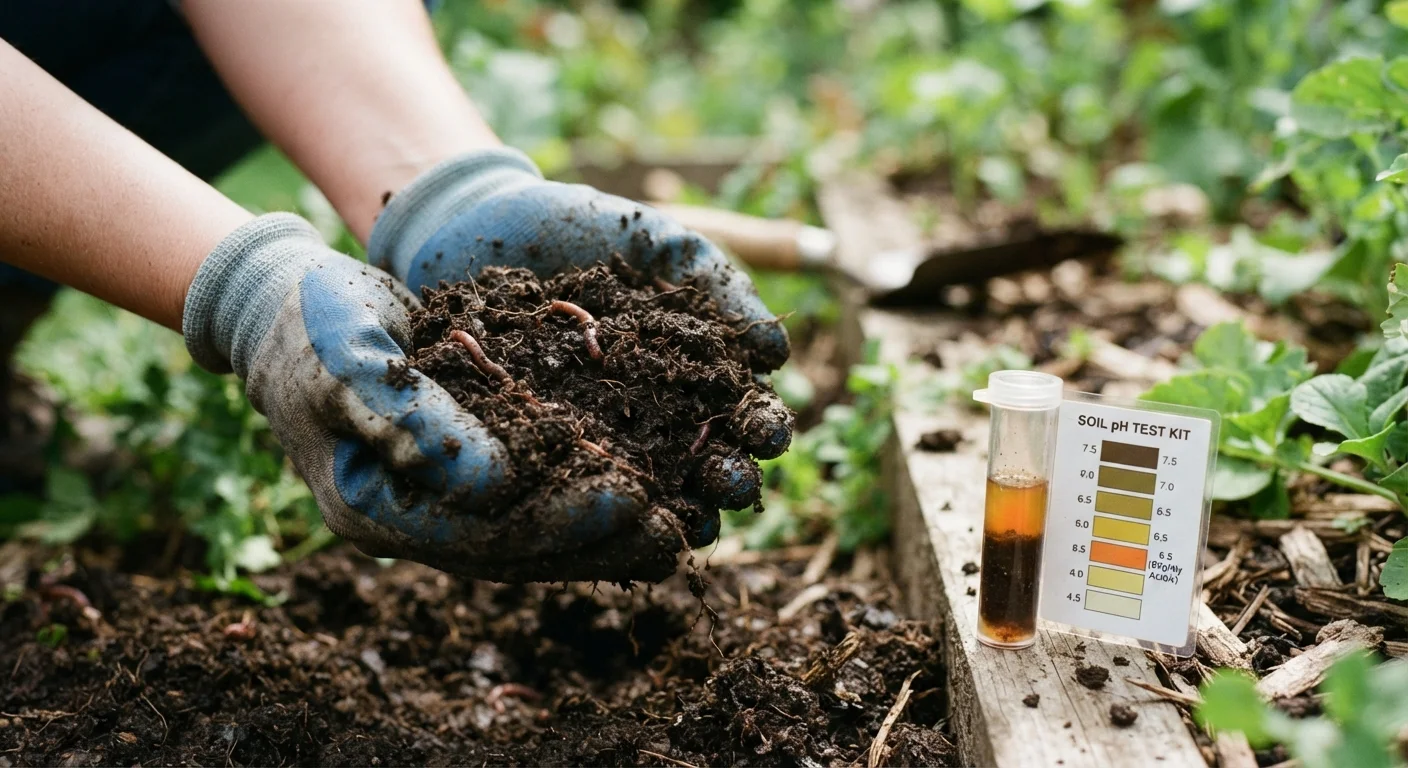
Testing comes before any amendment. A home test kit, available at most garden centers, gives a reasonable reading in minutes using a color-matching solution. For a more precise result, submit a sample to your state's cooperative extension service lab. Extension labs typically report pH alongside organic matter content and macronutrient levels, and many include site-specific amendment recommendations with the result.
To collect a sample, take small scoops of soil from several spots in the planting area at a depth of about 4 to 6 inches. Mix them together and send or test roughly a cup of that combined sample. One spot in the garden can read differently from another, so mixing gives a more accurate picture of the overall bed.
Adjusting pH: raising and lowering
If your soil is too acidic, ground limestone (lime) is the standard amendment. Calcitic lime adds calcium; dolomitic lime adds both calcium and magnesium. The amount you need depends on how far the pH must shift and what type of soil you have. Sandy soils require less lime to change pH than clay soils, which have more buffering capacity.
If your soil is too alkaline, elemental sulfur is the most common corrective. Soil bacteria convert it to sulfuric acid over time, which gradually lowers pH. Iron sulfate works faster but is typically used for smaller adjustments. Wood ash raises pH and should be used carefully in already-neutral or alkaline soils.
Whatever amendment you use, apply it based on test results, not guesswork. Work it into the top several inches of soil and plan to retest after three to six months. pH does not shift overnight, and over-application can create new problems. Your local gardening myths article covers a few misconceptions around household amendments like coffee grounds that are sometimes mistakenly used for pH management.
Matching plants to your existing pH
Amending pH takes time and effort. For many gardeners, it is more practical to choose plants that suit the soil they already have rather than chasing a target number.
Blueberries, azaleas, and rhododendrons prefer acidic soil in the pH 4.5 to 5.5 range. Lawn grasses and most vegetables do well between 6.0 and 7.0. Lilacs and clematis tolerate slightly alkaline conditions around 7.0 to 7.5. Knowing your baseline pH before you select plants saves correction work later. For other factors that affect what you can successfully grow, the USDA hardiness zones guide explains how climate zone interacts with plant selection.
Once your pH is in the right range, consistent watering habits matter as much as soil chemistry. See watering schedules for backyard gardens for guidance on how timing and depth affect plant health alongside soil conditions.