

Key Takeaways
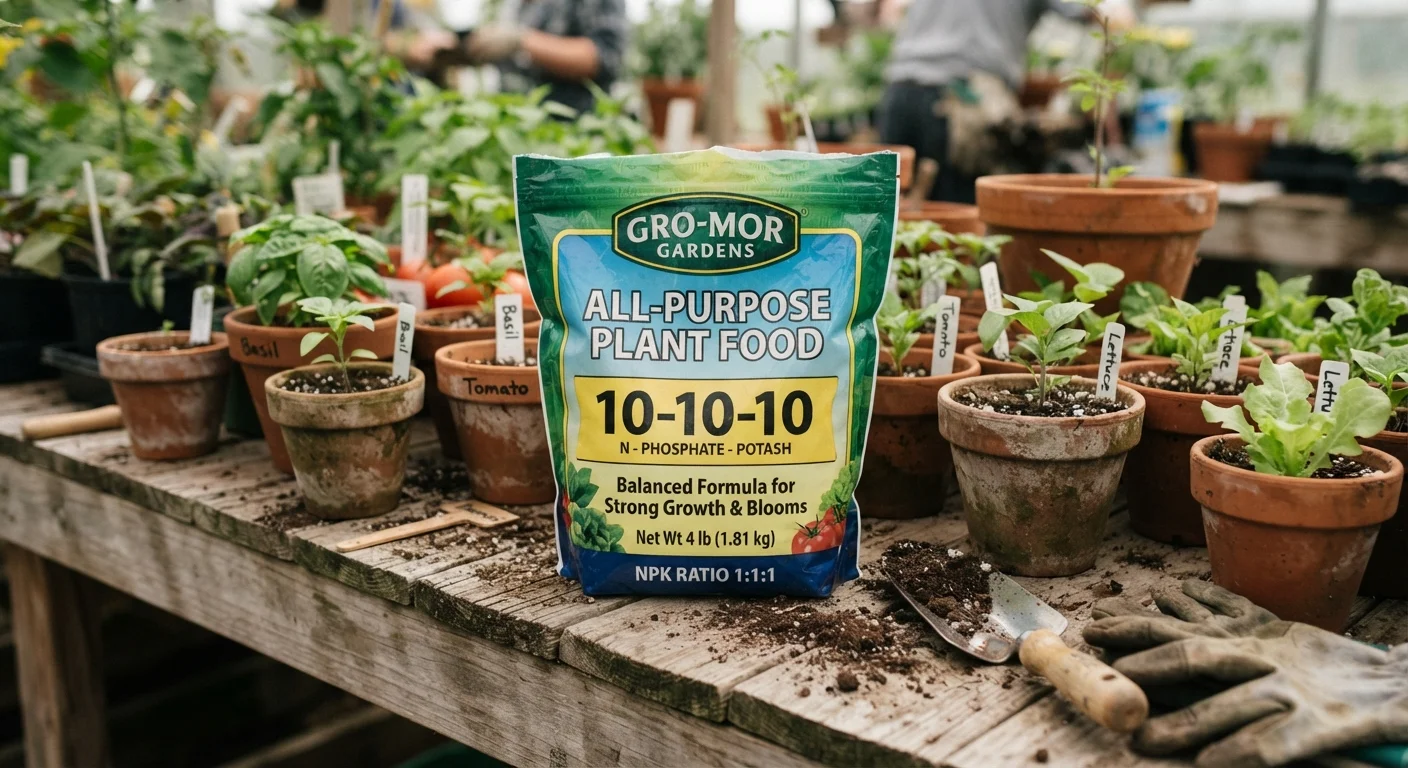
- The three numbers on fertilizer bags always appear in the same order: nitrogen, phosphorus, potassium.
- Nitrogen drives leafy green growth; phosphorus supports roots and flowers; potassium strengthens overall plant health.
- A soil test tells you which nutrients your garden actually needs before you buy any fertilizer.
- Higher numbers mean a more concentrated product, not necessarily a better one for every plant.
- Applying the wrong nutrient ratio can harm plants or contribute to runoff problems.
N-P-K ratio
The three numbers on a fertilizer label, such as 10-5-3, represent the percentage by weight of nitrogen (N), phosphorus (P), and potassium (K) in that product. Each nutrient does a different job in plant health. The numbers let you compare products and choose the right balance for your specific plants and soil.
Phosphorus is listed as its oxide equivalent (P2O5) and potassium as its oxide equivalent (K2O) on U.S. labels, so the numbers reflect available nutrient equivalents rather than pure elemental weights.
What the three numbers actually tell you
Pick up any fertilizer bag and you will find three numbers printed prominently on the front, something like 10-5-3 or 5-10-5. These numbers are the guaranteed analysis, and they always appear in the same order: nitrogen (N), phosphorus (P), and potassium (K). Each number is a percentage of the total bag weight made up by that nutrient.
A 10-pound bag labeled 10-5-3 contains 1 pound of nitrogen, 0.5 pounds of phosphorus equivalent, and 0.3 pounds of potassium equivalent. The remaining 8.2 pounds is carrier material that makes the product spreadable and consistent. Understanding this math prevents over-application, which wastes money and can injure plants.
The numbers also let you compare products at a glance. A 30-0-4 lawn food is very nitrogen-heavy with minimal potassium and no phosphorus at all, suitable for feeding established turf where phosphorus is already sufficient. A 5-10-10 product, with relatively low nitrogen and higher phosphorus and potassium, suits a vegetable garden during fruiting and root development. Neither is universally superior; the right choice depends on what your soil already holds. See our guide to soil pH and nutrient availability for context on how soil chemistry affects what plants can actually absorb.
What each nutrient does for plants
Nitrogen (N) is the growth engine for leaves and stems. It is a core component of chlorophyll, the molecule plants use to capture sunlight, and of the proteins that build new tissue. Lawns, leafy vegetables, and fast-growing annuals tend to need the most nitrogen. Deficiency shows up as pale green or yellow older leaves, starting at the bottom of the plant.
Phosphorus (P) drives root establishment and supports flower and fruit production. It is especially important when you are starting seeds, transplanting, or trying to improve flowering in perennials and fruiting crops. Phosphorus moves slowly through soil, so surface applications take time to reach roots. Deficiency often produces a reddish or purplish tint on the undersides of leaves.
Potassium (K) regulates water movement in plant cells, strengthens cell walls, and helps plants resist disease and stress from drought or cold. It does not produce a dramatic visual effect on its own, but its absence makes plants less resilient overall. Brown leaf edges, weak stems, and poor fruit fill are common signs of low potassium.
Test before you buy
A soil test done through your local cooperative extension service costs far less than a season of wrong fertilizer applications. The results tell you exactly which nutrients are low so you can match the N-P-K ratio to what your soil actually needs, rather than guessing based on plant symptoms alone.
How to choose the right ratio for your garden
The most useful tool before buying any fertilizer is a soil test. A basic test tells you current nitrogen, phosphorus, and potassium levels, along with pH. Many cooperative extension services affiliated with state universities offer testing for a modest fee, and the results come with specific product recommendations. Without a test, you are making an educated guess about what your soil needs.
As a general starting point, most lawns in active growing season benefit from a higher first number (nitrogen). Vegetable gardens preparing for transplanting benefit from a moderate first number with higher phosphorus and potassium. Established trees and shrubs often need very little supplemental fertilizer if they are growing in healthy soil.
Growth stage matters too. Seedlings and new transplants need phosphorus for root development, so a formula with a stronger middle number makes sense early on. Once plants are established and actively producing, shifting toward a balanced or potassium-forward ratio can support fruiting and disease resistance. You can also read your seed packets for planting-specific guidance that sometimes includes fertilizer timing suggestions.
Common mistakes to avoid
Applying more than the label rate does not speed up plant growth. Excess nitrogen in particular can burn roots, cause rapid weak growth that attracts pests, and leach into groundwater or nearby water bodies. Follow the application rate on the label, and when in doubt, apply less and observe plant response over several weeks.
Another frequent error is applying phosphorus to soil that already has plenty of it. Because phosphorus binds tightly to soil particles rather than washing away quickly, it accumulates over time with repeated applications. Excess phosphorus can interfere with a plant's ability to absorb iron and zinc, producing deficiency symptoms even when those nutrients are present.
Finally, fertilizer cannot fix a pH problem on its own. If your soil is too acidic or too alkaline, nutrients may be chemically unavailable to plant roots regardless of how much you apply. Checking and correcting pH first makes any fertilizer application more effective. Our article on soil pH walks through testing and adjustment in detail.