

| Planting depth unit | Inches (fractions or decimals) |
| Full sun definition | 6 or more hours of direct sun daily |
| Partial sun/shade definition | 3 to 6 hours of direct sun daily |
| Typical onion seed viability | 1 to 2 years |
| Typical tomato seed viability | 4 to 6 years (cool, dry storage) |
| Usable germination rate threshold | 70% or above; sow more densely below this |
The anatomy of a seed packet label
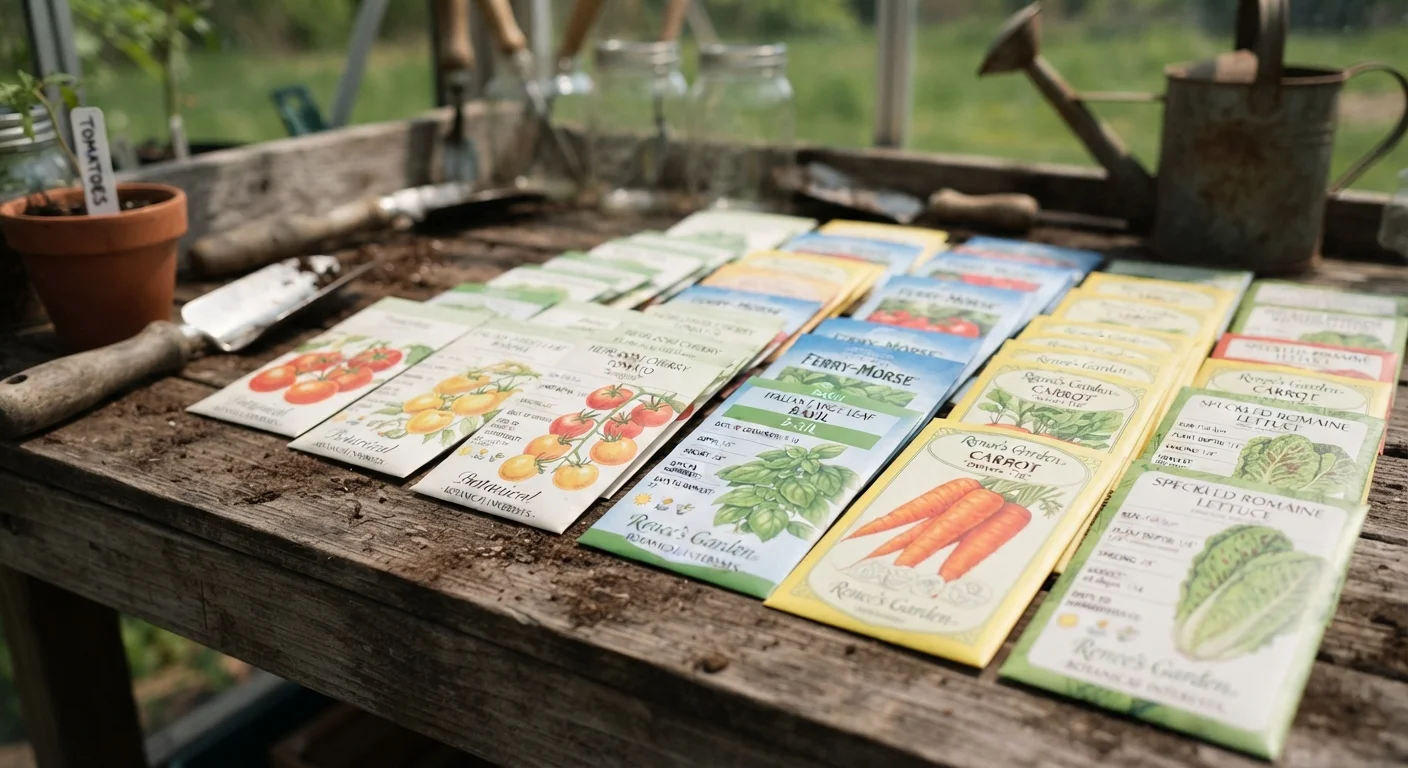
Every seed packet follows a loose but consistent structure. The front gives you the common name, variety name, and often a photo or illustration. The back and sides carry the practical data: planting depth, row spacing, days to germination, days to harvest, and sun requirements. Some packets also print a planting calendar or a small zone map. None of this information is decorative. Each figure tells you something specific about how and when to grow that plant.
Days to maturity
The number of days from transplanting (or direct sowing) until a crop is ready to harvest. It assumes consistent growing conditions and is an estimate, not a guarantee.
Germination rate
The percentage of seeds in a batch that tested viable under controlled lab conditions. A higher percentage means more seeds are likely to sprout.
Thinning
Removing seedlings from a row so the remaining plants are spaced far enough apart to grow fully. The final spacing after thinning is printed on the packet as 'thin to' distance.
Direct sow
Planting seeds straight into outdoor garden soil rather than starting them indoors first. Days to maturity counts from this date for direct-sow crops.
Hardiness zone
A geographic designation based on average annual minimum winter temperatures, defined by the USDA. It tells you whether a perennial plant is likely to survive winter in your location.
Lot number
A batch identifier printed on the packet for quality-control tracking. Near it you will typically find the 'packed for' year, which indicates seed freshness.
A few terms appear on nearly every packet, and misreading them is the most common reason seeds fail. The sections below go through each data point in order, from the ground up.
Planting depth and spacing
Planting depth is printed as a fraction or decimal in inches, such as 1/4" or 1/2". It tells you how far below the soil surface to place the seed. Seeds germinate using stored energy; if planted too deep, that energy runs out before the seedling reaches light. If planted too shallow, the seed may dry out or get displaced by watering. Follow the number closely, especially for small seeds.
Spacing appears in two forms on most packets. Seed spacing (sometimes called "in-row spacing") tells you how far apart to place individual seeds in a row, while row spacing tells you how far apart each row should be. A packet might read "Seed 3 inches apart in rows 18 inches apart." After germination, a separate figure labeled "thin to" tells you the final distance to leave between plants once you remove the crowded ones. Thinning feels wasteful, but crowded plants compete for water and nutrients and produce less.
| Planting depth unit | Inches (fractions or decimals) |
| Full sun definition | 6 or more hours of direct sun daily |
| Partial sun/shade definition | 3 to 6 hours of direct sun daily |
| Typical onion seed viability | 1 to 2 years |
| Typical tomato seed viability | 4 to 6 years (cool, dry storage) |
| Usable germination rate threshold | 70% or above; sow more densely below this |
Days to germination and days to maturity
"Days to germination" is a range, such as 7 to 14 days, measured from the date you sow the seed under normal conditions. It assumes adequate soil temperature and moisture. If your soil is colder than recommended, germination will sit at the longer end of the range or stall entirely. The packet often prints a minimum soil temperature alongside this figure; a soil thermometer takes the guesswork out of timing.
"Days to maturity" (also printed as "days to harvest") counts from transplant date for crops started indoors, and from direct-sow date for crops sown outside. A tomato labeled 75 days does not mean 75 days from when you buy the packet. It means 75 days after you set a healthy transplant in the ground. For direct-sown crops like carrots or beans, it counts from the day seeds go into the soil. This figure matters most when you are working backward from your first expected frost date to decide whether a crop has time to finish.
Sun, water, and zone information
Sun symbols use a standard shorthand. A solid circle means full sun (6 or more hours of direct sunlight daily). A half-filled circle means partial sun or partial shade (3 to 6 hours). An open or outlined circle means full shade (fewer than 3 hours). Some packets spell these out in words rather than using symbols, but the meaning is the same.
Water needs are less standardized. Some packets use icons ranging from a single droplet to three droplets, representing low to high water needs. Others use words: "drought tolerant," "regular water," or "keep evenly moist." Read these relative to your local climate and your soil type; sandy soil drains faster than clay, so "regular water" means different things in different gardens.
Zone information appears as a range, such as "Zones 4 to 9," and refers to USDA Plant Hardiness Zones. This tells you whether a perennial plant will survive winter in your area, or whether an annual will perform well in your climate. Learn how USDA hardiness zones work and how to find yours before selecting perennial seeds.
Seed count, lot number, and germination rate
The seed count tells you how many seeds the packet contains. This matters when you are calculating how many packets to buy for a given bed length. A packet of 50 large seeds like squash covers a lot of ground; a packet of 500 small seeds like lettuce covers much less than the count suggests once you factor in thinning.
The germination rate, printed as a percentage (for example, "Germ: 85%"), is the proportion of seeds in that lot that tested viable in lab conditions. An 85% rate means roughly 85 out of 100 seeds are expected to sprout. When germination rates drop below 70%, sow more densely to compensate. This figure also ages: seeds stored beyond their labeled "packed for" year will show lower real-world germination even if the printed number was high at packaging time.
The lot number is mainly a quality-control reference for the seed company, but note the "packed for" or "sell by" year printed near it. Seeds are viable for different lengths of time depending on the species. Onion and parsnip seeds typically last only one to two years; tomato and cucumber seeds can remain viable for four to six years when stored cool and dry. The N-P-K label on fertilizer bags follows a similarly standardized format worth understanding once your seedlings are in the ground.