

| Ideal mulch depth | 2 to 4 inches (General horticultural guidance) |
| Clearance from trunks and stems | 2 to 3 inches minimum (General horticultural guidance) |
| Wood chip lifespan | 1 to 3 years before significant breakdown |
| Straw mulch best use | Vegetable beds and annual gardens |
| Grass clippings max depth | 1 inch to avoid matting |
| Gravel mulch trade-off | Durable but radiates heat; no soil benefit |
What mulch actually does
Mulch is any material spread over soil to modify conditions at the surface. Its main jobs are retaining moisture, moderating soil temperature, reducing weed germination, and limiting erosion from rain and wind. Secondary benefits depend on the material: organic types break down and add organic matter to the soil, while inorganic types stay in place longer and offer more predictable longevity.
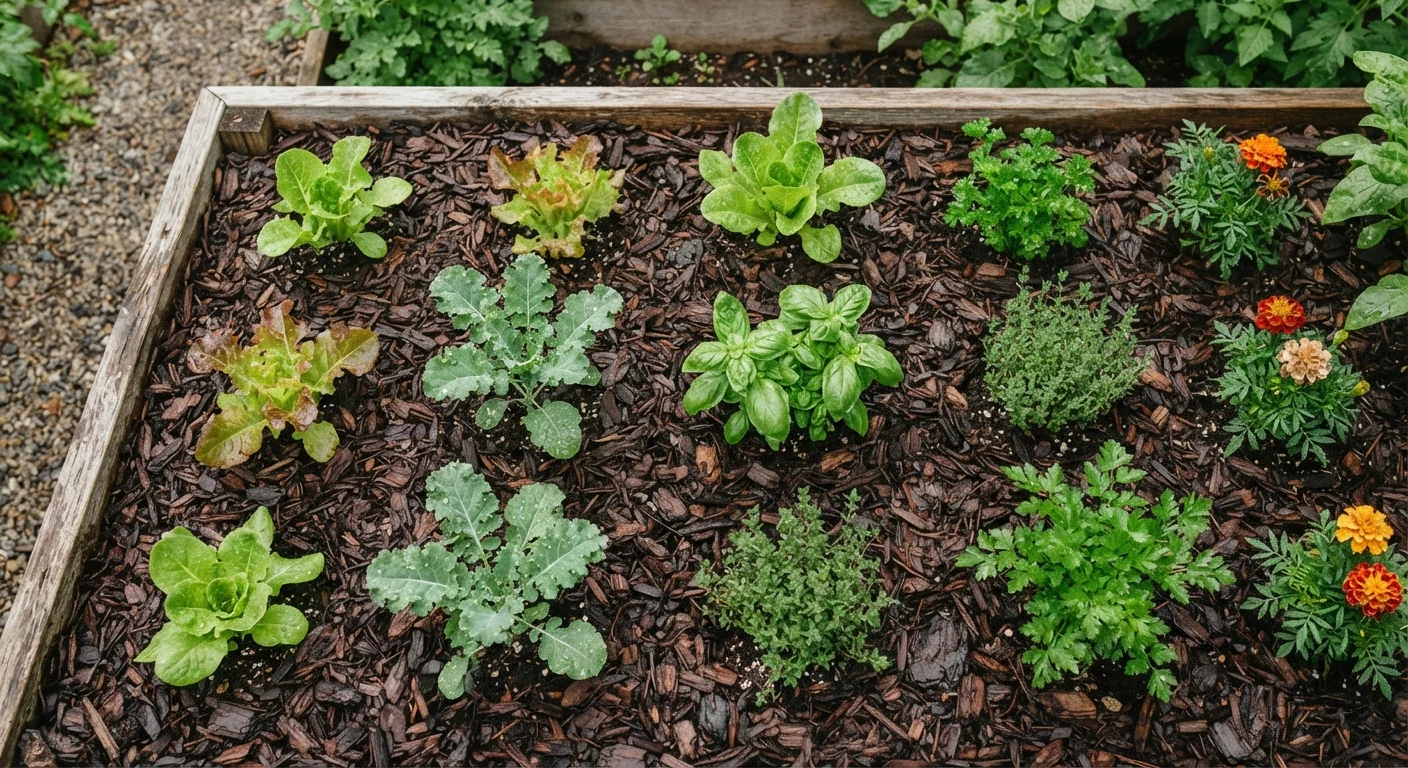
A correctly applied mulch layer sits 2 to 4 inches deep. Going thinner reduces the weed-suppression and moisture benefits; going deeper can suffocate roots and encourage fungal disease, especially when piled against plant stems or tree trunks. Keeping mulch a few inches away from stems and trunks is one of the most consistent recommendations in horticulture.
Mulch also influences the organisms living in your soil. Organic mulches feed earthworms and beneficial microbes as they decompose, which can improve soil structure over time. This is worth considering if you grow vegetables or are trying to build soil health, rather than just suppress weeds. For more on supporting soil biology through off-season practices, see how cover crops compare as a soil-health strategy.
| Ideal mulch depth | 2 to 4 inches (General horticultural guidance) |
| Clearance from trunks and stems | 2 to 3 inches minimum (General horticultural guidance) |
| Wood chip lifespan | 1 to 3 years before significant breakdown |
| Straw mulch best use | Vegetable beds and annual gardens |
| Grass clippings max depth | 1 inch to avoid matting |
| Gravel mulch trade-off | Durable but radiates heat; no soil benefit |
Organic mulch types and their trade-offs
Organic mulches decompose, so they need periodic replenishment, usually once or twice a year. In return, they improve soil structure and feed soil biology.
- Wood chips and shredded bark: Long-lasting among organics (1 to 3 years before significant breakdown), affordable, and widely available. Best around trees and shrubs. Avoid fresh wood chips directly in vegetable beds because high carbon content can temporarily tie up soil nitrogen as they decompose.
- Straw: Light, easy to spread, and fast to break down. Common in vegetable gardens because it does not mat as tightly as other materials. Confirm the source is free of herbicide residue before applying to edible crops.
- Compost: Feeds the soil most directly, but provides less weed suppression than bulkier materials. Works well as a thin layer under another mulch, or as a topdressing on beds where soil fertility is the main goal.
- Shredded leaves: Free if you have trees, effective, and valuable to soil biology. Leaves can mat when applied whole, so shredding them first improves air and water movement through the layer.
- Grass clippings: Readily available but best used in thin layers (1 inch or less). Thick applications mat, block moisture, and generate unpleasant odors as they break down.
Pairing a good mulch routine with a thoughtful watering schedule tends to produce noticeably healthier beds, because both practices work on moisture management together.
Inorganic mulch types and their trade-offs
Inorganic mulches do not decompose, so they require less frequent replacement. They do not feed soil biology, and some can complicate future soil amendment or planting changes.
- Gravel and crushed stone: Durable, drains well, and works in areas where a permanent, low-maintenance surface is the goal, such as dry garden beds, paths, or slopes. Stone absorbs and radiates heat, which can stress plants in hot climates. Removal is labor-intensive if you change your mind about the design.
- Landscape fabric: Often paired with stone or gravel to suppress weeds underneath a decorative layer. Over time, soil and organic debris collect on top of the fabric and weeds begin growing in that layer anyway. Landscape fabric under organic mulch breaks down faster and may not justify the added cost.
- Rubber mulch: Made from recycled tires, slow to decompose, and popular in playgrounds for impact absorption. Concerns about leaching compounds into soil make it a poor choice for edible gardens; it is better suited to non-planting areas.
Inorganic mulches work well when permanence and low maintenance matter more than soil improvement. They fit naturally in paths, rock gardens, and established native plant areas where you want a finished look without annual upkeep. If you grow native plants, gravel mulch can mimic the natural surface conditions many native species prefer.
Matching mulch to the situation
The right choice depends on where you are mulching and what you want to achieve.
| Situation | Suitable mulch | Notes |
|---|---|---|
| Vegetable garden | Straw, shredded leaves, compost | Avoid fresh wood chips; confirm straw is herbicide-free |
| Trees and shrubs | Wood chips, shredded bark | Keep clear of trunks; refresh every 1 to 2 years |
| Perennial flower beds | Shredded bark, shredded leaves | Allows perennials to push through in spring |
| Slopes and erosion-prone areas | Wood chips, gravel, straw with netting | Heavier materials stay put better on grades |
| Paths and non-planting zones | Gravel, crushed stone, rubber mulch | Permanence matters more than soil benefit here |
Mulch choices also interact with other garden practices. After pruning shrubs or trees, renewing the mulch ring around the base is a good way to protect recovering roots and conserve moisture during the growth response. One habit worth avoiding is mixing conflicting advice from different sources: common gardening myths about mulch, such as the idea that all wood chips rob nitrogen from plants, can lead to skipping mulch altogether where it would genuinely help.