

Key Takeaways
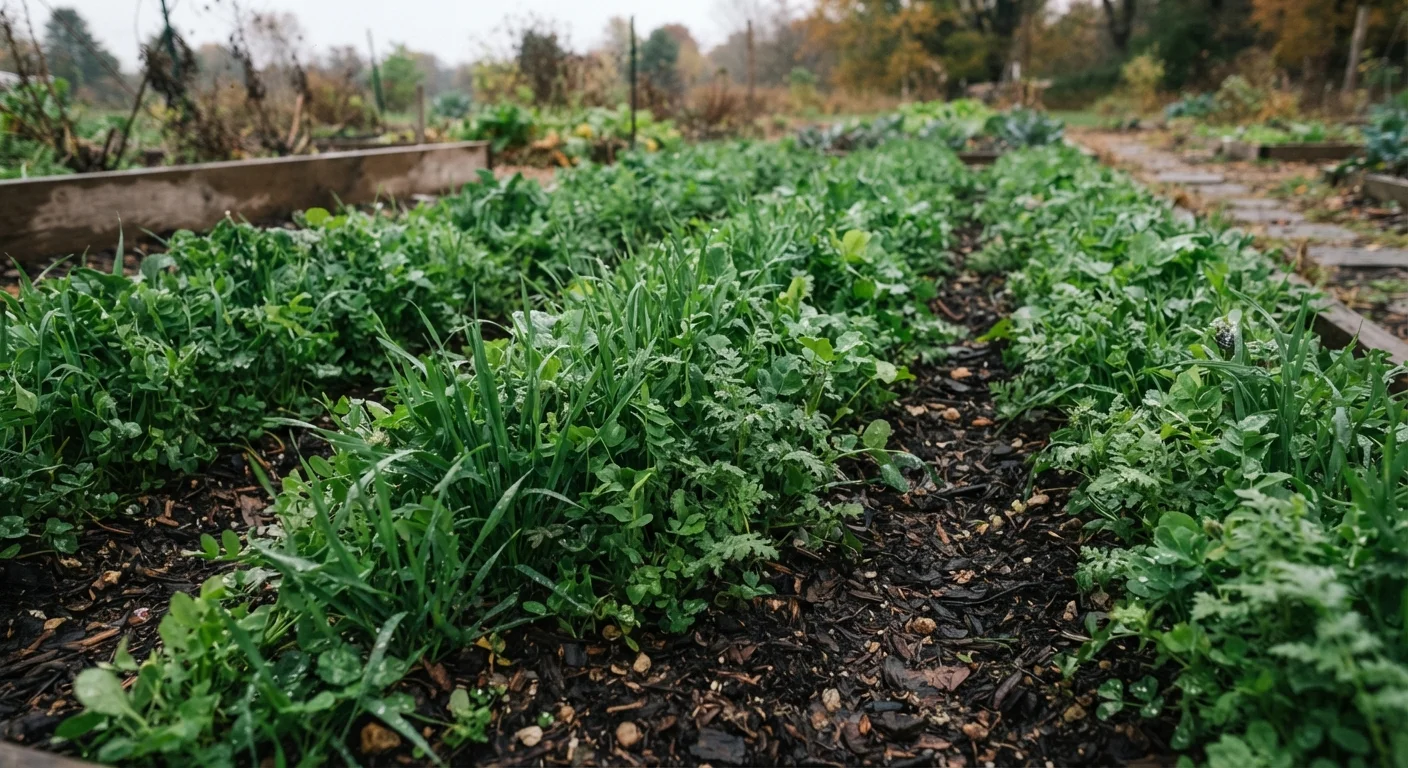
- Cover crops protect bare soil from erosion and compaction during the off-season.
- Legume cover crops fix nitrogen from the air and add it to your soil for free.
- Timing matters: most cover crops need 4 to 6 weeks of growth before the first hard freeze.
- Terminating cover crops correctly prevents them from becoming weeds in spring.
- Different crops suit different goals, from weed suppression to drainage improvement.
What you will need
What cover crops actually do for your soil
A bare garden bed is not resting. Rain compacts its surface, wind carries away fine particles, and weeds colonize open ground quickly. Cover crops address all three problems at once by keeping living roots in the soil and foliage above it.
Roots hold soil particles together and create channels for water to move downward rather than running off. When those roots die and decompose, they add organic matter, which improves both drainage in clay soils and water retention in sandy ones. Legume roots host bacteria that pull nitrogen gas from the air and convert it into a form plants can use, a process called nitrogen fixation. A well-grown hairy vetch crop can contribute 60 to 120 pounds of nitrogen per acre before termination, according to USDA research, though exact amounts vary by soil conditions and how long the crop grows.
Above ground, dense foliage blocks light from reaching weed seeds, cutting germination significantly. This is different from what mulch does for weed control: mulch suppresses weeds passively, while a cover crop actively competes for resources. After termination, the residue then acts like mulch, moderating soil temperature into spring.
Start simple if you're new to cover crops
Winter rye is forgiving, widely available, and easy to terminate in spring. It works in almost every US climate and gives you a clear sense of how cover cropping fits your garden routine before you experiment with mixes or specialty varieties.
Which cover crop to choose and when to plant it
The right cover crop depends on three factors: your climate, your soil's biggest weakness, and when your main-season crop will leave the bed empty.
In northern states with cold winters, winter rye is the most reliable choice because it germinates in soil as cold as 34 degrees F and survives temperatures well below zero. Pairing it with hairy vetch adds nitrogen fixation to that cold-hardiness. For gardeners in the mid-Atlantic or Southeast, crimson clover is more practical: it overwinters in zones 6 and warmer and produces a vivid bloom that supports pollinators before termination in spring.
If compaction is your main problem, daikon radish is worth considering. Its taproot can penetrate 12 to 18 inches into compacted subsoil, breaking it up physically. Because daikon winterkills easily, spring termination is simple. This makes it a good pairing with the fall garden prep work many gardeners do anyway at season's end.
Warm-season options like buckwheat work between early spring harvests and fall planting. Buckwheat grows fast (flowers in 6 weeks), suppresses weeds aggressively, and attracts beneficial insects. Terminate it before seeds form.
What you will need
Step-by-step: growing and terminating a cover crop
Choose a cover crop that matches your goal
Before buying seed, decide what you need most from your soil. The three main cover crop categories are legumes, grasses, and brassicas, each with a different strength.
- Legumes (crimson clover, hairy vetch, field peas): fix atmospheric nitrogen into the soil, reducing the need for added fertilizer next season. Choose these when your bed follows a heavy-feeding crop like corn or tomatoes.
- Cereal grasses (winter rye, oats, winter wheat): produce dense root systems that hold soil in place, reduce compaction, and add substantial organic matter. Winter rye is the most cold-tolerant option and germinates in cool soil.
- Brassicas (daikon radish, turnips): grow deep taproots that break up compacted subsoil, a technique sometimes called bio-drilling. They winterkill in most US climates, leaving channels for water and air in spring.
Mixing two types, such as hairy vetch with winter rye, gives you nitrogen fixation alongside erosion control.
Time your seeding correctly
Most cool-season cover crops need 4 to 6 weeks of active growth before a hard freeze (below 25 degrees F). Count back from your average first frost date to find your planting window. In most of the northern US, that means seeding in late August through September. In warmer southern states, a winter cover crop can go in as late as November.
Warm-season cover crops like buckwheat or sunn hemp work differently: plant them in summer between crop rotations, give them 6 to 8 weeks, then terminate before they set seed.
Prepare the bed and sow seed
Clear crop debris and pull large weeds. Rake the soil surface lightly to create a rough seedbed; cover crop seed does not need a perfectly fine tilth. Broadcast seed by hand or with a spreader at the rate listed on the seed packet, then rake again to work seed into the top quarter to half inch of soil. Firm the bed lightly with the back of a rake or by walking across it to improve seed-to-soil contact.
Water the bed gently after seeding and keep it moist until germination, which takes 5 to 10 days for most species. See watering schedules for garden beds if you need guidance on how to water without waterlogging.
Manage the crop through winter
Most cool-season cover crops need no care after establishment. Winter rye and hairy vetch will go dormant during the coldest weeks and resume growth in early spring. Brassica cover crops typically winterkill on their own, leaving a mulch-like mat of residue on the soil surface.
If you planted oats rather than winter rye, expect them to winterkill in USDA zones 6 and colder, which can actually be an advantage if you want an easy spring termination without digging.
Terminate the cover crop before planting
Termination means killing or cutting down the cover crop so it stops growing and begins to decompose. Do this 2 to 4 weeks before you plan to plant your main crops, to give residue time to break down.
Three common methods:
- Cut stems at the soil line with a hoe, then leave the residue on the surface as a mulch layer. This works well for low-growing crops like clover.
- Turn the entire plant under with a spade or tiller, burying residue 4 to 6 inches deep so it decomposes quickly.
- Roll and crimp (for larger plots): flatten the growing plants with a heavy roller, killing them without tillage and leaving a thick mulch mat.
Do not let cover crops flower and set seed unless that is intentional. Winter rye in particular can become a weed if it matures before termination.
Common mistakes and how to avoid them
The most common error is planting too late. A cover crop that gets three weeks of growth before a hard freeze barely covers the soil surface and does little to suppress weeds. If your window has closed for a seeded cover crop, a layer of organic mulch will protect soil through winter. See the comparison in mulch types and how they work for alternatives.
The second mistake is skipping termination or terminating too late. Winter rye that grows past knee height before you cut it produces tough, carbon-rich stems that decompose slowly and can tie up soil nitrogen temporarily as microbes break it down. Cut or turn it under when stems are 12 to 18 inches tall for the best balance of biomass and decomposition speed.
Finally, gardeners sometimes assume that any cover crop residue on the soil surface is harming their seeds. Residue that forms a loose mat is fine and continues to suppress weeds. Only a thick, wet mat of decomposing material pressed directly against seedlings can cause problems; rake it aside slightly from your seeding rows if needed.