

Key Takeaways
- Basement moisture comes from three distinct sources: condensation, seepage through walls, and groundwater intrusion.
- Diagnosing the source correctly before spending money on a fix prevents wasted effort and repeat problems.
- Many surface-level solutions fail because they address symptoms rather than the underlying water pathway.
- Interior waterproofing manages water after it enters; exterior waterproofing stops it from entering in the first place.
- Some repairs, especially those involving drainage systems or foundation walls, require a licensed professional.
Reduces health risks from mold and mildew
Persistent basement dampness promotes mold growth, which can affect indoor air quality throughout the home. Keeping moisture levels in check limits conditions where mold establishes itself.
Protects structural integrity of the foundation
Water that repeatedly saturates and dries concrete causes spalling and erosion over time. Managing moisture reduces long-term deterioration of foundation walls and floor slabs.
Increases usable living space
A dry basement can function as finished living space, storage, or a utility area without the damage risk that moisture brings to flooring, drywall, and stored belongings.
Can reduce energy costs indirectly
Chronic dampness raises humidity throughout the home, making air conditioning work harder. A drier basement contributes to more stable indoor humidity levels.
Exterior solutions address the root cause
Proper grading and exterior drainage stop water before it contacts the foundation, which is more durable than managing water after it enters.
Exterior waterproofing is expensive and disruptive
Full perimeter excavation to apply exterior membranes and inspect footer drains typically costs several thousand dollars and requires landscaping repair afterward.
Interior systems manage water rather than stopping it
A sump pump and interior drainage channel collect and remove water that has already entered the foundation, meaning the wall still gets wet with every rain event.
Sump pumps fail without power or maintenance
A pump that lacks a battery backup becomes useless during a power outage, which often coincides with the storms that produce the most groundwater. Pumps also require periodic inspection and eventual replacement.
Surface coatings have limited effectiveness
Masonry waterproofing paints and hydraulic cement slow vapor transmission but cannot withstand significant hydrostatic pressure. Applying them without addressing drainage often leads to paint failure and false confidence.
Misdiagnosis leads to wasted spending
Installing an interior drainage system for a condensation problem, or improving grading for an issue caused by a failed footer drain, solves nothing and delays the correct fix.
Our Verdict
Basement waterproofing is worth doing when the source of moisture is correctly identified first. A homeowner who diagnoses condensation and installs interior drainage has wasted money; one who identifies active wall seepage and improves grading around the foundation may solve the problem for minimal cost. The most durable results combine exterior water management with interior backup systems, but the right scope depends entirely on where the water is coming from.
Homeowners dealing with recurring dampness, efflorescence, or visible seepage who want to understand the cause before committing to an expensive repair or contractor quote.
Why basements get wet: the three sources
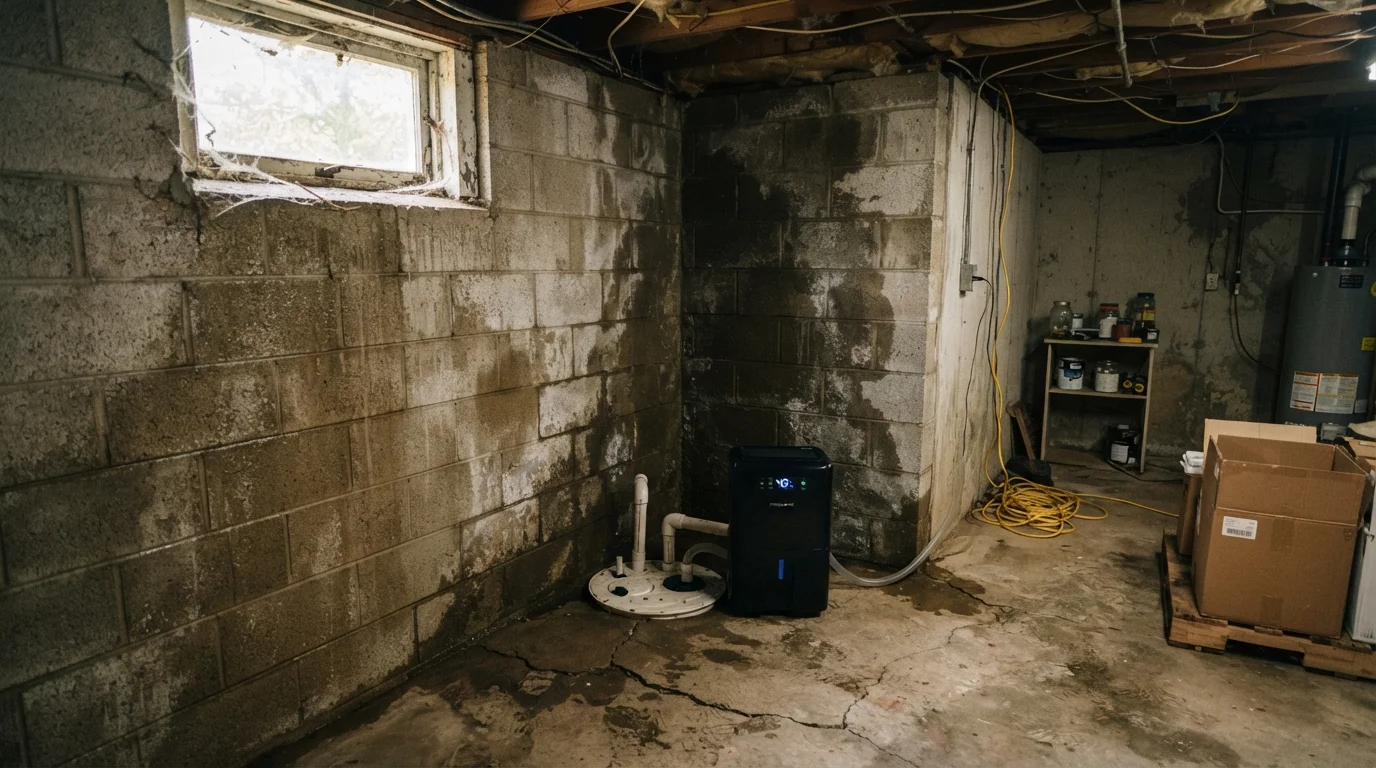
Basement moisture falls into three categories, and they require different responses. Mixing them up is the most common reason waterproofing projects fail.
Condensation forms when warm, humid air contacts cool concrete walls or floors. The wall itself is dry; the water is coming from the air. A simple test: tape a piece of aluminum foil to the wall, seal the edges, and leave it for 24 hours. If moisture collects on the room-side surface, you have a condensation problem, not a leaking wall.
Seepage is water that moves through pores and cracks in concrete or masonry under hydrostatic pressure, the pressure that builds up when saturated soil pushes against the foundation. Efflorescence, which is the white chalky residue left on walls after water evaporates, is a reliable sign of seepage.
Groundwater intrusion is the most serious category. It happens when the water table rises high enough to push water up through floor cracks or the joint where the floor meets the wall. This is common after heavy rain or snowmelt and often requires a drainage system rather than surface sealing.
For signs that water has already caused damage in other parts of your home, see water damage warning signs homeowners often overlook.
Exterior vs. interior waterproofing
Exterior waterproofing addresses water before it contacts the foundation. It typically involves excavating around the perimeter, applying a waterproof membrane or coating to the outside of the foundation wall, installing drainage board to direct water away from the footing, and ensuring the perimeter drain (also called a French drain or footer drain) is functional. Proper grading, meaning soil that slopes away from the house at a minimum of 6 inches over the first 10 feet, also belongs in this category and is often the cheapest fix available.
Interior waterproofing manages water that has already entered or is passing through the wall. A common interior system uses a drainage channel installed beneath the floor slab along the perimeter, connected to a sump pit with a pump. Interior wall coatings, sometimes called hydraulic cement or masonry waterproofing paint, can slow seepage but cannot stop water under significant pressure.
Start with the simple fixes first
Before investing in drainage systems or coatings, correct grading, extend downspouts, and clean gutters. These steps resolve a meaningful share of basement moisture problems and cost far less than interior or exterior waterproofing systems. If seepage continues after two or three major rain events following these improvements, a more involved solution is likely needed.
If improving grading and extending downspout extensions does not reduce seepage within one or two rain cycles, the problem likely originates deeper in the drainage system around the foundation, and a professional assessment is reasonable to seek before investing further.
Pros and cons of interior waterproofing systems
Reduces health risks from mold and mildew
Persistent basement dampness promotes mold growth, which can affect indoor air quality throughout the home. Keeping moisture levels in check limits conditions where mold establishes itself.
Protects structural integrity of the foundation
Water that repeatedly saturates and dries concrete causes spalling and erosion over time. Managing moisture reduces long-term deterioration of foundation walls and floor slabs.
Increases usable living space
A dry basement can function as finished living space, storage, or a utility area without the damage risk that moisture brings to flooring, drywall, and stored belongings.
Can reduce energy costs indirectly
Chronic dampness raises humidity throughout the home, making air conditioning work harder. A drier basement contributes to more stable indoor humidity levels.
Exterior solutions address the root cause
Proper grading and exterior drainage stop water before it contacts the foundation, which is more durable than managing water after it enters.
Exterior waterproofing is expensive and disruptive
Full perimeter excavation to apply exterior membranes and inspect footer drains typically costs several thousand dollars and requires landscaping repair afterward.
Interior systems manage water rather than stopping it
A sump pump and interior drainage channel collect and remove water that has already entered the foundation, meaning the wall still gets wet with every rain event.
Sump pumps fail without power or maintenance
A pump that lacks a battery backup becomes useless during a power outage, which often coincides with the storms that produce the most groundwater. Pumps also require periodic inspection and eventual replacement.
Surface coatings have limited effectiveness
Masonry waterproofing paints and hydraulic cement slow vapor transmission but cannot withstand significant hydrostatic pressure. Applying them without addressing drainage often leads to paint failure and false confidence.
Misdiagnosis leads to wasted spending
Installing an interior drainage system for a condensation problem, or improving grading for an issue caused by a failed footer drain, solves nothing and delays the correct fix.
Interior drainage systems are the most frequently sold solution. They are genuinely effective at managing water that enters the basement, and installation does not require exterior excavation. The main limitation is that they collect and redirect water rather than preventing its entry. A sump pump requires power to operate, so a power outage during a major storm is a real risk without a battery backup. Interior wall coatings stop minor moisture vapor but will fail, sometimes dramatically, against active hydrostatic pressure.
Grading, gutters, and the overlooked fixes
A large proportion of basement moisture problems start above ground. Gutters that overflow or downspouts that discharge water within a few feet of the foundation saturate the soil nearest the wall. Soil that has settled against the foundation over time creates a bowl that collects water and directs it toward the wall.
Check downspout extensions: they should carry water at least 6 feet from the foundation, and preferably to a point where the ground slopes away naturally. Clean gutters at minimum twice a year. If soil has settled and created negative grade, adding topsoil and re-sloping the ground is a straightforward DIY task that costs far less than any drainage system.
Window wells that lack drainage at the bottom can also funnel water through basement windows. A layer of gravel at the base of each well gives water somewhere to go rather than pooling against the window frame. For related guidance on sealing around windows, see caulking gaps around windows and doors.
These surface improvements pair well with broader seasonal preparation covered in weatherproofing your home before winter.
When to call a professional
Horizontal cracks in a poured concrete or block foundation wall can indicate lateral soil pressure and a structural concern, not just a water issue. Any crack wider than about 1/4 inch, stair-step cracking in block walls, or walls that appear to bow inward warrant a structural engineer's assessment before waterproofing work begins. Covering structural movement with a drainage system does not stop that movement.
Installing a full perimeter interior drainage system involves cutting the concrete floor, and improper installation can undermine the footing. Exterior excavation near the foundation carries its own risks if utilities are not located first. For these tasks, verify that contractors hold the appropriate license in your state and check whether permits are required by your local building department.
98%
Basements that experience some moisture
The American Society of Home Inspectors has reported that the vast majority of basements in the US will experience some form of water intrusion over the life of the home.
6 in.
Minimum grade slope in first 10 feet
The International Residential Code recommends a minimum 6-inch drop in ground level over the first 10 feet from a foundation wall to direct surface water away.