

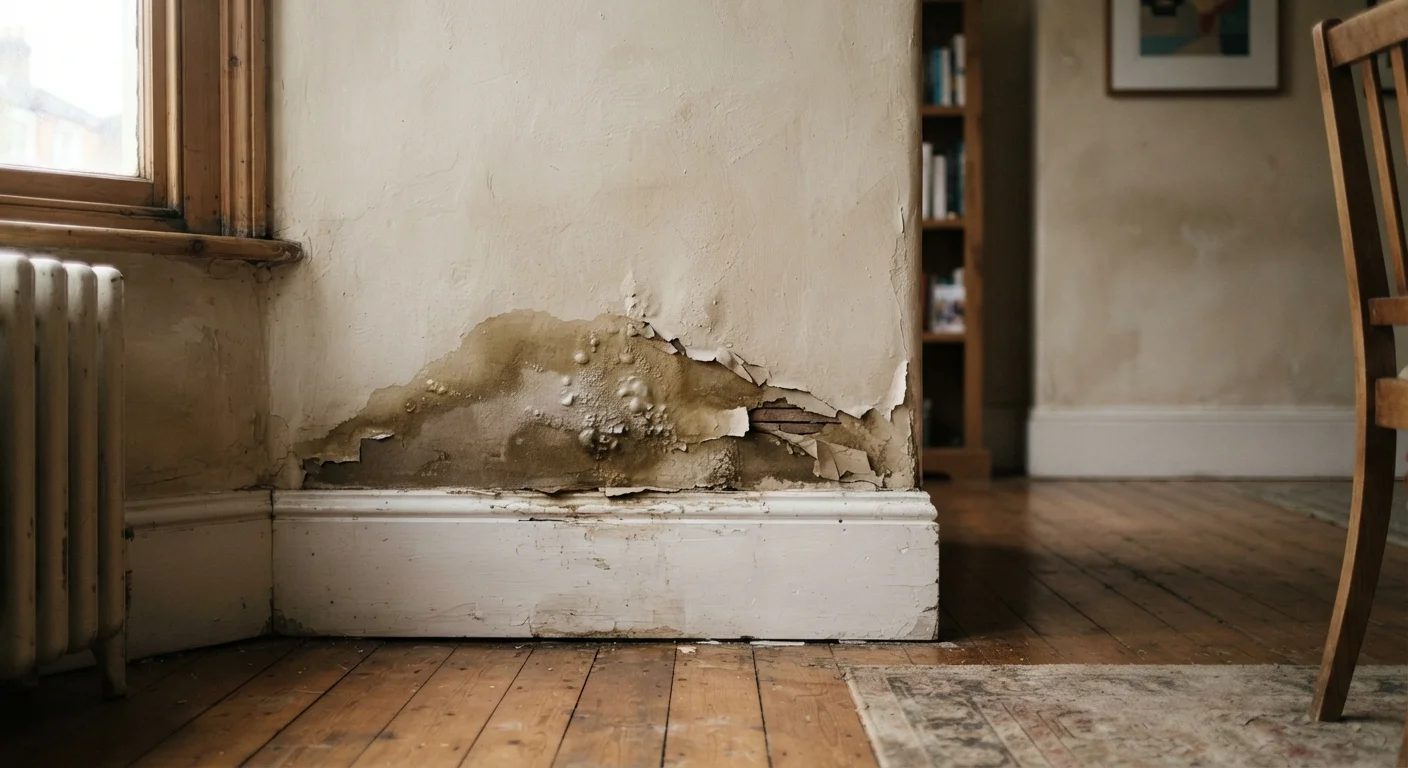
Key Takeaways
- Musty odors and soft drywall are often the first signs of water damage behind walls.
- Many homeowners attribute early warning signs to aging materials rather than active moisture intrusion.
- Catching water damage early can prevent far more extensive and costly structural repairs.
- Some water damage signs, especially near electrical panels or structural beams, require a licensed professional.
Why water damage goes unnoticed for so long
Water moves along the path of least resistance, which means the source of moisture is often nowhere near the visible damage. A slow roof leak can travel several feet along a rafter before dripping onto ceiling drywall. A failing pipe fitting inside a wall cavity may saturate insulation for months before any surface sign appears. By the time most homeowners notice something wrong, the damage is already well established.
The mistakes below are patterns that let water damage go undetected and unchecked. Understanding why each one happens makes it easier to break the habit. See also our guide to hidden maintenance costs for context on how undetected water problems can compound over time.
Dismissing a musty smell as normal house odor.
Why it happens: Older homes have a familiar smell, and homeowners often normalize odors that develop gradually over time.
Ignoring small ceiling stains because they appear dry.
Why it happens: A stain that is no longer wet can look like an old, resolved problem, so homeowners assume it no longer needs attention.
Treating warped or buckled flooring as a purely cosmetic issue.
Why it happens: Warping can look like a manufacturing defect or settling, especially in older homes with imperfect floors.
Overlooking slow-draining fixtures as a plumbing quirk.
Why it happens: A sink or tub that drains slowly is easy to attribute to a minor clog, so homeowners clear the visible drain and move on.
Painting over efflorescence on basement or foundation walls.
Why it happens: The white chalky deposits look like a surface stain, and a coat of paint makes them disappear temporarily.
Ignoring high indoor humidity as a seasonal inconvenience.
Why it happens: Humidity fluctuates with weather, so sustained elevated indoor humidity is easy to write off as a temporary condition.
What to do when you find a warning sign
Finding one sign does not automatically mean catastrophic damage, but every sign deserves investigation rather than observation. Use a firm finger to press drywall that looks stained or discolored. Soft, spongy, or crumbly drywall points to active or recent moisture exposure and warrants cutting a small inspection hole or calling a water damage professional.
For anything involving the roof, review our ground-level roof inspection guide before climbing a ladder. Basement and foundation moisture has its own set of causes; the basement waterproofing guide walks through how to diagnose the source before choosing a fix.
Do not ignore signs near shared walls
In attached homes, condos, or duplexes, water from a neighbor's unit can travel through shared walls or ceilings. If you see staining or smell mold but cannot find an internal source, the moisture may be entering from an adjacent unit. Notify your building manager or HOA and document the damage before beginning any repair work.
Any water damage near an electrical panel, outlet, or junction box requires you to stop and call a licensed electrician before investigating further. Water and live wiring are a serious safety hazard, and this is not a situation for DIY troubleshooting.
1 in 50
Homeowners filing a water damage claim each year
According to the Insurance Information Institute, water damage and freezing is among the most common homeowners insurance claims filed annually in the United States.
24-48 hrs
Time for mold to begin growing after water exposure
The U.S. Environmental Protection Agency notes that mold can begin to develop on wet materials within 24 to 48 hours under the right conditions.