

| US average annual mileage | 13,000-15,000 miles (Federal Highway Administration) |
| High-mileage threshold (general) | 100,000+ miles (Common industry reference point) |
| Odometer fraud law | Truth in Mileage Act (federal) (US federal statute) |
| Odometer disclosure required | At time of vehicle title transfer (NHTSA consumer guidance) |
| Mileage unit in the US | Miles (not kilometers) |
| Mileage impact on insurance | Higher annual miles typically raise premiums (General industry practice) |
What an odometer reading actually measures
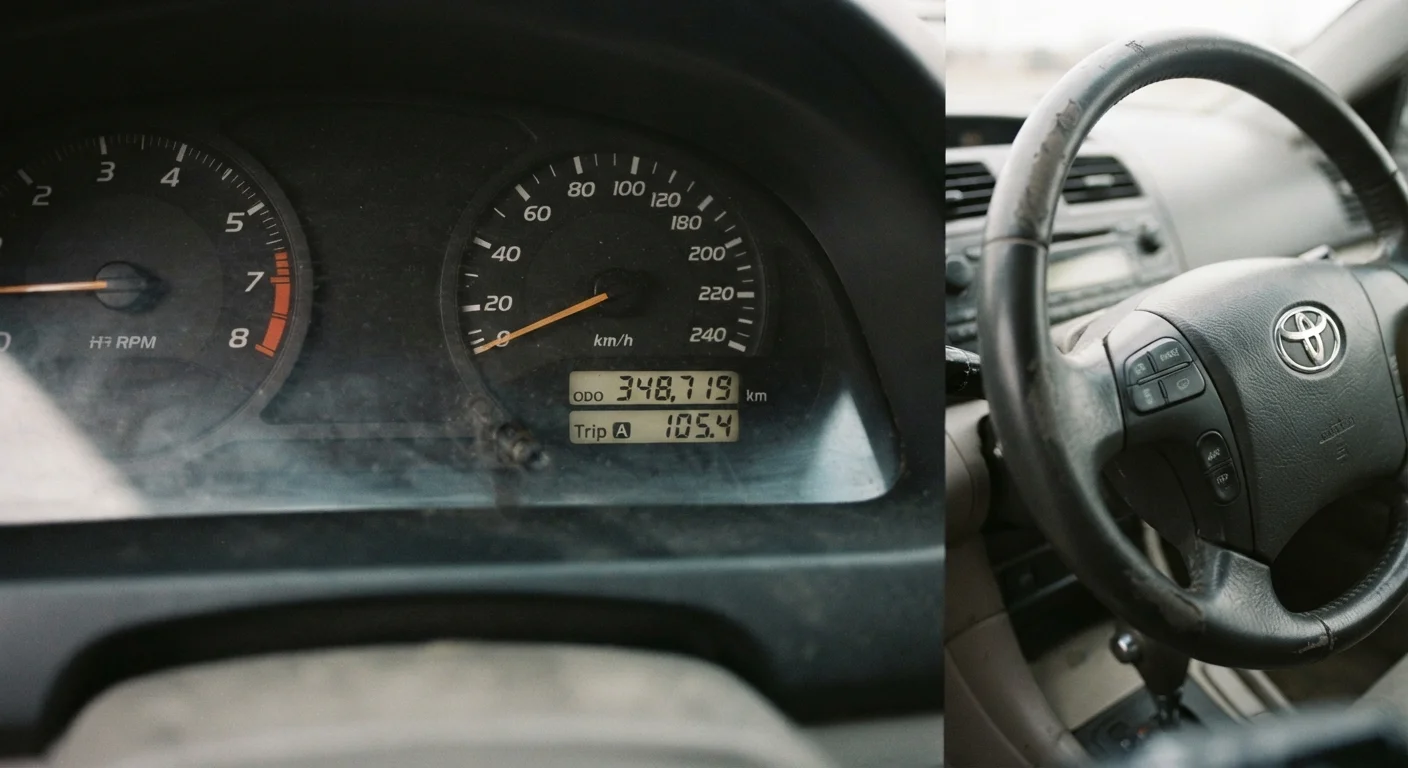
An odometer records the total cumulative distance a vehicle has traveled since it left the factory. In the United States, that distance is measured in miles. The number on the odometer is one of the first figures a buyer, insurer, or appraiser will look at because mileage correlates with wear on nearly every major system: engine, transmission, suspension, brakes, and tires.
Two vehicles of the same model year can be in very different mechanical condition depending on how many miles they have accumulated and how those miles were driven. Highway miles at steady speeds generally cause less wear than stop-and-go city driving, which puts repeated stress on brakes, transmission fluid, and engine components. A 75,000-mile car with a documented highway history may be in better shape than a 60,000-mile vehicle that spent most of its life in dense urban traffic.
The odometer reading also anchors your maintenance schedule. Most manufacturers tie service intervals, such as transmission fluid changes, spark plug replacement, and timing belt inspection, to mileage rather than calendar time. Knowing your exact mileage lets you stay on schedule. See routine upkeep items most owners overlook for a broader picture of what those intervals cover.
| US average annual mileage | 13,000-15,000 miles (Federal Highway Administration) |
| High-mileage threshold (general) | 100,000+ miles (Common industry reference point) |
| Odometer fraud law | Truth in Mileage Act (federal) (US federal statute) |
| Odometer disclosure required | At time of vehicle title transfer (NHTSA consumer guidance) |
| Mileage unit in the US | Miles (not kilometers) |
| Mileage impact on insurance | Higher annual miles typically raise premiums (General industry practice) |
How mileage affects resale value and depreciation
Mileage is one of the strongest predictors of a vehicle's market value. Appraisers and used-car valuation guides treat mileage as a direct input when estimating what a vehicle is worth. A car with significantly fewer miles than average for its age will typically command a higher price; one with more miles than average will usually sell for less.
The national average annual mileage for a US passenger vehicle is roughly 13,000 to 15,000 miles, according to Federal Highway Administration data. Appraisers use this range as a baseline. A five-year-old car with 40,000 miles on it is well below average for its age and will generally be priced accordingly. A five-year-old car with 90,000 miles is above average and will usually reflect that in a lower asking or trade-in price.
Mileage and depreciation work together. A vehicle that depreciates steeply in the first few years may lose additional value faster if mileage is also above average. For a fuller explanation of how these two factors interact, see how your vehicle loses value over time. Documented service records can partially offset high mileage by demonstrating consistent maintenance, which is covered in how vehicle maintenance records affect resale value.
Odometer fraud and how to protect yourself
Odometer fraud, also called odometer rollback, is the illegal practice of altering a vehicle's odometer to show a lower mileage than the car has actually traveled. Federal law under the Truth in Mileage Act requires sellers to disclose the odometer reading on a written disclosure statement when transferring vehicle ownership. Tampering with an odometer is a federal crime.
Despite legal protections, fraud still occurs. The National Highway Traffic Safety Administration (NHTSA) has documented odometer fraud as an ongoing consumer issue. A few practical steps reduce your exposure. First, request a vehicle history report from a service that aggregates title, registration, and inspection records: discrepancies in recorded mileage across different points in time are a red flag. Second, compare the reading to service stickers inside the vehicle, oil change receipts, or inspection records. Third, have a qualified mechanic inspect the vehicle for wear patterns that seem inconsistent with the displayed mileage: excessive pedal wear, a worn steering wheel, or unusual brake wear can suggest higher use than the odometer shows.
When buying a used vehicle, the seller is required by federal law to provide an odometer disclosure statement at the time of sale. Keep that document.
High-mileage thresholds and what they mean for maintenance
There is no universal mileage number at which a vehicle becomes unreliable, but certain thresholds are worth understanding because they correspond to increased maintenance needs and, in some cases, higher ownership costs.
Vehicles crossing 100,000 miles often need attention to timing belts or timing chains (depending on the engine design), coolant system components, and suspension parts that wear over time. This does not mean a 100,000-mile vehicle is a poor choice; many modern cars are engineered to run well past 200,000 miles with proper care. What changes is the diligence required. Keeping a high-mileage vehicle reliable involves closer attention to systems that degrade gradually and may not trigger a warning light until they fail.
Insurance companies also look at mileage when calculating premiums. Drivers who log more annual miles statistically have more exposure to accidents, so insurers often charge higher rates for higher-mileage use. Some insurers offer low-mileage discounts for drivers who stay well under the national average each year. Ask your insurer how annual mileage figures into your premium calculation if you are not sure.
Tire condition is another mileage-related factor worth monitoring. High total mileage combined with irregular rotation history accelerates uneven wear. Tire safety basics explains what to inspect and when, and how tire pressure connects to fuel economy covers another dimension of ongoing tire management.