

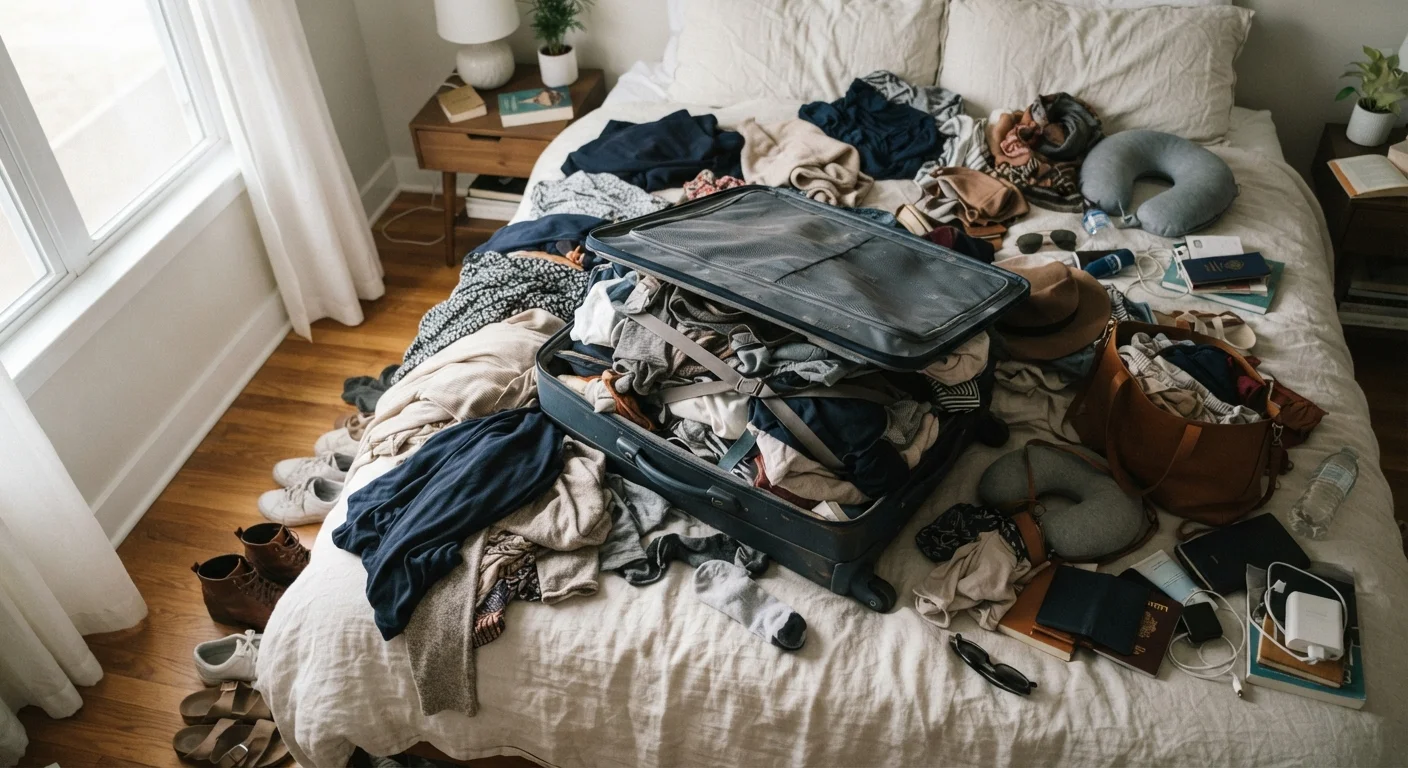
Key Takeaways
- Overpacking is usually driven by anxiety and uncertainty, not actual need.
- Packing for worst-case scenarios instead of realistic ones adds significant weight.
- A written packing list reviewed before the bag is opened prevents impulse additions.
- Mixing neutral, interchangeable clothing items reduces total garments needed by half.
- Checking baggage policies and bag weight before travel prevents last-minute repacking stress.
Why overpacking is an emotional problem, not a practical one
Most travelers who overpack are not bad at math. They know a seven-day trip does not require fourteen shirts. The problem runs deeper: packing triggers a particular kind of low-level anxiety about being underprepared, and the instinct to resolve that anxiety is to add more. Each item tossed into the bag feels like insurance against something going wrong.
This pattern is worth naming because the fix has to match the cause. If overpacking were purely a space-management issue, better folding techniques would solve it. But when the root is emotional, organization tools alone will not hold. Understanding what is actually driving the behavior is what makes lasting change possible.
For a broader look at how packing fits into a full travel system, see this end-to-end packing resource.
Packing for every possible scenario instead of the likely itinerary.
Why it happens: Travelers mentally simulate worst-case situations (a sudden formal dinner, unexpected cold weather) and pack for those instead of the trip they actually planned.
Bringing full-size toiletries when travel sizes or hotel amenities will do.
Why it happens: People default to their home routine and grab what is already in the bathroom without questioning whether the quantity is appropriate for the trip length.
Packing clothing that does not mix and match with anything else in the bag.
Why it happens: Shoppers buy items they love individually, but those pieces may require specific pairings that do not travel well together, leading to more garments to 'complete' each look.
Saving the packing until the night before departure.
Why it happens: Packing feels like a low-priority task, so it gets deferred. Last-minute packing produces rushed, emotional decisions and forgotten items that get replaced by grabbing extras.
Ignoring bag weight limits until the airport.
Why it happens: Without weighing the bag at home, travelers have no concrete feedback on how much they have packed. The problem only becomes visible when it is expensive to fix.
Habits that consistently lead to a lighter bag
Breaking the overpacking cycle does not require radical minimalism. It requires replacing reactive, anxiety-driven decisions with a few deliberate habits.
Write the list before opening the bag. Most people pack by standing in front of their closet and grabbing what feels right. A written list, built at least a day before departure, forces you to think through actual activities and outfits rather than possibilities. Review the list once, then stick to it.
Plan outfits, not individual items. Instead of packing a stack of shirts and hoping they match, map out each day's outfit as a unit. This immediately exposes redundancies. A shirt that works for two dinners only needs to appear once.
Set a weight or volume limit before you start. Choosing your bag first, before selecting clothes, creates a physical boundary. It is much harder to overpack into a 40-liter carry-on than into a large checked bag with room to spare.
Do a final cut. After packing everything on your list, remove at least two items. This single habit counters the tendency to add just-in-case items at the end. If nothing is clearly removable, that is a signal the list itself needs trimming next time.
If you are traveling with children, the same principles apply but the logistics multiply. See practical strategies for family packing for guidance specific to that context.
~50%
Travelers who report regretting bringing too much
Travel surveys consistently find roughly half of leisure travelers say they packed more than they needed on their most recent trip.
2x
Typical redundancy in a packed bag
Packing coaches commonly observe that the average leisure bag contains twice as many clothing items as the traveler actually wears during the trip.