

Key Takeaways
- Ocean ships carry hundreds to thousands of passengers; river ships typically carry 100 to 200.
- River cruises dock in town centers, while ocean ships anchor offshore or at dedicated terminals.
- Ocean voyages include more sea days; river itineraries usually stop at a new port every day.
- River cruise fares generally include more in the base price, such as excursions and drinks.
- Ocean cruises offer more onboard entertainment, dining variety, and amenity options.
- Neither style is objectively better: the right choice depends on what you want from the trip.
Option A
Ocean cruises
Large-ship travel across open seas with onboard amenities as part of the experience.
Best for: Travelers who want a wide range of onboard activities, sea days, and access to coastal ports worldwide.
Option B
River cruises
Small-ship travel along inland waterways with the focus on ports and culture ashore.
Best for: Travelers who prefer an intimate atmosphere, frequent port stops, and destinations that larger ships cannot reach.
If you travel with kids or want resort-style amenities at sea
Ocean cruises
Large ships have dedicated children's programming, pools, multiple dining venues, and evening entertainment that river ships do not offer. See tips for cruising with kids for family-specific planning.
If you want immersive cultural access and frequent port stops
River cruises
River ships dock directly in historic town centers, often within walking distance of main sights, and itineraries are built around time ashore rather than days at sea.
If you want to cover long distances or remote ocean regions
Ocean cruises
Ocean ships can cross the Atlantic, reach Alaska, or transit the Panama Canal on itineraries that no river vessel can replicate. Explore cruise regions to see which areas interest you.
If you dislike large crowds and prefer a quieter travel pace
River cruises
With passenger counts rarely above 200, river ships feel more like small group travel. Shared spaces are never congested, and staff-to-guest ratios tend to be higher.
If budget flexibility matters and you want to control add-on costs
Ocean cruises
Base fares on ocean ships are often lower, giving you the option to spend more or less on extras. River cruise pricing typically bundles more upfront but leaves less room to adjust total cost.
How the two styles differ at a glance
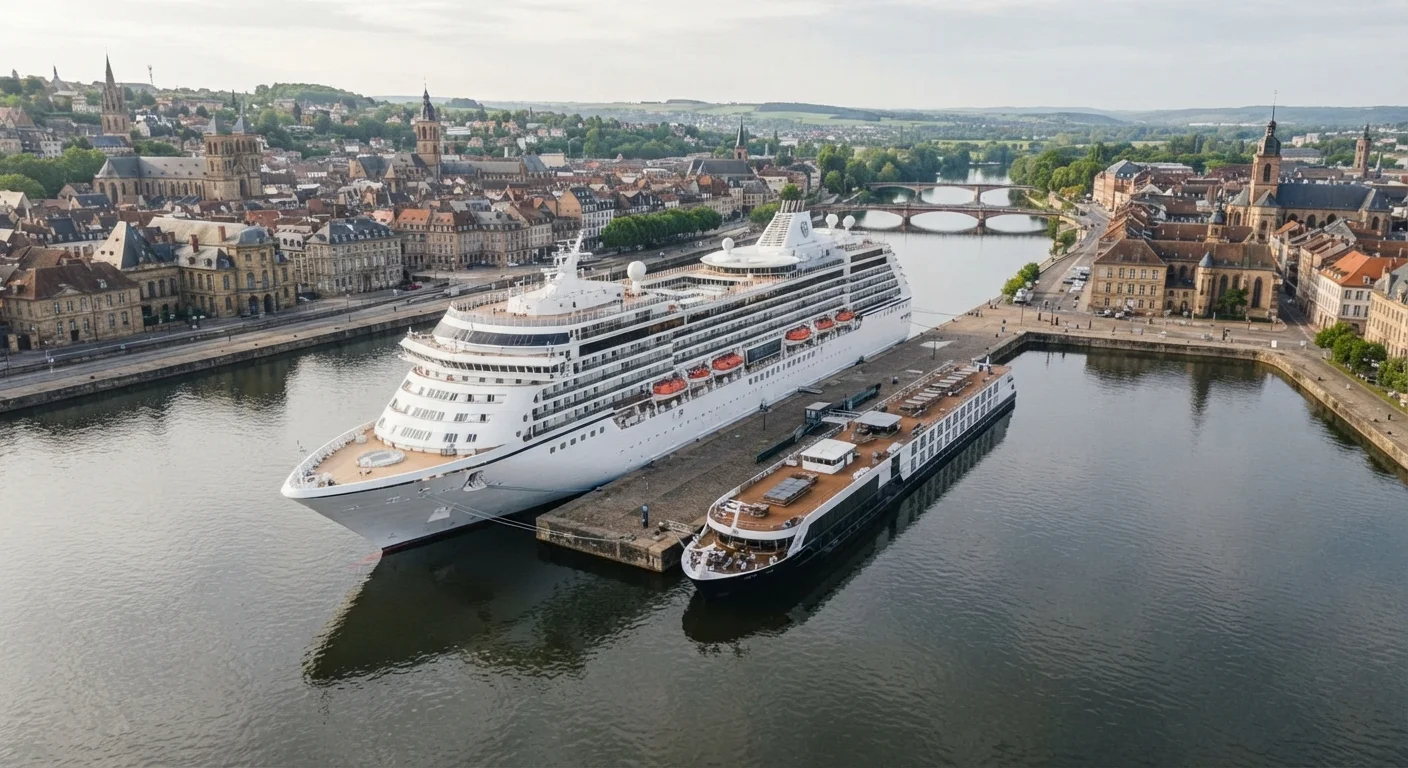
The most immediate difference between ocean and river cruises is ship size. Ocean vessels range from a few hundred passengers on expedition ships to over 5,000 on the largest mass-market ships. River vessels are constrained by the width of locks and bridges, so most carry between 100 and 200 guests. That scale difference shapes nearly every other aspect of the experience.
On an ocean ship, the vessel itself is part of the draw. Multiple restaurants, pools, theaters, casinos, and activity decks mean passengers can fill sea days without going ashore. On a river ship, the ship is comfortable but modest. Passengers spend most of their time in port, and the itinerary is designed around that.
| Criterion | Ocean cruises | River cruises |
|---|---|---|
| Ship capacity | 300 to 5,000+ passengers | 100 to 200 passengers |
| Typical itinerary length | 7 to 14 nights common | 7 to 14 nights common |
| Sea or sailing days | 2 to 5 per week | Mostly overnight transits |
| Port location | Cruise terminal, varies by city | Town center quay |
| Onboard amenities | Pools, theaters, multiple venues | Lounge, sun deck, dining room |
| What fare typically covers | Cabin and main dining | Cabin, meals, excursions, often drinks |
| Motion on water | Can be significant in open sea | Minimal on inland waterways |
| Geographic reach | Global coastal routes | Specific inland waterway regions |
Itinerary rhythm differs too. A typical week-long ocean voyage might include two or three sea days. A seven-night river itinerary usually docks at a different town each morning. If you find sea days restorative, ocean travel suits that preference. If sitting on open water feels like wasted time to you, river itineraries keep the ports coming.
Destinations and port access
Ocean ships reach every inhabited continent and hundreds of coastal ports. The Caribbean, Mediterranean, Alaska, and the Norwegian fjords are among the most traveled ocean regions. Each region has a distinct character in terms of climate, culture, and what you can do ashore.
River cruises concentrate on inland waterways. Europe's Danube, Rhine, and Douro rivers are the most popular routes for US travelers. The Mekong, Irrawaddy, Nile, and Amazon also have river itineraries, though options are fewer. The geographic scope is narrower, but the access is often deeper: a river ship can stop in a medieval village that no ocean terminal serves.
Port arrival is a practical difference worth knowing. Ocean ships dock at purpose-built cruise terminals, which are sometimes miles from a city center. River ships tie up along town quays, often within a short walk of the main square. That changes how much time and effort shore visits actually take. For more on making the most of port time, see how to decide between ship tours and going it alone.
Cost structure and what fares typically include
Pricing comparisons need a full accounting
When comparing ocean and river cruise costs, look beyond the per-night fare. Factor in excursions, gratuities, beverages, and specialty dining to get an accurate picture of what you will spend. River fares that appear high often include costs that ocean travelers pay separately. Build a realistic total for each option before drawing conclusions.
A traveler who prices both options fully, factoring in the extras they would actually use, often finds the gap narrower than the headline fares suggest. The question is not which list price is lower but which total cost matches your travel habits. If you skip organized excursions and prefer a drink package over included wine, an ocean cruise may cost less overall. If you want guided tours at every port and meals that include beverages, a river fare may be more cost-efficient.
Dining options on ocean ships have expanded significantly, and understanding what is covered versus what costs extra helps you budget accurately before you book.
Choosing based on your travel priorities
Motion sensitivity is worth considering honestly. Ocean ships can encounter rough seas, and even large vessels move noticeably in heavy weather. River ships sail on calm inland water and rarely produce noticeable motion. Travelers who have experienced seasickness on previous trips often find river cruising much more comfortable.
Group composition also matters. Ocean ships have the infrastructure for families with children, including kids' clubs, dedicated pools, and flexible dining. River ships are almost entirely adult environments, and many lines set a minimum age of 12 or higher. Solo travelers may find that the smaller, more social atmosphere on a river ship leads to more connection with fellow passengers, though solo supplements on river lines can be steep.
If your goal is to visit a specific region deeply, a river itinerary in that area will likely deliver more time ashore and more contact with local culture than an ocean itinerary covering the same geography. If your goal is to cover wide geographic ground or experience a specific ocean region's variety of ports, ocean travel is the practical choice.