

Key Takeaways
- The Caribbean suits first-timers well because of short port stops, warm weather, and a high volume of departures year-round.
- Alaska and Norway offer scenery-focused itineraries where the ship itself is a viewing platform for glaciers and fjords.
- The Mediterranean packs in history-rich ports, but longer travel times from the US and visa considerations deserve attention.
- River cruises in Europe and Asia follow a fundamentally different pace and scale from ocean cruises.
- Choosing a region means matching your interests, travel budget, and available time before comparing ship options.
Why the region matters as much as the ship
Most first-time cruisers spend the bulk of their research on ships and cabin categories. The region, though, shapes nearly everything else: the weather window, the types of ports, how much sea time versus shore time you get, and what kind of activities make sense once you arrive. A ship that excels in Alaska may be identical to one in the Bahamas, but the experience aboard will feel completely different because of where it goes.
The seven regions below cover the main sailing areas for US travelers. Each one has a distinct rhythm, and understanding that rhythm before you book saves disappointment later. For a broader look at how ocean and river options compare, see ocean cruises vs. river cruises.
The Caribbean
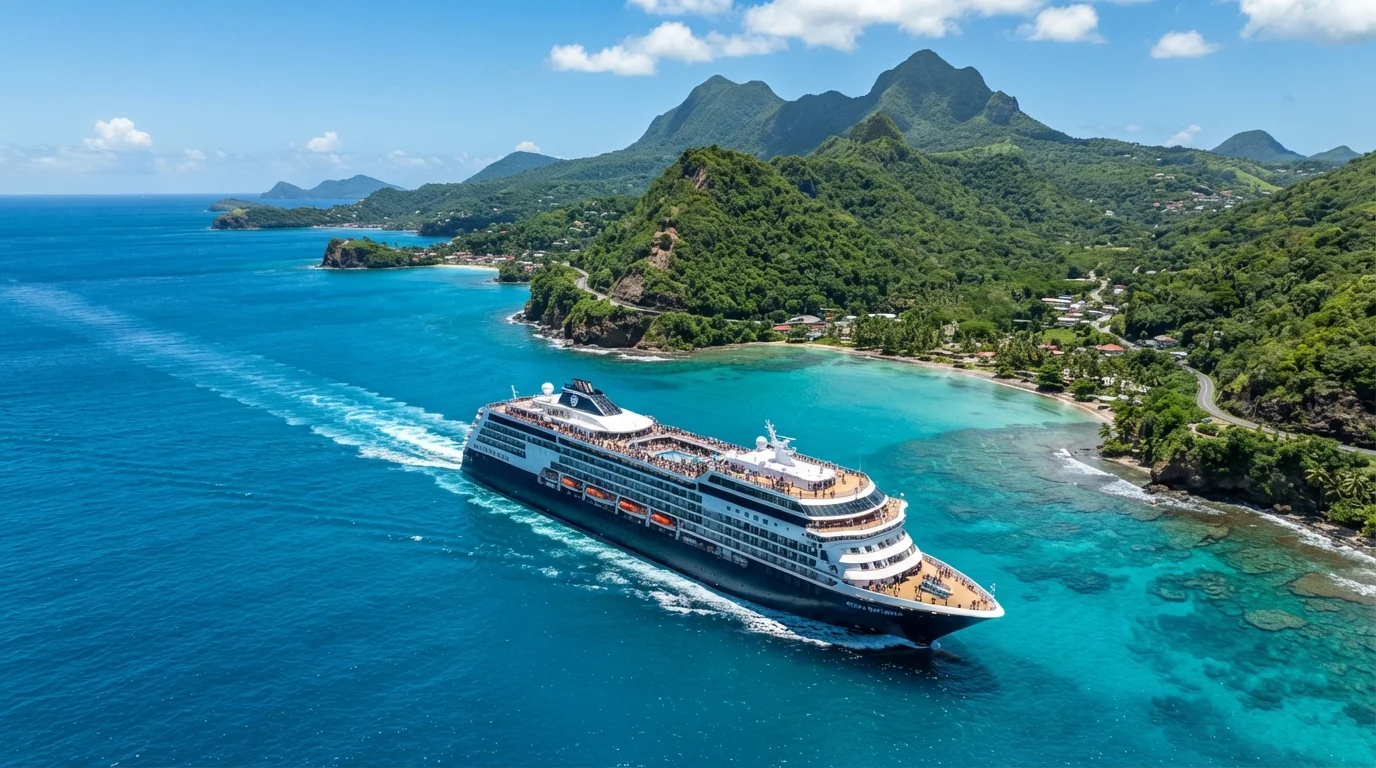
The Caribbean is the most-sailed cruise region in the world for US travelers, and the main reason is logistics. Dozens of ships depart from Florida, Texas, Louisiana, and the mid-Atlantic seaboard, so many passengers drive to the port rather than fly. Itineraries range from three-night weekend getaways to fourteen-night loops covering the Eastern, Western, and Southern Caribbean.
Ports vary considerably. The Western Caribbean typically includes Mexico, Belize, Honduras, and the Cayman Islands. The Eastern Caribbean covers islands such as St. Maarten, St. Thomas, and Puerto Rico. The Southern Caribbean extends to Aruba, Curacao, and Barbados, with fewer US departure ports and longer transit days at sea. Weather is generally warm year-round, though the Atlantic hurricane season runs June through November and can affect itineraries.
Many passengers drive to the port rather than fly, which lowers the overall trip cost.
Alaska
Alaska itineraries run primarily from May through September, when daylight is long and wildlife is most active. The two main routes are the Inside Passage, which hugs the coastline through British Columbia and Southeast Alaska, and the Gulf of Alaska, which crosses open water and often includes Glacier Bay or College Fjord. Round-trip sailings depart from Seattle or Vancouver; one-way sailings connect Seattle or Vancouver to Seward or Whittier, near Anchorage.
Ports such as Juneau, Skagway, Ketchikan, and Sitka each offer excursions oriented around scenery and outdoor activity: whale watching, glacier hikes, floatplane tours, and salmon fishing. A significant portion of the Alaska experience happens while the ship is moving, so a cabin with a good view or a balcony has practical value in this region that it may not in the Caribbean.
Much of the Alaska experience happens while the ship is underway, making a balcony cabin more useful here.
The Mediterranean
Mediterranean cruises split into Western and Eastern itineraries. Western routes focus on Spain, France, Italy, and sometimes Portugal or Morocco. Eastern routes cover Greece, Croatia, Turkey, and Israel. Many ships reposition to European home ports for the summer season, so US travelers usually fly into Barcelona, Rome, Athens, or another hub city to board.
Port days are dense with historical sites, which suits travelers who want to cover a lot of cultural ground quickly. The pace is different from the Caribbean: less beach time, more walking through ancient cities. Summer is the peak season and brings heat and crowds at major attractions. Shoulder seasons (April to May and September to October) offer a more manageable experience at most ports.
Shoulder season in the Mediterranean offers the same ports with smaller crowds and cooler temperatures.
Northern Europe and the Norwegian fjords
Northern European itineraries split into two broad types: Norwegian fjord sailings and Baltic capitals routes. Fjord itineraries focus on the western coast of Norway, with ports such as Bergen, Flam, Geiranger, and the North Cape. Baltic routes connect cities including Stockholm, Copenhagen, Helsinki, Tallinn, and St. Petersburg, though travelers should check current advisory status for any Russian ports before planning.
This region appeals to travelers who want dramatic scenery and walkable city centers over beach days. Summer is the only practical season for most northern itineraries, and daylight at high latitudes can extend past midnight in June and July. Temperatures are cool even in summer, so packing layers is necessary regardless of the calendar.
Daylight at high latitudes can extend past midnight in June, which changes the onboard experience significantly.
The Bahamas and Bermuda
The Bahamas and Bermuda are often grouped with the Caribbean in marketing, but both operate somewhat differently. The Bahamas are just off the Florida coast and are a common stop on short, three- to five-night itineraries from Miami, Port Canaveral, or Port Everglades. Nassau and private island stops (owned or leased by cruise lines) make up most Bahamas port calls.
Bermuda sits in the Atlantic, roughly 1,000 miles east of North Carolina, and is not technically in the Caribbean. Sailings there often depart from New York, Baltimore, or Boston and involve longer sea days. Bermuda itineraries tend to anchor for multiple days at one or two ports rather than hopping between many stops, which suits travelers who want time to explore one place more thoroughly.
Bermuda itineraries often stay in port for two or three consecutive days, unlike most Caribbean hops.
Asia and the South Pacific
Asia and the South Pacific cover a wide range of itineraries: Japan coastal routes, Southeast Asian loops through Vietnam, Thailand, and Singapore, and South Pacific crossings that include Australia, New Zealand, and island groups such as Fiji or French Polynesia. Most of these require transatlantic or transpacific flights, making them longer and more expensive trips for US travelers.
Japan itineraries have grown in popularity and often include ports such as Tokyo (Yokohama), Kyoto (Kobe), Hiroshima, and smaller coastal towns. South Pacific and Australia/New Zealand sailings are frequently linked to repositioning voyages at the start or end of a ship's seasonal deployment, which sometimes produces longer, lower-cost options. See the repositioning cruise guide for how those itineraries work.
South Pacific sailings often overlap with repositioning voyages, which can mean longer itineraries at lower per-day costs.
European river cruises
River cruises in Europe do not belong in the same category as ocean cruises in any meaningful operational sense. Ships carry 100 to 200 passengers rather than thousands, sail inland waterways rather than open sea, and stop in town centers rather than purpose-built cruise terminals. The Rhine, Danube, Moselle, and Douro are the most-sailed rivers, with itineraries connecting cities such as Amsterdam, Budapest, Vienna, Prague (by coach transfer), and Porto.
The pace is slower, excursions are usually included in the fare, and sea sickness is not a factor. The trade-off is cost: river cruises are typically more expensive per night than comparable ocean sailings. For a fuller breakdown of how these two formats differ, the ocean vs. river cruise comparison covers ship size, itinerary structure, and typical costs side by side.
River cruise ships dock in town centers, often within walking distance of the main attractions.
Matching the right region to your trip
Budget and time are the two practical filters that narrow the list fastest. Caribbean itineraries depart from Florida, Texas, and other US ports, which eliminates transatlantic airfare. Alaska sailings typically run seven nights and are reachable from Seattle or Vancouver without international travel. European regions require flights, adding cost and jet-lag recovery days to the plan.
Once you have a region, the ship and itinerary choices open up. If the dining side of cruise planning is still unfamiliar, the cruise dining options guide breaks down how onboard restaurants work across ship types. Travelers who want a slower, longer crossing with more sea days may also find the guide to repositioning cruises worth reading before they commit to a standard round-trip itinerary.
Entry requirements change frequently
Visa rules, vaccination requirements, and port access can shift with little notice, especially for itineraries covering multiple countries. Always check the US State Department travel advisories and verify entry requirements for each destination with that country's official embassy or consulate before your departure date. Your cruise line's documentation team can also clarify what paperwork is required for each port of call on your specific itinerary.
This article is for general travel planning information only. Entry requirements, visa rules, port schedules, and travel advisories can change. Verify current conditions with official government sources and your cruise line before booking.