

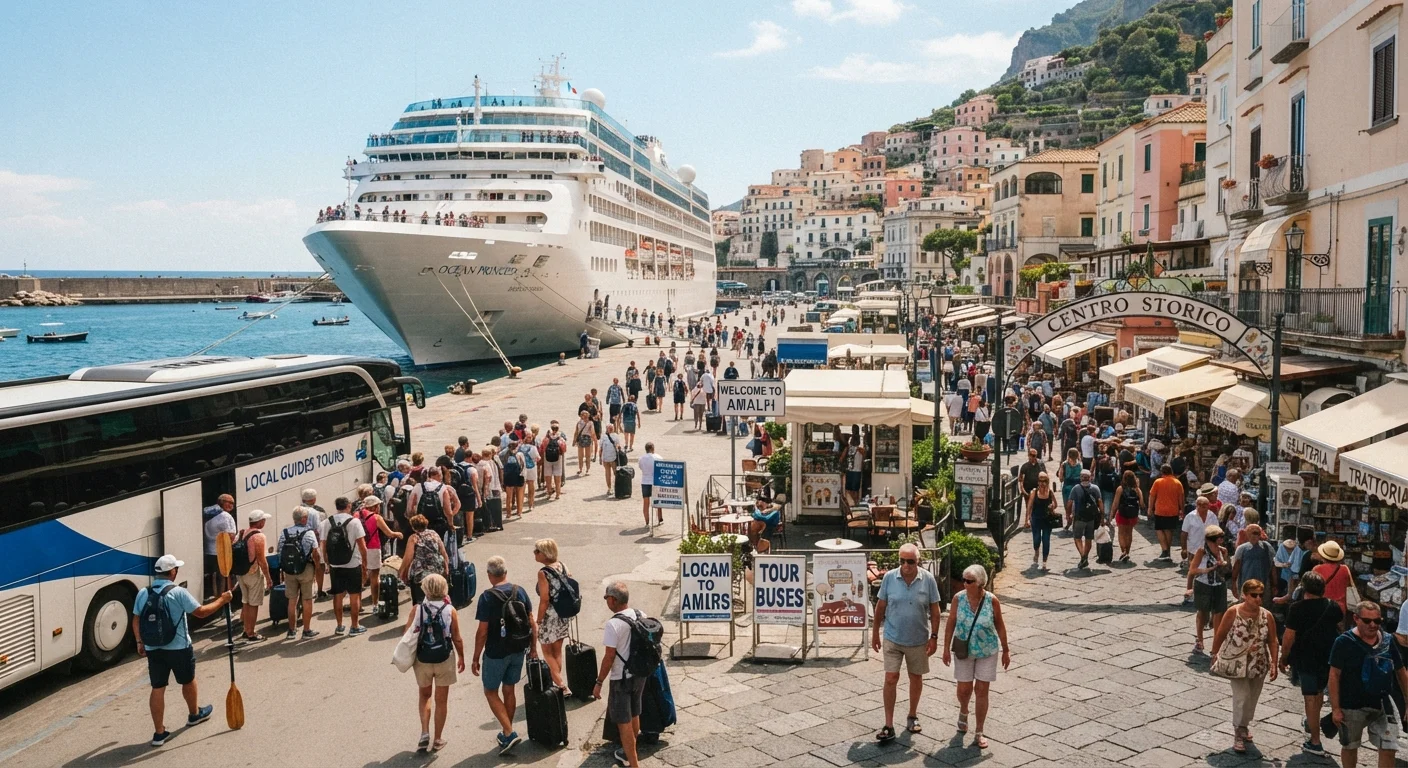
Key Takeaways
- Ship-organized tours guarantee the ship waits if your excursion runs late; independent travel does not.
- Independent exploration typically costs less but requires more advance research and local logistics planning.
- Port familiarity, language barriers, and group size all affect which approach works better on a given day.
- Some destinations and activities are genuinely difficult to arrange independently in the time a port call allows.
- Mixing approaches across a multi-port itinerary is common and often the most practical strategy.
Our Verdict
Neither option is universally better. Ship tours trade flexibility and cost for convenience and guaranteed departure protection. Independent excursions offer more control and value, but require preparation and carry more risk if things go wrong. Most cruisers benefit from using both approaches across different ports rather than committing to one method for an entire itinerary.
| Best for | Recommended |
|---|---|
| First-time cruisers unfamiliar with a destination | Ship-organized tours |
| Travelers who want maximum flexibility and have done their research | Independent exploration |
| Those with mobility needs or accessibility requirements | Ship-organized tours |
| Small groups visiting well-documented, easy-to-navigate ports | Independent exploration |
What ship-organized tours actually include
When you book an excursion through the cruise line, you are paying for a bundled experience: transportation, a guide, entry fees, and a structured schedule that fits within your port window. The cruise line has vetted the operator (though standards vary), and your ticket includes one significant benefit that no independent trip can match: if the tour runs late, the ship will wait for you.
That departure guarantee matters more than many first-time cruisers realize. Ports with heavy traffic, long distances from the pier, or unpredictable road conditions can turn a 20-minute buffer into a missed sailing. Ship-organized tours absorb that risk on your behalf.
For travelers with mobility needs, ship tours often provide the clearest accessibility information upfront. See the cruise accessibility guide for what to ask operators before booking any excursion.
The trade-off is cost and crowd size. Ship excursions are almost always more expensive than booking the same activity locally, and group sizes can run into the dozens. You spend more time waiting and less time at the site itself.
How independent excursions work and what they demand
Going independent means arranging your own transportation, entry, and timing once the ship docks. That could be as simple as walking off the pier into a walkable town, or as involved as pre-booking a private driver, a local guide, and timed entry to a popular attraction.
The cost advantage is real. A ship excursion to a historic site might cost three times what you would pay booking direct with a local operator or taking a regional bus or taxi. For a family or a group of four, the savings can be substantial across a multi-port itinerary. Families cruising with children often find independent arrangements more economical and easier to pace around younger travelers.
The demand is also real. You need to know your port's geography, have a reliable return plan, and build in enough time to get back to the ship before the departure deadline, not the posted all-aboard time, which is typically 30 minutes before sailing. One missed taxi or an unexpectedly long line can put you in a difficult position.
| Ship-organized tour | Independent excursion | |
|---|---|---|
| Cost | Higher, bundled price | Lower, pay each element separately |
| Departure protection | Ship waits if tour runs late | No protection; missing ship is your risk |
| Group size | Often large (20 to 50 people) | As small as you choose |
| Flexibility | Fixed schedule and route | Adjust pace and stops freely |
| Pre-trip research needed | Minimal | Significant planning required |
| Best for complex logistics | Yes, handled by operator | Only if pre-arranged carefully |
| Accessibility options | Usually documented upfront | Requires direct research with providers |
Research is the deciding factor. Ports with good public transit, clear signage, and short distances from the pier (think Santorini's main town or Nassau's historic district) are far easier to navigate independently than ports where the highlights require a long drive on roads without reliable local transportation.
Port-specific factors that change the calculation
Not every port presents the same challenge. Before deciding, consider four things: distance from the pier to your target destination, available local transportation, how much of the port call time you have, and whether language or local currency creates friction.
A six-hour port call in a compact European town with a tram system and English-language signage is a different problem than a five-hour call in a port where the main sites are 45 minutes away by road and taxis require negotiation in another language. In the second scenario, a ship tour or a pre-arranged private driver removes most of the uncertainty.
If you are visiting a port that appears on your itinerary for only one day, consider how recoverable a bad independent plan would be. A missed attraction is disappointing; missing the ship is expensive and stressful. For ports where you have context and confidence, independent travel rewards you with a genuinely different experience. For ports that are new and logistically complex, a ship tour may be the more honest use of a limited window.
For broader itinerary planning, the complete guide to cruise itinerary planning covers how port day count and call length affect what is actually possible ashore.
Practical steps before you choose
Before your cruise departs, look up each port on the itinerary and note the scheduled arrival and departure times. Subtract 30 to 45 minutes from the departure time for your personal hard deadline to be back at the gangway.
For each port, find out: how far the pier is from the main attractions, what transportation exists (shuttles, taxis, public buses, ferries), and whether any timed-entry or high-demand sites require advance booking that ship tours handle automatically.
Build a buffer into independent plans
Aim to be back at the pier at least one hour before the ship's posted all-aboard time, not 30 minutes. That buffer absorbs a slow taxi, a longer-than-expected walk, or a security line at the gangway. If you finish early, you can always spend the extra time at the pier or on the ship.
Check travel forums and recent trip reports for your specific ports. Other cruisers who visited in the past year are the most reliable source for current logistics, local taxi pricing, and which independent arrangements worked well. Conditions change, so look for recent accounts rather than older travel guides.
If going independent, always carry the ship's name, your sailing date, and the port agent's local phone number. Most cruise lines print this on a daily schedule card; photograph it before you leave the ship. That information helps local authorities or your transportation provider get you back quickly if something goes wrong.