

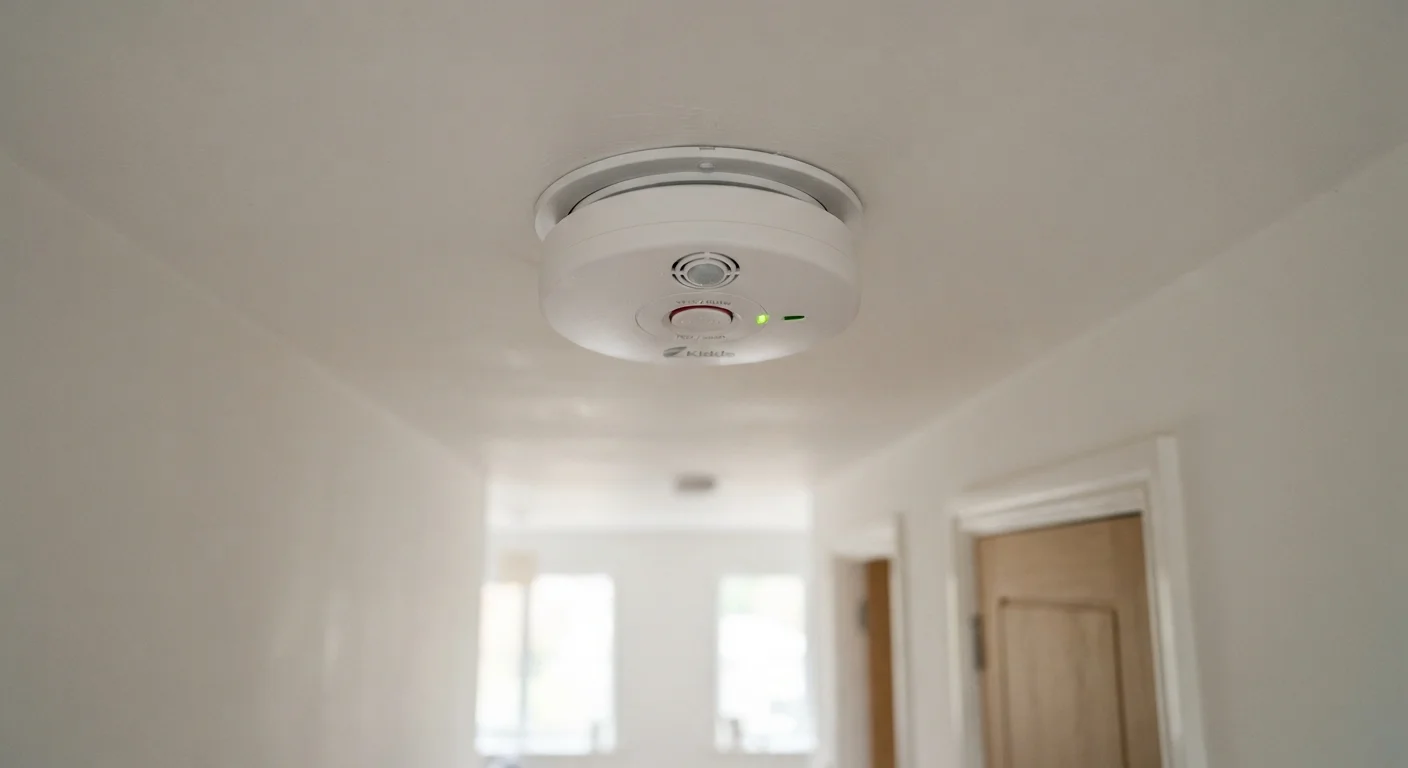
| Monthly testing | Press the test button once a month (NFPA 72, National Fire Alarm and Signaling Code) |
| Standard battery replacement | At least once per year |
| Smoke detector lifespan | Replace after 10 years from manufacture date (NFPA general guidance) |
| CO detector lifespan | Replace after 5 to 7 years (check model label) |
| Minimum detectors per home | One per level, plus inside and outside each sleeping area (NFPA 72) |
| Ceiling mounting clearance | At least 4 inches from any wall |
What each detector type does
Smoke detectors sense combustion particles in the air and trigger an alarm before fire spreads. Most residential models use one of two sensing methods: ionization detection (faster at sensing fast-flaming fires) or photoelectric detection (faster at sensing slow, smoldering fires). Combination units use both methods in a single device.
Carbon monoxide detectors measure CO gas, which is colorless and odorless and produced by fuel-burning appliances such as furnaces, gas ranges, fireplaces, and vehicles. CO buildup can become dangerous before any visible sign appears, which is why a working detector is the only reliable alert.
Combination smoke/CO detectors cover both hazards in one unit. Before buying, confirm the model is listed by a nationally recognized testing laboratory, such as UL or CSA.
Ionization detector
A smoke detector that uses a small amount of radioactive material to ionize air inside a sensing chamber. Smoke particles disrupt the ion current and trigger the alarm. This technology responds quickly to flaming fires.
Photoelectric detector
A smoke detector that uses a light beam inside a sensing chamber. Smoke scatters the light onto a sensor, triggering the alarm. It responds more quickly to slow, smoldering fires than ionization types do.
Carbon monoxide (CO)
A colorless, odorless gas produced by incomplete combustion of fuels such as natural gas, propane, oil, wood, and gasoline. Elevated indoor concentrations can be harmful or fatal without warning.
End-of-life date
The date printed on a detector by the manufacturer indicating when the device should be retired. After this date, the sensor may no longer respond reliably, even if the unit appears to function normally.
Sealed lithium battery
A non-replaceable battery built into some detector models to power the unit for its entire rated lifespan, typically 10 years. When the battery is depleted, the whole unit must be replaced.
Testing and battery maintenance schedule
Test every detector in the home once a month by pressing and holding the test button until the alarm sounds. A faint or absent alarm means the battery is low or the unit has failed.
| Monthly testing | Press the test button once a month (NFPA 72, National Fire Alarm and Signaling Code) |
| Standard battery replacement | At least once per year |
| Smoke detector lifespan | Replace after 10 years from manufacture date (NFPA general guidance) |
| CO detector lifespan | Replace after 5 to 7 years (check model label) |
| Minimum detectors per home | One per level, plus inside and outside each sleeping area (NFPA 72) |
| Ceiling mounting clearance | At least 4 inches from any wall |
Battery replacement frequency depends on the power source:
- 9-volt or AA batteries in standard detectors: replace at least once a year, or immediately when the low-battery chirp begins.
- 10-year sealed lithium batteries: no replacement needed; when the battery dies, retire the entire unit.
- Hardwired detectors with battery backup: replace the backup battery annually even though the unit draws primary power from your home's electrical system.
A useful habit is to change batteries when you change your clocks for daylight saving time, though any consistent annual date works just as well. This fits naturally into a broader seasonal routine; see the quarterly home maintenance checklist for a full schedule of tasks to pair with detector upkeep.
When to retire a detector
Detector sensors degrade over time and cannot be recalibrated at home. Manufacturers and the National Fire Protection Association (NFPA) publish general guidance on replacement timelines:
- Smoke detectors: replace 10 years after the manufacture date, which is printed on a label on the back of the unit.
- Carbon monoxide detectors: replace 5 to 7 years after manufacture, depending on the model. Check the back label or manufacturer documentation for the specific end-of-life date.
- Combination units: follow the shorter of the two timelines that apply to the CO sensing component.
If a detector chirps continuously despite a fresh battery, or fails the monthly test repeatedly, replace it immediately regardless of age. Do not attempt to silence a chirping unit by removing the battery and leaving the spot unprotected.
Placement and common installation mistakes
Smoke detectors belong on every level of the home, inside each sleeping room, and outside each sleeping area. CO detectors should be installed near sleeping areas so occupants can hear them at night.
Avoid placing smoke detectors within 10 feet of cooking appliances to reduce false alarms, and keep them away from bathrooms and areas prone to steam or high humidity. Do not install CO detectors directly above or beside fuel-burning appliances; follow the clearance distances in the product instructions.
Detectors mounted on the ceiling should be at least 4 inches from the wall. Wall-mounted units should sit 4 to 12 inches below the ceiling. Dead air collects in corners, which can slow smoke or gas from reaching the sensor.
For questions about your home's electrical layout or hardwired detector wiring, the guide to circuit breakers explains how your panel works and when to call a licensed electrician.
Keeping records and staying current with codes
Write the installation date on the inside cover or back of each detector with a marker. Photograph the label showing the manufacture date and store the image in a home maintenance folder. This makes it straightforward to track replacement timelines without removing every unit from the ceiling each year.
Local building codes and landlord-tenant laws vary on the number, type, and placement of required detectors. Renters should confirm what their lease and local code require; in many states, landlords are legally responsible for providing working detectors, but residents may be responsible for reporting failures and replacing batteries. Check with your local fire marshal's office or housing authority for the rules that apply to your address.
Routine detector maintenance fits alongside other annual home safety tasks. The water heater maintenance guide covers another often-overlooked safety item that benefits from the same once-a-year attention.