

Key Takeaways
- Most human movements fall into six broad patterns: squat, hinge, push, pull, carry, and locomotion.
- Organizing workouts by pattern rather than exercise name makes it easier to build balance and avoid gaps.
- Push and pull movements should appear in roughly equal volume to reduce shoulder and postural strain.
- Any exercise that fits a pattern can substitute for another within the same pattern.
- Covering all six patterns across a week supports full-body function without requiring daily long sessions.
Fundamental movement patterns
Fundamental movement patterns are the basic categories of physical action that the human body is built to perform: squatting, hinging, pushing, pulling, carrying, and locomotion. Rather than organizing a workout around specific named exercises, this approach groups all exercises by the underlying movement they represent. A squat and a leg press, for example, both belong to the squat pattern, even though they look different. Understanding these patterns helps you build balanced programs and spot gaps in your training.
Strength and conditioning professionals often use movement pattern frameworks to assess functional capacity and reduce the risk of muscular imbalances caused by overtraining one pattern while neglecting its counterpart.
Why the exercise name is often the wrong thing to focus on
Most people choose workouts by exercise name: bench press, lunges, lat pulldown. The name feels concrete, but it does not tell you much about what the movement is actually training or whether your program is balanced. Two exercises with very different names can train identical muscle groups and movement mechanics, while two exercises that sound similar can be almost entirely different in function.
A more useful lens is the movement pattern behind the exercise. Every strength exercise is essentially a variation of a small number of fundamental actions. Once you understand which pattern a given exercise belongs to, you can swap exercises freely, spot imbalances in your program, and make decisions based on function rather than familiarity.
This approach is especially practical for people who train with limited time or equipment. If a machine is occupied, you do not need to skip the movement entirely; you just need another exercise in the same pattern. Efficient short sessions rely heavily on this kind of thinking, since pattern coverage matters more than any single exercise choice.
The six patterns and what each one covers
Most movement frameworks organize exercises into six categories.
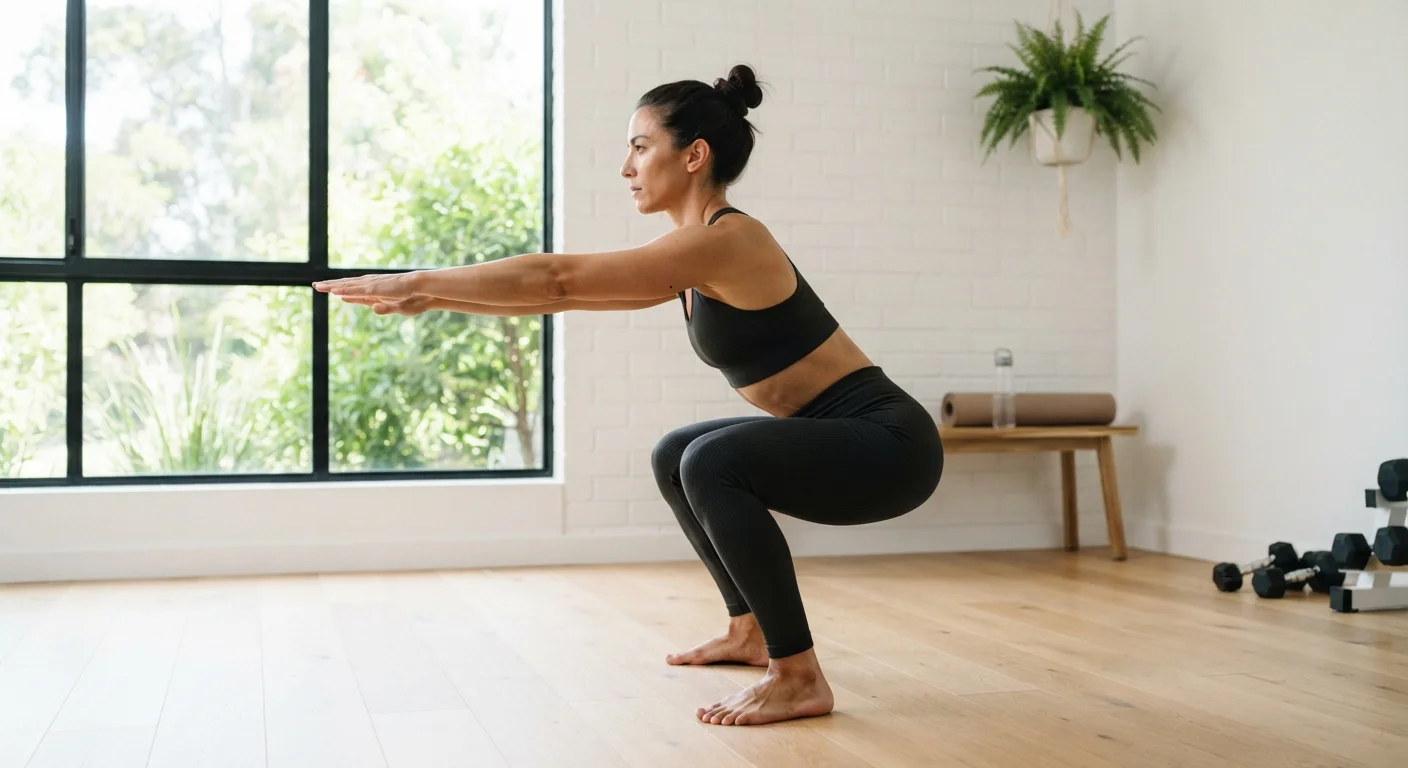
Squat. Any movement where the hips and knees bend simultaneously while the torso stays relatively upright. Bodyweight squats, goblet squats, split squats, and leg press variations all belong here. The squat pattern trains the quadriceps, glutes, and the muscles that stabilize the knee and hip.
Hip hinge. The hips move backward with a relatively neutral spine while the knees bend only slightly. Deadlifts, Romanian deadlifts, kettlebell swings, and good mornings are hinge-pattern movements. The hinge primarily trains the posterior chain: hamstrings, glutes, and lower back.
Push. Moving a load away from the body. Horizontal push (bench press, push-up) and vertical push (overhead press, pike push-up) both fall here, though programs often treat them separately because they involve different shoulder mechanics.
Pull. Moving a load toward the body. Rows train horizontal pull; pull-ups and lat pulldowns train vertical pull. The pull pattern is the most commonly neglected in programs that emphasize chest and shoulder work.
Carry. Moving while supporting a load. Farmer carries, suitcase carries, and even walking with a loaded backpack all count. Carry movements train grip, core stability, and gait in ways that isolated exercises do not replicate well.
Locomotion. Walking, running, skipping, and step patterns. For many adults, this is covered through daily activity or cardio sessions rather than formal strength work, but it belongs in any complete picture of movement health.
6
Fundamental movement patterns in most frameworks
Strength and conditioning frameworks typically organize all exercises into six primary movement categories: squat, hinge, push, pull, carry, and locomotion.
1:1
Recommended push-to-pull volume ratio
Many exercise physiologists and certified trainers suggest matching pushing volume with pulling volume per week to reduce the risk of shoulder and postural imbalances.
2-4
Training days needed to cover all six patterns weekly
Most adults can cover all six fundamental patterns at least once per week by training two to four days, depending on session length and how patterns are distributed.
Push-pull balance: the most common imbalance in home and gym programs
Push-pull balance gets more attention than any other pattern pairing because the consequences of neglecting it tend to show up clearly. Programs that include several chest and shoulder exercises but few rows or pull variations often produce forward shoulder posture and upper-back weakness over time. This is not inevitable, but it is a predictable result of repeated imbalance.
A simple rule of thumb from strength and conditioning practice is to match pushing volume with pulling volume over the course of a week. If a session includes three sets of push-ups and three sets of overhead press, a comparable volume of rows or pull-ups keeps the balance reasonable. This does not need to be exact, but the direction matters. For more on how training choices interact, see the overview of mobility vs. flexibility, which covers how range of motion and joint control relate to how these patterns feel in practice.
Audit your current routine in five minutes
List every exercise you did in the past week and assign each one to a pattern: squat, hinge, push, pull, carry, or locomotion. Any pattern with zero entries is a gap worth addressing. You do not need to restructure everything; adding one or two sets of a neglected pattern to an existing session is usually enough to restore balance.
Using patterns to fill gaps without overhauling your routine
One of the quieter benefits of thinking in patterns is that it makes gaps obvious without requiring a complete program redesign. If you look at a week of training and notice no hinge-pattern work, adding a set of Romanian deadlifts or kettlebell swings to an existing session addresses the gap without disrupting anything else.
This is also how the pattern framework helps with joint-conscious exercise. Someone with knee discomfort may need to reduce squat-pattern volume, but they can often maintain hinge, push, pull, and carry work with no modification. The program stays balanced even when one pattern needs adjustment.
Progressive overload applies at the pattern level too. Rather than trying to add weight to every exercise each session, you can focus on progressing within each pattern systematically, which makes long-term improvement more manageable. And because the patterns transfer across exercises, a progression in one variation carries over when you switch to another in the same category.
This article is for general informational purposes only and is not a substitute for advice from a qualified fitness professional or healthcare provider. Consult a professional before beginning or significantly changing an exercise program, especially if you have any existing health conditions or injuries.