

Key Takeaways
- Sessions as short as 20 minutes can build meaningful strength when structured around compound movements.
- Choosing multi-joint exercises lets you work more muscle groups with fewer total sets.
- Consistency across weeks matters more than the length of any single session.
- Rest periods and exercise order have a larger impact on short-session results than most people expect.
- Bodyweight and minimal-equipment options remove the barrier of gym access entirely.
What you will need
Why short sessions work
The widespread belief that effective strength training requires 45 to 60 minutes in the gym has more to do with gym culture than exercise physiology. Research on resistance training consistently shows that the volume of quality work, meaning sets and reps performed with appropriate effort, matters more than total time spent. A 20-minute session built around compound movements and controlled rest can match or exceed the training stimulus of a longer, less focused one.
The obstacle most people face is not a lack of time but a lack of structure. Without a clear plan, sessions expand to fill whatever time is available. Short sessions force prioritization, which often improves quality by removing low-value exercises and reducing unfocused rest.
Some popular workout habits quietly undermine consistency over time, and overly long sessions are one of them. When a workout requires an hour you rarely have, it simply does not happen.
Pair short sessions with a realistic weekly plan
Short sessions are most effective when they are part of a consistent weekly pattern rather than ad hoc workouts. Two to three sessions per week, each targeting the whole body, give your muscles enough frequency to adapt. See how cardio and strength training interact if you plan to include both in a limited schedule.
How to structure your short session
Before following the steps below, gather what you need and confirm you have your timer ready. The steps work for bodyweight-only training as well as sessions with dumbbells or bands.
What you will need
The steps are designed to be adapted rather than followed rigidly. Someone training at home with no equipment will make different exercise choices than someone with access to a full rack, but the structure, compound movements, defined sets, controlled rest, and progression, applies equally.
Pick two or three compound movements as your foundation
Compound movements work multiple joints and muscle groups at once. A squat, a hinge (like a deadlift variation), a push (like a push-up or overhead press), and a pull (like a row) cover most of the body. When time is short, choose two or three of these rather than isolating single muscles.
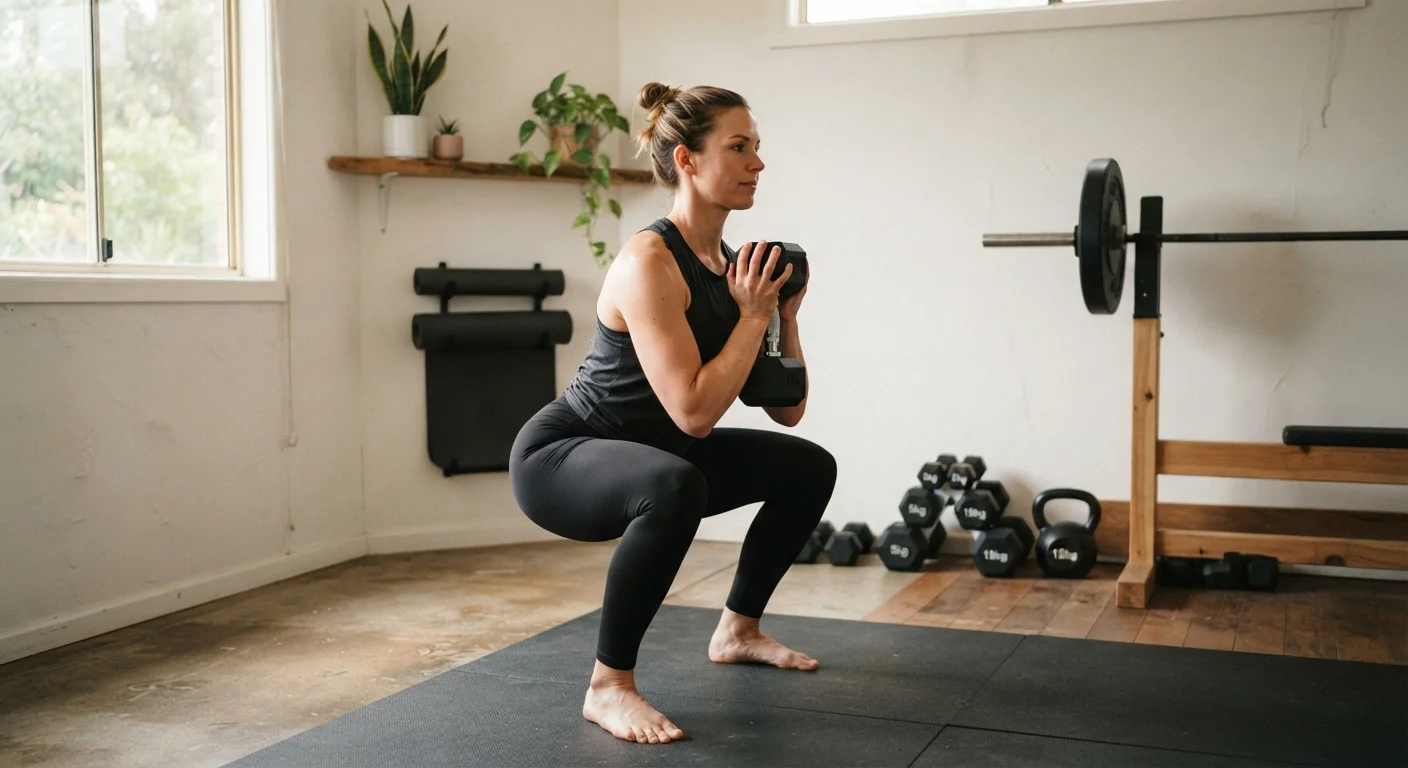
For example, pairing a goblet squat with a push-up and a dumbbell row gives you lower body, chest, shoulders, triceps, upper back, and biceps in three exercises. See how foundational movement patterns work for a deeper breakdown of why this approach produces balanced results.
Set your sets and reps before you start
Walking in without a plan is one of the most common ways short sessions stretch longer than intended. Decide in advance: three sets of eight to ten reps per exercise is a reliable starting point for most adults building general strength. Write it down or log it in a notes app so there is nothing to figure out mid-session.
This also lets you track progress week to week, which matters for knowing when to add load or reps.
Cap your rest periods
Rest is where short sessions lose time. For general strength with a limited schedule, rest periods of 60 to 90 seconds between sets keep sessions compact without sacrificing much performance on compound lifts. If you are lifting heavier (close to your maximum for that rep range), allow up to two minutes.
Using a timer removes the guesswork and prevents the rest from quietly expanding to three or four minutes.
Use a superset structure to save time
A superset pairs two exercises back to back with little or no rest between them, then a full rest after both. Pairing a lower-body movement with an upper-body movement works well because one area recovers while the other works. For example: goblet squat, then immediately a dumbbell row, then 60 to 90 seconds of rest before repeating.
This approach can cut total session time without reducing volume. Bodyweight training lends itself particularly well to this structure since no equipment changes are needed between exercises.
Schedule sessions consistently across the week
Two or three short sessions spread across the week will produce more consistent strength gains than one long session followed by days of inactivity. The body adapts to repeated stress over time, and frequency supports that process. Even two 20-minute sessions per week gives each major muscle group adequate stimulus when the exercises are chosen well.
Building a weekly schedule that fits your real commitments is covered in detail elsewhere, but the principle is simple: treat sessions like appointments rather than optional extras.
Progress the load or reps over time
Short sessions stop working when they stay the same for months. Progressive overload, the gradual increase of demand on the muscles, is what drives continued strength gains. Once you can complete all planned sets and reps with good form and the last rep feels manageable, add a small amount of load or one extra rep per set the following week.
Without this, even well-designed short sessions plateau. The log you kept in step two makes this straightforward to manage.
This article is for general informational purposes only and is not a substitute for advice from a qualified fitness or healthcare professional. If you have an existing injury, chronic condition, or have been inactive for an extended period, consult a qualified professional before beginning a new exercise program.