

Key Takeaways
- Paying with cash tends to produce more spending restraint than cards because physical money feels more real to part with.
- Debit cards draw directly from your bank balance, which limits overspending but offers fewer fraud protections than credit cards.
- Credit cards carry risk if balances are not paid in full, but they can build credit history and offer purchase protections.
- Mixing payment methods deliberately, based on the purchase type, can support better budget discipline.
Our Verdict
No single payment method is objectively superior for every situation. Cash works well for discretionary categories where overspending is a recurring problem. Debit suits people who want simplicity without debt risk. Credit cards are worth using where purchase protections and credit building matter, provided balances are cleared each month. Consult a licensed financial adviser if you are working through debt or building a financial plan.
| Best for | Recommended |
|---|---|
| Those who frequently overspend on discretionary items | Cash |
| Those who want a simple, debt-free option tied to real balances | Debit card |
| Those with disciplined payoff habits who want purchase protections | Credit card |
How payment method shapes the way you spend
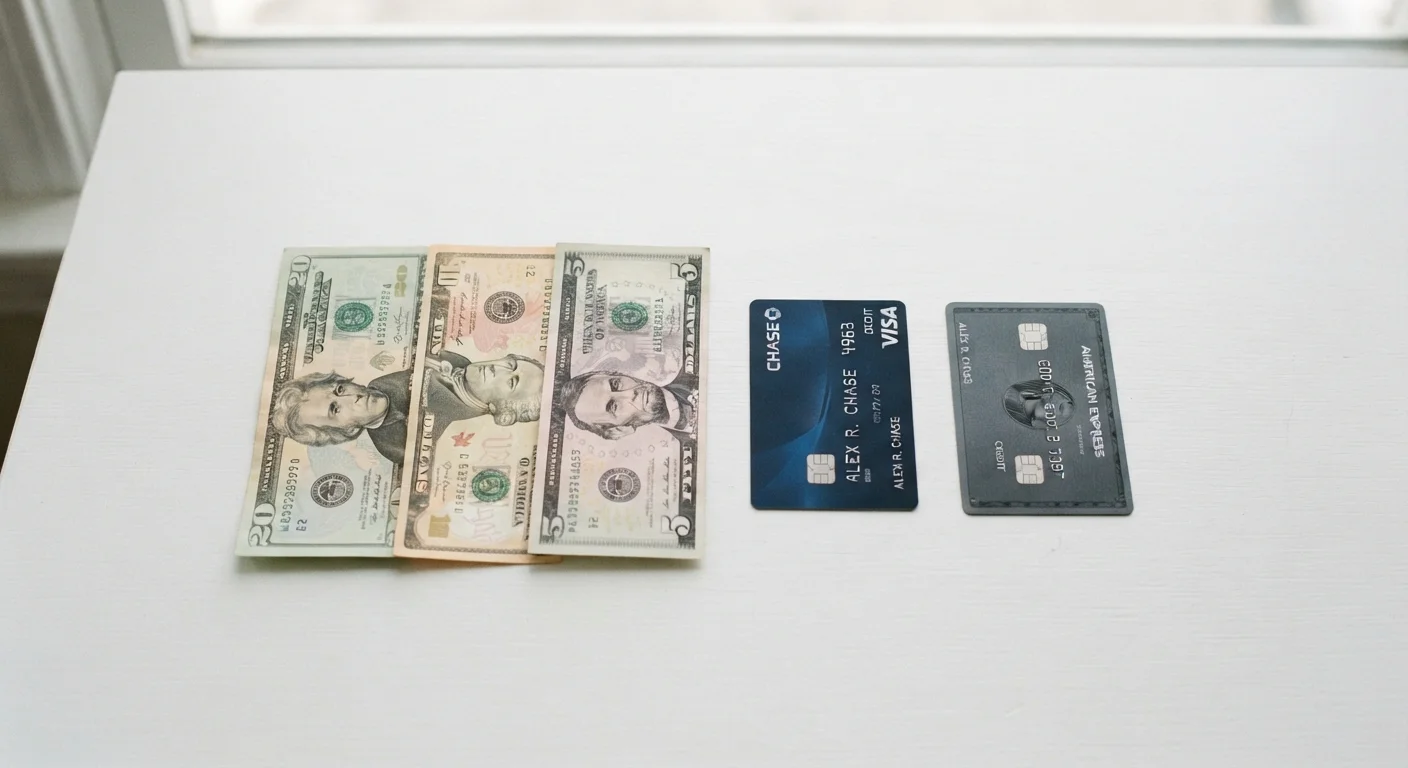
The way you pay for something changes how you think about the purchase. Research in consumer psychology has consistently shown that people tend to spend more when they use cards instead of cash, a pattern sometimes called the "pain of paying." Physical money triggers a tangible sense of loss; handing over a $20 bill registers differently in the brain than tapping a card. That gap in perception has real consequences for everyday budgets.
This is not a minor theoretical point. For anyone trying to build better money habits, understanding how each payment method influences behaviour is as practical as tracking income and expenses. See the budgeting basics hub for simple frameworks that pair well with this kind of payment awareness.
| Cash | Debit card | Credit card | |
|---|---|---|---|
| Spending limit | What you carry | Account balance | Credit limit |
| Fraud protection | None | Limited (EFTA) | Strong (FCBA) |
| Credit building | No | No | Yes, if used responsibly |
| Overspending risk | Low | Low to moderate | Moderate to high |
| Online usability | Not directly | Yes | Yes |
| Transaction records | None automatic | Bank statement | Card statement |
| Interest cost risk | None | None | High if balance carried |
Cash: built-in friction that limits spending
Cash creates a hard stop. When the money in your wallet is gone, the transaction cannot proceed. That constraint is its main financial advantage, and it is why cash-based budgeting methods, such as the envelope method, have a track record of helping people rein in discretionary spending.
The practical drawbacks are real, though. Cash offers no fraud protection. If it is lost or stolen, it is gone. It cannot be used for online purchases without a workaround, and it builds no credit history. For large or recurring transactions, carrying cash is inconvenient and sometimes impractical.
Cash works best when it is used intentionally for categories where overspending is a known problem, such as dining out, entertainment, or grocery shopping above a set weekly amount. Pairing cash use with a digital spending tracker helps cover the gap in record-keeping that cash naturally creates.
Debit cards: real money, less friction
A debit card draws directly from a checking account, so it shares cash's core constraint: you can only spend what you have. Unlike cash, it leaves a transaction record, works online, and does not require carrying bills. For many people, it is the default payment method precisely because it feels both convenient and low-risk.
The friction reduction compared to cash matters more than it might seem. Swiping or tapping a card is psychologically closer to credit card behaviour than to paying with bills. Research has found that debit card users can still spend more per transaction than cash payers, even though funds are limited to account balances. The compounding effect of small daily purchases applies just as readily to debit as to credit.
Debit cards also carry weaker federal fraud protections than credit cards under the Electronic Fund Transfer Act. If a debit card number is compromised and the card is not reported quickly, liability exposure can be higher than with credit card fraud. Checking your bank's specific terms is worth doing before assuming full protection.
Credit cards: flexibility with a cost attached
Credit cards offer the most purchasing flexibility and the strongest fraud protections under the Fair Credit Billing Act, which caps consumer liability for unauthorised charges at $50, though many issuers go further voluntarily. They also report payment behaviour to the major credit bureaus, so responsible use builds the credit history that affects loan eligibility, insurance rates, and rental applications. Understanding how credit utilization affects your score is useful background for any credit card holder.
The risk is structural. Because a credit card separates the purchase from the payment, it removes immediate budget feedback. Carrying a balance triggers interest charges that can compound quickly. For people who do not pay the full statement balance each month, the cost of convenience can outweigh its benefits. If you are weighing whether to use credit or another product for a larger expense, the trade-offs between personal loans and credit cards are worth reviewing before committing.
This article is for general informational purposes only and does not constitute personalised financial advice. Consult a licensed financial professional regarding your individual circumstances.