

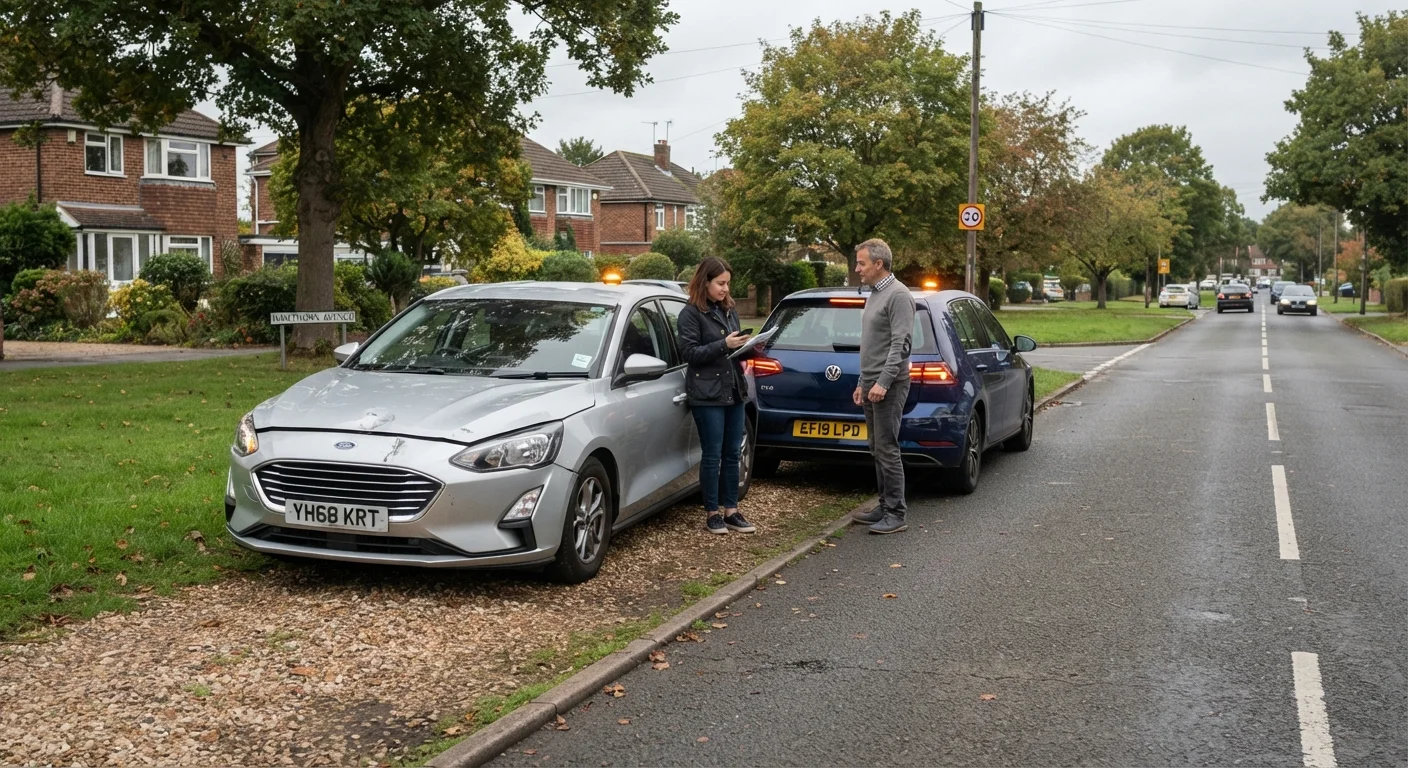
Key Takeaways
- Move vehicles out of active traffic lanes as soon as it is safe to do so.
- Call 911 if anyone is injured; in many states a police report is legally required even for minor crashes.
- Exchange insurance and contact information with the other driver before leaving the scene.
- Document the scene with photos before vehicles are moved whenever possible.
- Never admit fault at the scene; liability is determined by insurers and, when necessary, courts.
- Notify your insurer promptly, even if you do not plan to file a claim.
What you will need
Why minor collisions are often mishandled
A fender-bender can be disorienting even when nobody is hurt. Adrenaline, frustration, and pressure from other drivers can push people into decisions that create problems later: leaving the scene too quickly, skipping documentation, or agreeing informally to handle repairs without involving insurance. Each of those shortcuts can backfire during a dispute over liability or when hidden damage surfaces days later.
Drivers who know the correct steps in advance tend to handle the scene more calmly and protect themselves more effectively. If you want to build a broader foundation of safe driving practices, see our guide to highway merging rules and practice, which covers how poor lane changes can lead to collisions in the first place.
What you will need
Step-by-step: what to do at the scene
Follow the steps below in order. The sequence matters because safety comes before documentation, and documentation comes before any conversation with the other driver about costs or fault.
Move to safety
If the vehicles are drivable and no one appears seriously hurt, move them off the roadway to a shoulder, parking lot, or side street. Staying in an active lane after a minor collision creates a second, often more serious hazard. Turn on your hazard lights the moment the collision happens.
Check for injuries
Ask everyone in your vehicle and then the other vehicle if they are hurt. Some injuries, including whiplash, may not feel painful immediately after a collision. If anyone reports pain, dizziness, or difficulty moving, call 911 without delay and do not encourage them to stand or walk.
Call the police if required
Many states legally require drivers to report any collision that involves injury, a fatality, or property damage above a set dollar threshold (thresholds vary by state). Even when it is not legally mandated, a police report creates an official record that can help resolve insurance disputes. Call the non-emergency line for a minor crash with no injuries, or 911 if anyone is hurt.
Document the scene
Take photographs of all vehicle damage, the positions of both cars, any skid marks, the surrounding road, traffic signs, and weather conditions. Wide shots establish context; close-ups capture specific damage. Do this before vehicles are moved if it is safe to do so.
Also photograph both driver's licenses, insurance cards, and license plates to avoid transcription errors.
Exchange information
Collect and share the following with the other driver:
- Full name, address, and phone number
- Driver's license number and issuing state
- Insurance company name and policy number
- Vehicle make, model, year, and license plate number
If witnesses are present, ask for their name and phone number. Witness accounts can be useful if fault is disputed.
Avoid admitting fault
Do not apologize, speculate about what caused the collision, or say anything that could be interpreted as accepting blame. Fault is determined by insurers based on evidence, applicable traffic law, and sometimes a police report. Statements made at the scene can be used against you in a claim or legal proceeding.
Notify your insurance company
Contact your insurer as soon as possible after leaving the scene, even if the damage appears minor and you are unsure whether you will file a claim. Most policies include a prompt-reporting requirement. Delaying notification can complicate or void coverage. Your insurer will explain the claims process and next steps based on your specific policy terms.
Store your documents before you need them
Keep a copy of your insurance card and vehicle registration in a consistent spot in your glove compartment. After a collision is not the time to search for them. Some insurers also offer digital insurance cards through their mobile apps, which can be easier to access quickly.
After you leave the scene
Once you are home, write down a full account of the collision while the details are fresh: the time, location, road conditions, direction each vehicle was traveling, and a description of how the impact occurred. This record can support your version of events if the other driver's account differs.
Have your vehicle inspected by a qualified mechanic before driving it extensively, even if the damage appears cosmetic. Bumper collisions can affect sensors, structural crumple zones, and cooling components that are not visible to the eye. If you want a broader look at how to keep your vehicle in good condition, the car care basics for new drivers covers routine maintenance habits that help drivers catch problems early.
Never leave the scene before exchanging information
Leaving the scene of a collision without exchanging information or reporting to police (where required) is a criminal offense in every US state, regardless of how minor the damage appears. Penalties range from fines to license suspension to felony charges if injuries are involved. Always stop, check on the other driver, and follow your state's reporting requirements.
This article is for general informational purposes only and does not constitute legal or insurance advice. Traffic laws and reporting requirements vary by state. Consult a licensed insurance professional or legal adviser for guidance specific to your situation.