

Key Takeaways
- A parked car loses battery charge within weeks because modern vehicles draw small amounts of power even when off.
- Fuel degrades and can leave varnish deposits in fuel lines and injectors after about 30 days without a stabilizer.
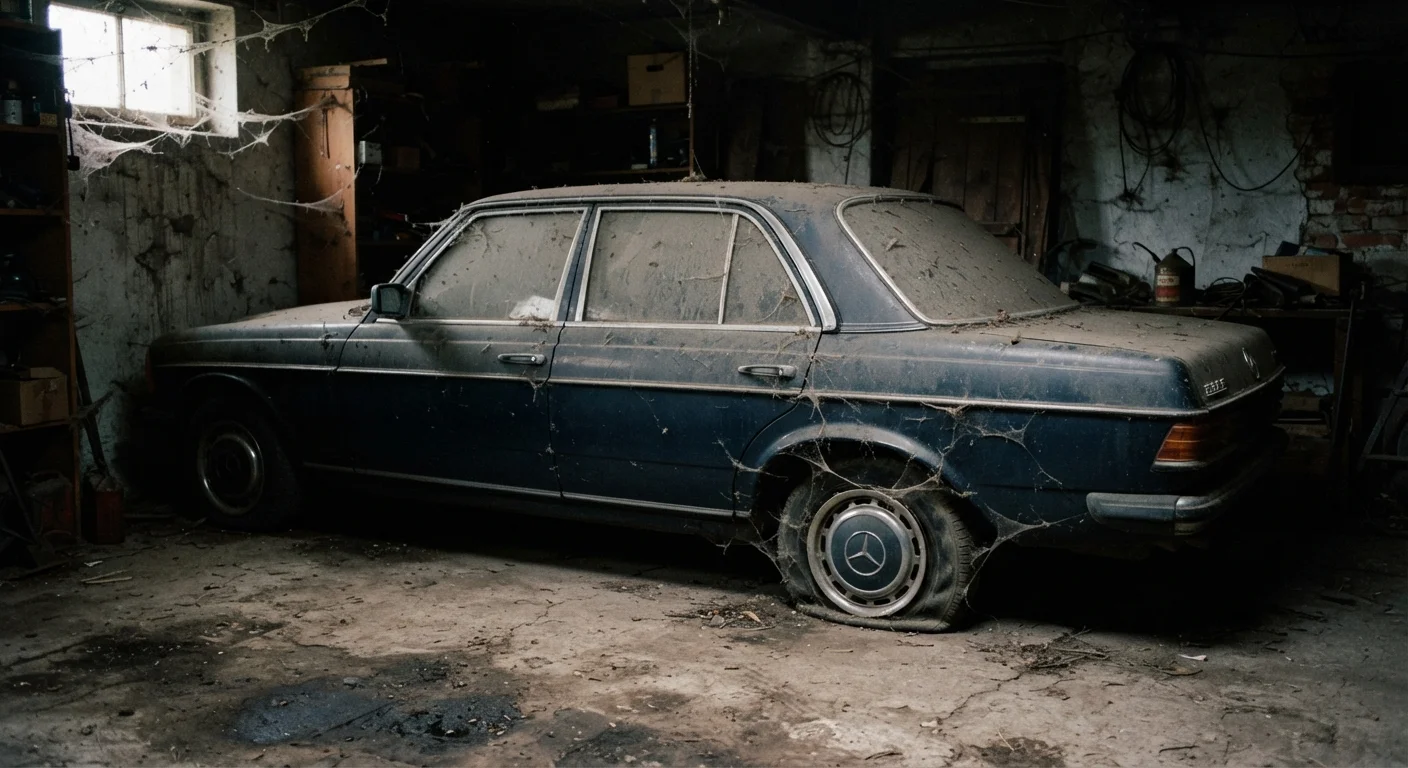
- Tires develop flat spots from prolonged contact with a single surface point, especially in cold temperatures.
- Rubber seals and gaskets dry out when a car sits, which can lead to oil and coolant leaks when driving resumes.
- Brake rotors develop a rust layer quickly, and brake fluid absorbs moisture over time regardless of mileage.
- Rodents and insects can cause serious wiring and interior damage in parked vehicles, especially in enclosed spaces.
Long-term car storage
Long-term car storage refers to leaving a vehicle parked and unused for an extended period, generally four weeks or more. During that time, multiple vehicle systems degrade without the regular movement and heat cycles that keep them functional. The effects range from a discharged battery to hardened rubber seals and stale fuel.
The threshold for meaningful degradation varies by climate, vehicle age, and fuel type. Ethanol-blended gasoline (E10 or higher) can absorb moisture and degrade noticeably within 30 days without a fuel stabilizer.
The battery drains faster than most drivers expect
Every modern vehicle draws a small continuous current from its battery to power the alarm system, clock, keyless entry modules, and onboard computers. This parasitic draw is normal and small, but over two to four weeks it can pull a standard 12-volt lead-acid battery below the threshold for a reliable start. Cold temperatures accelerate this process because battery capacity drops when the temperature falls.
A battery that discharges deeply and repeatedly suffers permanent capacity loss. Once voltage drops low enough, the internal plates can sulfate, which reduces the battery's ability to hold a full charge even after recharging. For context on how storage fits into overall battery wear, see battery health warning signs.
Consider a battery maintainer for storage
A battery maintainer (sometimes called a trickle charger) connects to the battery and supplies a small charge that offsets the vehicle's parasitic draw. It keeps the battery at a healthy voltage without overcharging it. This is different from a standard battery charger, which is designed for a faster charge cycle and is not suitable for continuous connection.
Fuel, oil, and other fluids change while the car sits
Gasoline begins to oxidize and lose volatility within about 30 days, particularly blends containing ethanol. Degraded fuel can leave varnish-like deposits in the fuel tank, fuel lines, and injectors. Those deposits restrict fuel flow and can cause rough starts or misfires when the car is returned to service.
Engine oil does not degrade as quickly as fuel, but it does settle and lose its protective film on metal surfaces. When a long-stored engine first starts, there is a brief period where metal-on-metal contact occurs before oil pressure rebuilds. This is a normal part of any cold start, but it is more pronounced after extended storage.
Brake fluid absorbs moisture from the air over time, a property known as hygroscopy. Absorbed water lowers the fluid's boiling point and can cause corrosion inside brake lines and calipers. This happens regardless of how few miles the car has traveled, which is why brake fluid is typically replaced on a time-based schedule in addition to a mileage-based one.
30 days
Approximate time before ethanol-blend fuel degrades noticeably
Industry guidance from fuel system manufacturers and storage product documentation consistently cites this threshold for untreated gasoline.
2 to 4 weeks
Time for parasitic draw to fully drain a typical car battery
The exact timeframe depends on battery age, ambient temperature, and the vehicle's standby current draw.
A few days
Time for surface rust to form on bare brake rotors
Thin surface oxidation forms quickly in humid conditions; it typically wears off with normal braking but can deepen over months of inactivity.
Tires, seals, and brakes all respond to inactivity
Tires bear the car's full weight at a single contact point when it sits still. Over weeks, the tire casing deforms slightly at that point, creating a flat spot. In cold weather this happens faster. Flat spots often disappear after a few miles of driving as the tire warms and reshapes, but severe cases, particularly on older or under-inflated tires, can cause a persistent vibration or require tire replacement.
Rubber seals and gaskets throughout the engine, transmission, and suspension need regular contact with oil and coolant to stay supple. Extended dryness can cause them to shrink and harden. Visible evidence usually appears after the car is driven again: small drips or wet spots around valve covers, the front crankshaft seal, or transmission pan gaskets.
Brake rotors are bare metal, and surface rust forms within a few days of exposure to humidity. A thin rust layer typically wears off after the first few brake applications, but a car stored for months can develop pitting, especially in coastal or humid climates. Pitted rotors may cause pulsation when braking and eventually require replacement. For a broader look at how these components age over time, the reference guide to car part lifespans covers typical service intervals for brakes and related systems.
Pests and moisture cause damage that is easy to overlook
Rodents are attracted to parked vehicles for warmth and shelter. They can chew through wiring harnesses, brake lines, air filter housings, and interior materials. Wiring damage in particular can be expensive and difficult to diagnose because faults may appear intermittently after the car resumes normal use.
Condensation builds inside a parked car whenever temperature swings cause humid air to pass through ventilation gaps. Over months, this can lead to mold growth in carpet, seat foam, and the HVAC system. Vehicles stored without a moisture-absorbing product in wet climates are more vulnerable. Older vehicles with aging weatherstripping are at greater risk because seals that have started to shrink, as described above, let in more air movement.
Owners returning a car to regular use after extended storage should inspect fluid levels, tire pressure, brake response in a low-speed area, and any unusual smells or warning lights before highway driving. Vehicles with higher mileage warrant closer attention after storage; the high-mileage car maintenance guide covers which systems deserve extra scrutiny as a car ages.