

Key Takeaways
- A slow engine crank is one of the earliest signs a battery is losing capacity.
- Extreme temperatures, short trips, and parasitic drains all shorten battery life.
- Most lead-acid car batteries last three to five years under normal conditions.
- A simple voltage test can reveal battery health before a failure leaves you stranded.
Why batteries weaken before they die
A car battery does not simply work perfectly one day and fail the next. Lead-acid batteries, which are still standard in most gasoline-powered vehicles, degrade gradually through a process called sulfation, where lead sulfate crystals build up on the battery plates and reduce the surface area available for chemical reactions. Each charge and discharge cycle adds to that wear.
Heat accelerates internal corrosion. Cold reduces the battery's ability to deliver current precisely when starting demands are highest. The result is a battery that may test within acceptable voltage at rest but cannot handle the load of cranking a cold engine in January. A resting voltage of 12.6 volts is considered fully charged, while anything below 12.0 volts at rest suggests significant discharge or deterioration.
Drivers who understand this curve have a real advantage: there is usually a window of several weeks between the first noticeable symptoms and a complete failure. Using that window to test and replace the battery on your own schedule avoids the cost and stress of an unexpected breakdown.
Mistakes that let battery problems go unnoticed
Most battery failures that leave drivers stranded were preceded by signs that went unaddressed. The mistakes below cover the most common ways those signs get missed or dismissed.
Ignoring a slow engine crank and assuming it will resolve on its own.
Why it happens: A slow crank is easy to rationalize, especially on cold mornings when sluggish starts feel normal.
Skipping battery checks during routine maintenance visits.
Why it happens: Batteries are out of sight and rarely mentioned unless something has already gone wrong.
Letting the vehicle sit unused for weeks without protecting the battery.
Why it happens: Many drivers do not realize that a parked car still draws a small current through its electronics, gradually draining the battery.
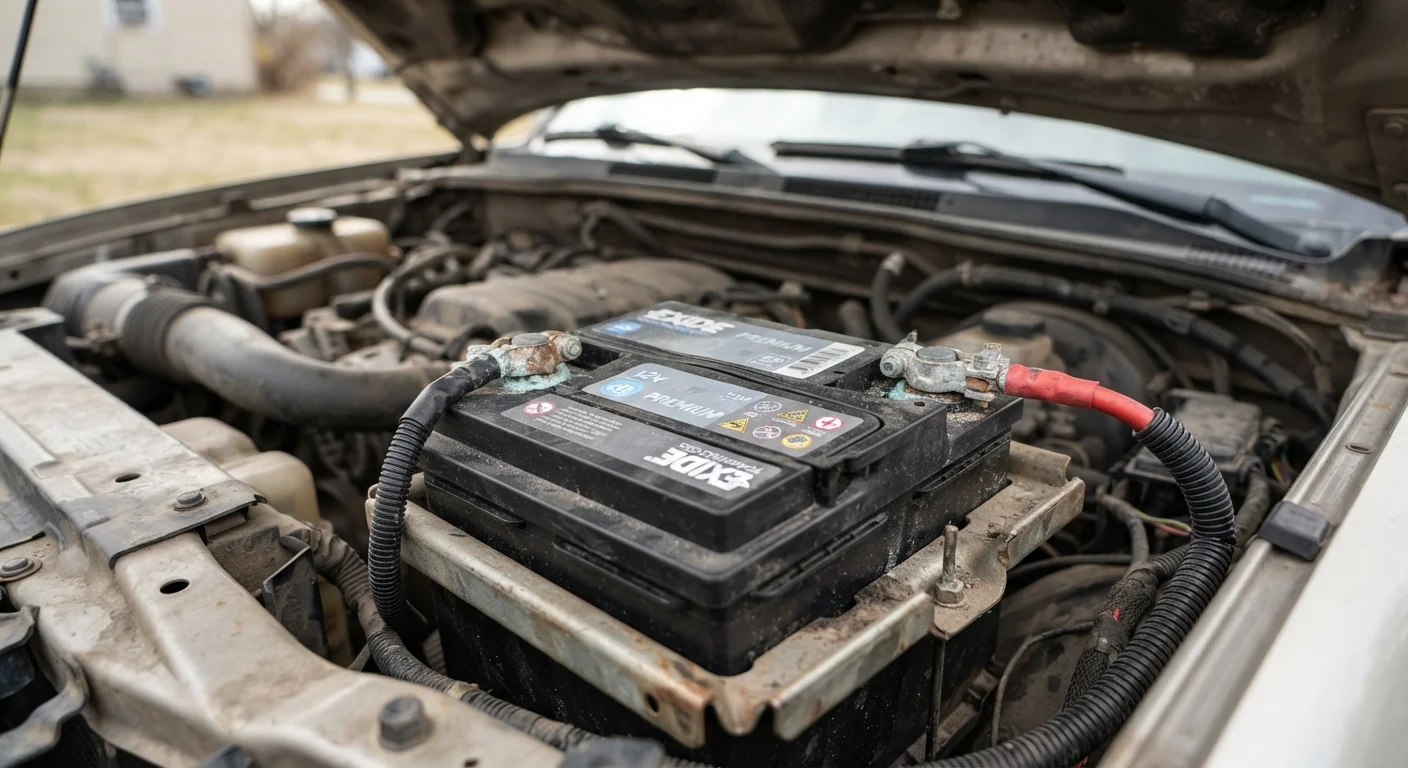
Dismissing corroded or loose battery terminals as a cosmetic issue.
Why it happens: Corrosion builds up slowly and looks minor, so drivers often assume it has no real effect on performance.
Relying only on dashboard warning lights to signal battery trouble.
Why it happens: Drivers trust that the battery warning light will appear before a failure, but that light monitors the charging system, not the battery's stored capacity.
One factor that compounds all of these mistakes is age. Once a battery passes the three-year mark, proactive testing matters more than reactive attention. The typical lifespan of common car parts gives useful context for when to start watching each component, not just the battery.
Conditions that shorten battery life faster than normal
Jump-starting is a temporary fix only
Getting a jump-start after a dead battery does not restore battery health. If a battery repeatedly needs a jump, it has likely degraded past the point where recharging helps. Continuing to rely on jump-starts while ignoring the root cause can also stress the alternator over time, creating a second repair bill.
Several driving patterns and environmental conditions drain a battery faster than the three-to-five-year average suggests. Short trips are a persistent problem: the alternator needs roughly 20 to 30 minutes of driving to fully recharge what the starter motor used. Drivers who take only brief daily trips may never fully recharge the battery, slowly drawing down its capacity over months.
Extreme heat (common in southern US states) is actually more damaging to battery chemistry than cold, even though cold is what makes weak batteries fail most visibly. Parking in direct sun for extended periods accelerates internal degradation. Accessories left running while the engine is off, including phone chargers, interior lights, or aftermarket electronics, add parasitic drain on top of the normal background draw from the car's own electronics.
Do not ignore a sudden electrical change
If your dashboard lights dim noticeably when the engine starts, or your power accessories slow down without explanation, treat it as a battery warning, not a minor quirk. Waiting for a full failure in cold weather or away from home turns a manageable inconvenience into a serious problem. Have the battery tested at an auto shop before the next long drive.
Understanding how these factors compound over a car's life also affects long-term ownership costs. A battery that fails early, or one that strains the alternator through repeated deep discharges, contributes to the broader maintenance picture discussed in how vehicle ownership costs accumulate over time.