

Key Takeaways
- Coolant absorbs engine heat and releases it through the radiator before recirculating.
- A failing thermostat, low coolant level, or worn water pump can each cause overheating.
- Coolant degrades over time and needs to be flushed and replaced on a schedule.
- Catching cooling system problems early is far less expensive than repairing a warped cylinder head.
- The temperature gauge on your dashboard is your first signal that something is wrong.
Engine cooling system
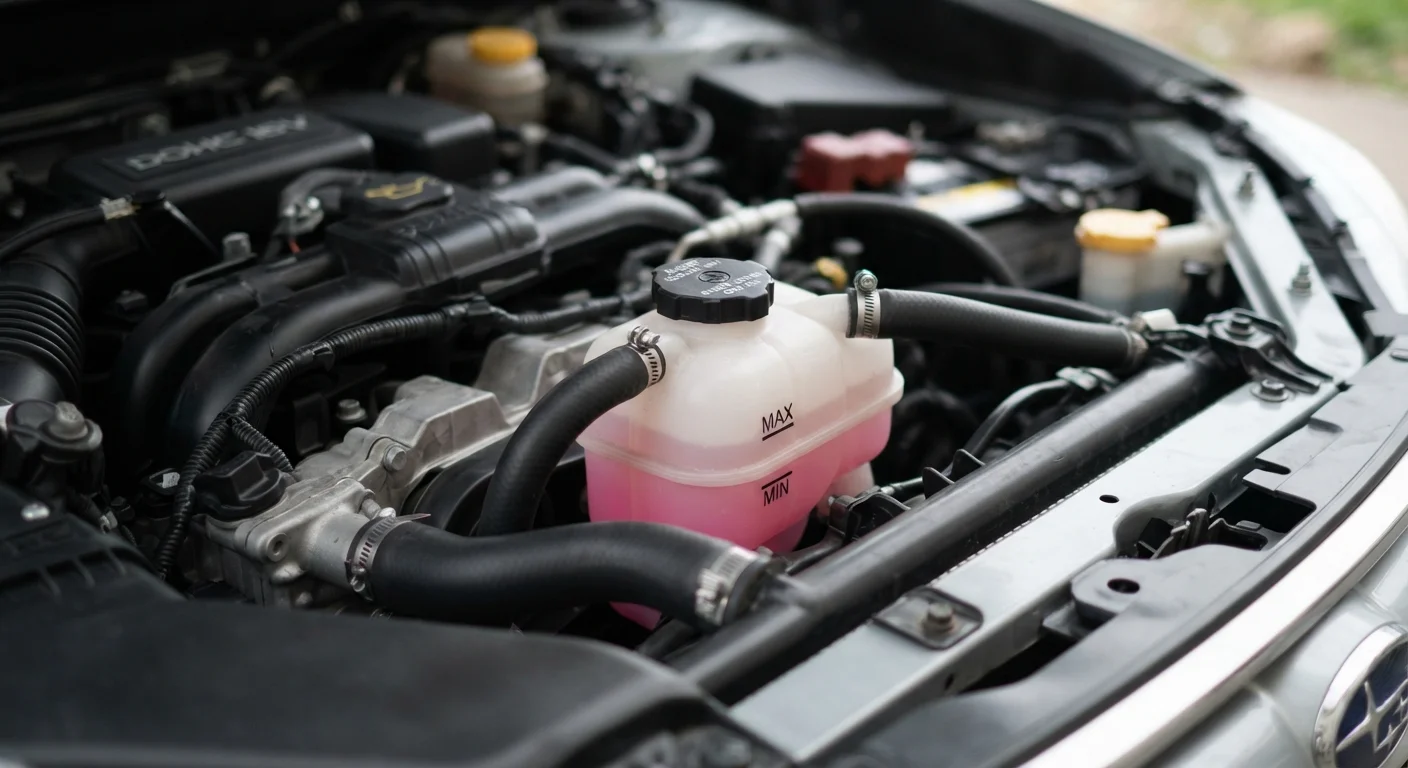
The cooling system is a network of components that moves liquid coolant through your engine to absorb heat, then circulates that heat away through the radiator. Without it, combustion engines would overheat within minutes. The system includes the radiator, water pump, thermostat, coolant reservoir, and a series of hoses connecting them.
Coolant (also called antifreeze) is typically a mixture of ethylene glycol and water, formulated to raise the boiling point and lower the freezing point of the fluid circulating through the engine block.
How the cooling system moves heat out of your engine
An internal combustion engine generates enormous amounts of heat. Combustion temperatures inside the cylinders can exceed 4,500 degrees Fahrenheit, and even after accounting for heat lost through the exhaust, the engine block absorbs enough thermal energy to destroy metal components without active cooling.
The coolant circuit works like this: the water pump pushes coolant through passages cast into the engine block and cylinder head. The fluid absorbs heat from the metal, then travels through the upper radiator hose to the radiator. Inside the radiator, the hot coolant passes through a network of thin tubes surrounded by fins. Air moving through those fins, either from driving or from the radiator fan, strips heat from the fluid. The cooled coolant then returns to the engine through the lower radiator hose, and the cycle repeats.
The thermostat manages this circuit. When the engine is cold, the thermostat stays closed and coolant circulates only within the engine to help it reach operating temperature faster. Once the engine warms to its target range, typically between 195 and 220 degrees Fahrenheit, the thermostat opens and allows the full circuit to run through the radiator. A thermostat stuck in the closed position is one of the most common causes of overheating.
Never open the radiator cap on a hot engine
Coolant systems are pressurized. Opening the radiator cap or coolant reservoir cap while the engine is hot can cause scalding fluid to erupt. Always wait until the engine has cooled completely before removing any cooling system cap.
What coolant actually does
Water alone would transfer heat adequately, but it freezes at 32 degrees Fahrenheit, boils at 212 degrees Fahrenheit, and corrodes metal over time. Coolant solves all three problems. Ethylene glycol lowers the freezing point of the mixture to around -34 degrees Fahrenheit and raises the boiling point to approximately 265 degrees Fahrenheit when the system is pressurized. The additives in coolant also coat metal surfaces to slow corrosion in the aluminum, iron, and copper components found in most cooling systems.
Those additives deplete with use. As they break down, the fluid becomes more acidic and less protective. This is why a coolant flush matters even if your temperature gauge reads normal: the fluid may still look green or orange while offering little corrosion protection. For context on how fluid degradation affects other engine systems, see how engine oil breaks down over time.
50/50
Recommended coolant-to-water mix ratio
Most vehicle manufacturers specify a 50 percent antifreeze, 50 percent distilled water mixture as the standard fill for moderate climates.
265°F
Approximate boiling point of pressurized coolant mix
A properly pressurized cooling system with a 50/50 coolant mix raises the boiling point well above the 212°F limit of plain water, providing a wider thermal safety margin.
30k-50k miles
Typical coolant flush interval
General industry guidance places conventional coolant flush intervals at 30,000 to 50,000 miles; extended-life formulas may allow longer intervals per the vehicle manufacturer's schedule.
Signs the cooling system needs attention
The temperature gauge is the most direct indicator. If it climbs toward the red zone, treat it as a serious warning and stop driving as soon as it is safe to do so. Running an overheated engine risks warping the cylinder head or damaging the head gasket, repairs that typically cost several times what a cooling system service would have cost.
Other warning signs are more subtle. A sweet smell near the engine or inside the cabin often indicates a coolant leak, because ethylene glycol has a distinctive odor. White or sweet-smelling exhaust smoke can mean coolant is entering the combustion chamber, which points to a failing head gasket. Visible coolant puddles under the car after parking, usually a bright green, orange, or pink color depending on the fluid type, signal a leak somewhere in the system.
Low coolant level in the reservoir is itself a warning. Coolant does not get consumed the way fuel does. If the level keeps dropping, there is a leak. Pressure-testing the system is a standard diagnostic step a mechanic can perform to find the source.
For a broader look at the checks most drivers overlook, annual vehicle maintenance tasks covers the full picture. On older vehicles, high-mileage car care guidance addresses how cooling system wear tends to accelerate past 100,000 miles.
Keeping the system in good working order
The core maintenance task is a periodic coolant flush, which drains degraded fluid, cleans the system, and refills it with fresh coolant at the correct concentration. Your owner's manual specifies the interval and the correct coolant type. Using the wrong formulation can cause the additives to react poorly with the metals in your specific engine.
Hoses and belts deserve attention too. The water pump in most modern vehicles is driven by the timing belt or serpentine belt. When that belt is due for replacement, ask your mechanic to inspect the water pump at the same time; the labor cost to replace both together is much lower than doing them separately. Hoses degrade internally before showing external cracks, so squeezing them to check for softness or stiffness is part of a thorough inspection.
Staying on top of cooling system maintenance is one of the more cost-effective things a driver can do. A coolant flush and hose inspection cost relatively little compared to the alternative. For a full view of managing car ownership expenses without cutting corners on safety, strategies for controlling car ownership costs covers the broader financial picture. You can also find guidance on checking multiple fluid levels yourself in car fluid checks every driver should know.