

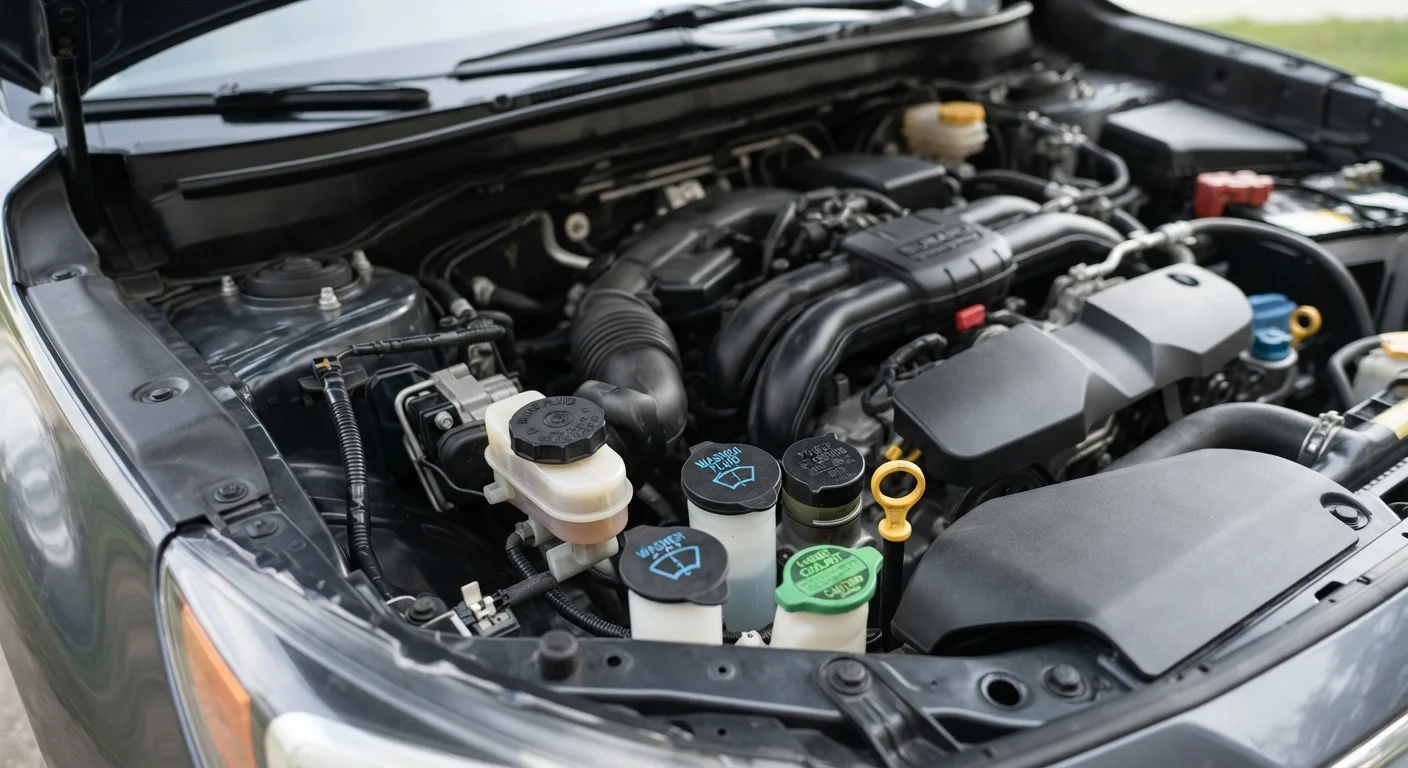
Key Takeaways
- Six fluids deserve regular inspection: engine oil, coolant, brake fluid, transmission fluid, power steering fluid, and washer fluid.
- Most checks require only a clean rag, good lighting, and your owner's manual for reference.
- Color and smell are reliable early indicators of fluid degradation before levels become a problem.
- Brake fluid and coolant checks carry safety implications and should not be skipped.
- Low or contaminated fluid often signals an underlying issue, not just a top-up need.
What you will need
Why fluid checks matter before symptoms appear
Most fluid-related car problems follow the same pattern: a fluid degrades or drops slowly, the driver notices no immediate change in how the car drives, and then a repair bill arrives that could have been avoided. Checking fluids regularly gives you an early view into system health, not just fluid levels.
Each fluid in your car serves a specific function. Engine oil lubricates moving metal parts. Coolant regulates engine temperature. Brake fluid transmits the force of your foot to the brake calipers. Transmission fluid cools and lubricates the gearbox. Power steering fluid (in older hydraulic systems) helps you turn the wheel. Washer fluid keeps your windshield clean. When any of these drops too low or becomes contaminated, performance or safety can be affected.
These checks are among the routine maintenance tasks that many owners overlook, even though they cost nothing to perform at home and take less than 20 minutes. Understanding what you are looking at under the hood also makes conversations with a mechanic more productive. For a look at what professionals examine during a scheduled service, see what a mechanic checks during a multi-point inspection.
Build a simple under-hood routine
Pick one day each month to run through all six fluid checks in sequence. Doing them together takes less than 20 minutes and makes it easy to spot trends, such as a fluid that drops consistently, which may indicate a slow leak worth investigating.
What you need before you start
No special tools are required for most fluid checks. You need a clean rag, your owner's manual, and a light source. Nitrile gloves are worth keeping in your car for this purpose, since brake fluid and coolant can irritate skin with repeated exposure.
Clean lint-free rag or paper towels
Used to wipe dipsticks clean before taking a reading and to check fluid color.
Owner's manual
Identifies reservoir locations, fluid specifications, and acceptable level ranges for your specific vehicle.
Flashlight or work light
Helps you see reservoir markings and fluid color clearly in a dim engine bay.
Nitrile gloves
Protects skin from brake fluid, coolant, and other fluids that can irritate or cause chemical burns.
What you will need
Always work with the engine off and the car on level ground. For fluids that require a warm engine (check your manual), let it run briefly, then allow it to sit for a few minutes before pulling any dipstick.
How to check each fluid
Park on level ground and prepare your workspace
Park on a flat, stable surface and turn the engine off. For oil and transmission fluid readings, most vehicles require the engine to be warmed up first, then turned off for a few minutes. Check your owner's manual for the exact procedure. Pop the hood, secure the prop rod, and give your eyes a moment to adjust before you start locating reservoirs.
Check engine oil level and condition
Pull the oil dipstick, wipe it clean, reinsert it fully, then pull it again. The oil should sit between the two marks at the tip. Healthy oil is amber to light brown. Black, gritty, or milky oil signals degradation or contamination and warrants attention beyond a simple top-up. Note how far below the full mark the level sits.
Inspect the coolant reservoir
Locate the translucent plastic coolant reservoir, which is usually connected to the radiator by a hose. Check the level against the MIN and MAX markings on the side of the tank without opening the cap. Coolant should appear bright green, orange, pink, or blue depending on the type your vehicle uses. A murky brown color or visible particles indicate it may need to be flushed. For a deeper explanation of how this system works, see how your engine avoids overheating.
Check brake fluid level and color
The brake fluid reservoir is typically a small, opaque or semi-transparent plastic container near the firewall on the driver's side. Check the level through the reservoir wall or by looking at the MIN/MAX lines. Healthy brake fluid ranges from clear to light yellow. A level that is noticeably low can indicate worn brake pads or a leak, both of which require inspection by a mechanic.
Check power steering fluid (if applicable)
Many newer vehicles use electric power steering and have no fluid reservoir. If your vehicle has hydraulic power steering, the reservoir is usually a small capped container near the power steering pump, often labeled with a steering wheel icon. Some reservoirs have a dipstick built into the cap; others have MIN/MAX lines on the side. The fluid should be clear to light amber. Pink or foamy fluid indicates air or water contamination.
Check transmission fluid
Not all vehicles have a transmission dipstick. Many modern automatic transmissions are sealed and require a mechanic to check the fluid. If your vehicle does have a dipstick, the process is similar to checking engine oil: pull, wipe, reinsert, and check again. Healthy transmission fluid is typically bright red and has a slightly sweet smell. Brown fluid or a burnt odor signals breakdown. For more on this, see why transmission fluid maintenance matters.
Top off windshield washer fluid
The washer fluid reservoir is usually the largest translucent container in the engine bay. It can safely be filled to the MAX line with commercially available washer fluid. Plain water is not a substitute as it can freeze in cold weather and does not clean as effectively. This is the only fluid where running low carries no mechanical or safety consequence beyond impaired visibility.
Brake fluid: never ignore contamination
Brake fluid absorbs moisture over time, which lowers its boiling point and can cause brake fade under hard use. If the fluid appears dark brown or smells burnt, have a qualified mechanic inspect the system before driving. Do not attempt to flush a brake system without proper training and equipment.
When a fluid reading signals a bigger problem
A one-time low reading on a non-critical fluid like washer fluid has a simple explanation. A fluid that runs low repeatedly, changes color between checks, or develops an unusual smell is telling you something is wrong with a system, not just with the fluid level.
Engine oil that turns black quickly between changes can mean the engine is running hot or combustion byproducts are contaminating the oil. Coolant that looks rusty or has floating debris suggests corrosion inside the cooling system. Brake fluid that drops without obvious pad wear points to a possible leak in a brake line or caliper. Any of these findings is a reason to consult a mechanic rather than simply topping up.
Staying ahead of these signals is a core part of safe driving practices. You might also want to check tire condition while you are already looking at the vehicle. The tire safety basics every driver should know covers pressure, tread depth, and when to replace.
This article is for general informational purposes. For any fluid issue that involves safety systems such as brakes or steering, consult a qualified mechanic before driving.