

Key Takeaways
- Situational awareness is a learned habit, not an instinct you either have or lack.
- Preparation before you arrive reduces the cognitive load of navigating a new place safely.
- Physical positioning and phone habits account for a large share of preventable incidents.
- Knowing where to go when something goes wrong matters as much as avoiding trouble in the first place.
- Fatigue significantly dulls your awareness, making rest a genuine safety consideration.
What you will need
What situational awareness actually means for travelers
Situational awareness is not paranoia and it is not the ability to predict danger. It is the practice of paying enough attention to your environment that you notice when something changes, so you have time to make a calm decision rather than a reactive one.
For most travelers, the risks in unfamiliar cities are low-grade and preventable: opportunistic theft, getting turned around in an unsafe area after dark, or missing a cue that a situation is escalating. These are not random. They tend to happen when a traveler is distracted, visibly confused, or has reduced their awareness by being tired or absorbed in a screen.
The steps in this guide address each of those gaps. None of them require physical training or specialized equipment. They require preparation and habit. Solo travelers in particular benefit from building these habits before their first trip. Our solo travel safety guide covers the additional considerations that come with traveling without a companion.
What you will need
Step-by-step: building awareness on the ground
Research your destination's safety landscape before you leave
Spend time reading your destination city's current conditions, not travel blogs alone, but official sources. The US Department of State's travel advisory pages (travel.state.gov) publish country-level assessments. Local government tourism boards often publish neighborhood-level guidance as well.
Note which areas see higher rates of petty theft, which transit routes are considered safer at night, and what the local emergency number is. This information doesn't need to be memorized. Write the key points on a card or save them offline.
Learn the physical layout before you walk it
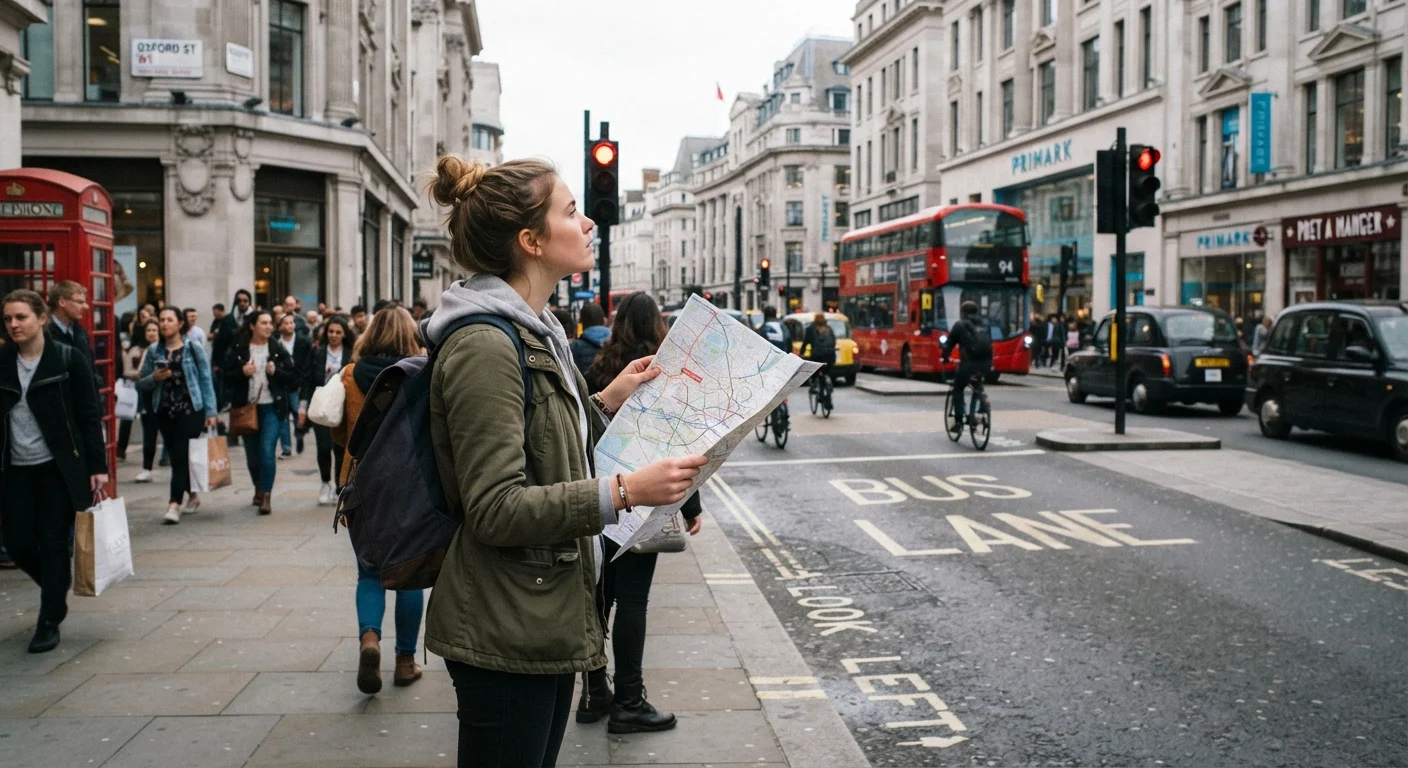
Before stepping outside your hotel or accommodation, spend ten minutes reviewing a map of the immediate area. Identify at least two landmarks near your base, the location of the nearest police station or hospital, and the general direction of your planned destinations.
Travelers who look uncertain attract more unwanted attention than those who move with purpose. Knowing roughly where you are going, even imperfectly, changes how you carry yourself.
Manage your attention and your phone in public
Scrolling through your phone while walking through a crowded market, transit station, or unfamiliar street reduces your awareness of what is happening immediately around you. It also signals distraction to anyone looking for an easy opportunity.
When you need to check directions, step to one side, put your back to a wall or building, and look up again before moving on. Keep headphone use to one ear or skip it entirely in environments you haven't assessed yet.
Read the environment around you continuously
Situational awareness means scanning your surroundings at regular intervals, not staring at potential threats. A practical habit: every few minutes, do a brief scan of who is nearby, where the exits and open spaces are, and whether anything feels out of place.
Specific cues worth noting include: groups of people who seem focused on arriving travelers rather than a destination, someone following at a consistent distance across multiple turns, or sudden crowding that didn't exist moments before. These are patterns, not certainties. Their value is in prompting you to move to a more open or populated space and reassess.
Position yourself deliberately in transit and public spaces
On public transit, choose seats near the driver or conductor when possible, or stand near doorways rather than deep in a car. In waiting areas, sit with your back to a wall and your bag in your lap or between your feet rather than on the seat beside you.
At ATMs, use machines inside banks or well-lit commercial buildings during business hours. Cover the keypad when entering your PIN regardless of who appears to be nearby.
Know what to do when something goes wrong
Before your trip, identify the local emergency number for your destination (it is not always 911 outside the US), the nearest embassy or consulate if you are traveling internationally, and your accommodation's address in the local language.
If you are confronted by someone demanding your belongings, most travel safety guidance is consistent: hand over the item. A wallet or phone is replaceable. Report the incident to local police and your accommodation, then contact your bank and travel insurance provider as quickly as possible.
For a broader look at the risks travelers tend to underestimate, see our guide to overlooked travel risks.
Factor rest into your safety plan
Fatigue reduces reaction time, judgment, and the ability to register subtle environmental cues. A traveler running on poor sleep after a long flight or a packed itinerary is genuinely less capable of noticing and responding to risk.
Build adequate rest into your schedule, particularly on arrival days and days involving long transit. This isn't a comfort consideration: it directly affects how well everything else in this guide works.
Travelers with children or older family members face additional layers of planning. See traveling with children: safety planning at every stage and travel safety considerations for older travelers for guidance specific to those groups.
If you want to test what you think you know about travel safety, our guide to common travel safety myths addresses several assumptions that can leave travelers less prepared than they expect.
Practice these habits at home first
The easiest time to build situational awareness habits is in familiar surroundings, not the first day of a trip. Try the phone discipline and environmental scanning steps on your next commute or errand run. By the time you arrive in an unfamiliar city, the behaviors will already feel normal.