

Key Takeaways
- Online check-in closes before embarkation day; completing it early avoids long terminal lines.
- All travel documents, including passports and boarding passes, must be in your carry-on, not checked luggage.
- Arriving outside your assigned boarding window creates unnecessary delays at the terminal.
- Knowing your muster station drill requirements in advance helps you settle in without surprises.
- Luggage checked at the pier may not reach your cabin until late afternoon or evening.
Why embarkation day goes wrong
Boarding a cruise ship should take under an hour. For many travelers, it takes three or more. The gap usually comes down to a handful of avoidable mistakes made in the days before, and the morning of, departure. First-time cruisers make these errors because the process is unfamiliar. Experienced cruisers make them because they assume one cruise works the same as the last.
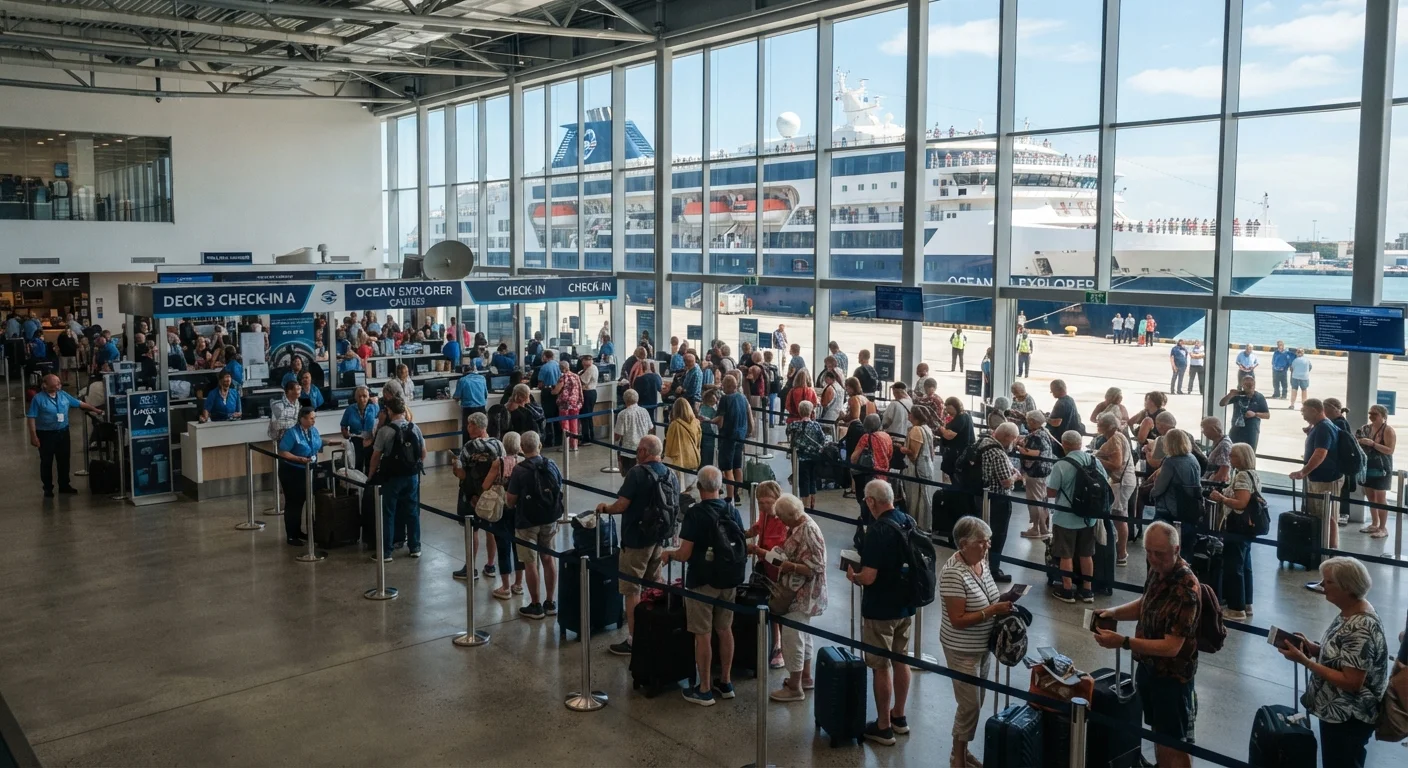
The terminal experience has changed considerably. Most major lines now require passengers to complete online check-in and select an arrival window in advance. Showing up without doing so puts you in a slower, walk-up line that processes last. If you want a full picture of what to prepare well before you get to the pier, the week-by-week cruise preparation checklist walks through the timeline in detail.
Skipping or delaying online check-in before embarkation day.
Why it happens: Passengers assume check-in happens at the terminal, the way it does at an airport gate. Cruise lines close online check-in 24 to 48 hours before departure.
Arriving at the terminal outside your assigned boarding window.
Why it happens: Travelers underestimate how many people are boarding on the same day and assume arriving early means getting on faster.
Packing essential documents and medication in checked luggage.
Why it happens: Travelers pack the night before and include everything in one large bag without separating what they will need immediately.
Not confirming port arrival logistics in advance.
Why it happens: Passengers focus on the ship experience and underestimate how complicated reaching the terminal can be, especially at large multi-ship ports.
Delaying the mandatory safety drill until just before departure.
Why it happens: Passengers want to explore the ship first and treat the drill as an interruption. Digital formats make it easy to defer.
At the terminal: what still trips people up
Even travelers who complete online check-in can slow themselves down once they arrive. Keeping your passport and printed or downloaded boarding pass in your carry-on sounds obvious, but checking those documents in a large bag is one of the most common causes of delay at the document verification counter. Pier staff cannot let you board without them, and retrieving luggage from the check-in area is a process that can take 20 to 30 minutes.
Luggage checked at the pier travels separately from passengers and arrives at your cabin hours after you board, sometimes as late as dinner. Anything you need for the afternoon, including medication, a change of clothes, or valuables, should stay with you. For a fuller look at what to keep on your person versus what can go in checked bags, see what first-time cruisers forget to pack.
Prescription medication must travel with you
Never pack prescription medication in luggage you check at the pier. If your bag is delayed or misrouted, you may not have access to it until well into the evening or the following day. Keep all medications in your carry-on in their original labeled containers. If you have questions about traveling with specific medications, consult your healthcare provider before your trip.
Travelers with mobility needs face additional planning considerations at the pier. Terminal layouts, boarding ramps, and shuttle connections vary by port. The cruise ship accessibility guide covers what to arrange ahead of time so embarkation day is manageable.
Getting the most from your first day onboard
Once aboard, many passengers head straight to the buffet, then spend the rest of the afternoon unaware that certain ship features, specialty dining reservations, and spa appointments fill up quickly on embarkation day. Logging into the ship's app or visiting the guest services desk early lets you secure time slots before other passengers do.
The mandatory safety drill, now often called a muster drill, is required by maritime law before the ship departs. Most lines have moved to a digital or on-demand format where passengers watch safety videos on their phone or cabin TV and then check in at their assigned muster station. Ignoring notifications about this requirement can delay departure for everyone onboard. Complete it as soon as the ship's system prompts you.
Onboard spending is a separate planning matter. Many passengers are surprised by charges that accumulate beyond the base fare. The cruise onboard spending breakdown explains where those costs typically come from so you can plan your budget before boarding.