

Travel Tips

Preparing for a Cruise Departure: A Week-by-Week Checklist

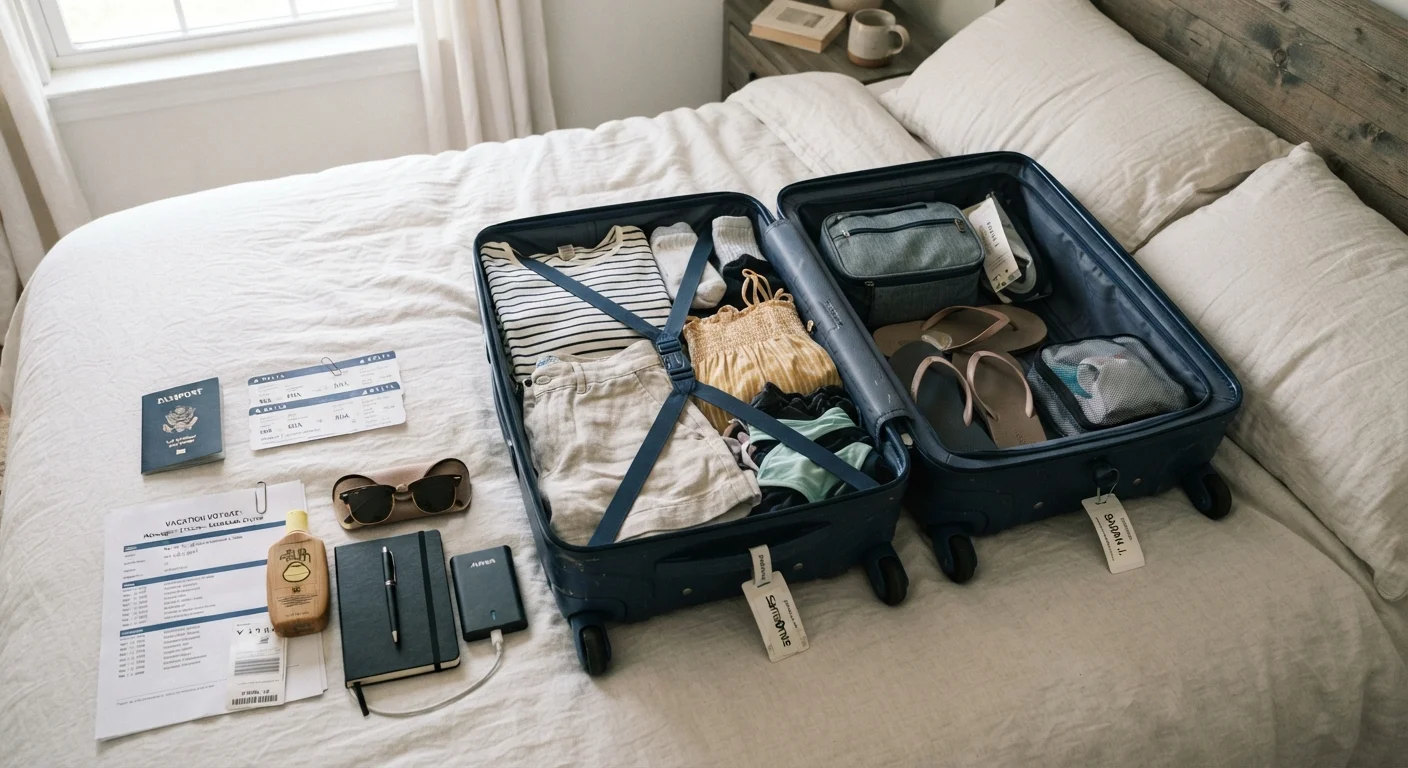
Open suitcase with cruise travel documents, passport, and packing essentials laid out on a bed

Key Takeaways

  • Passport validity requirements vary by itinerary; check at least 60 days before departure.
  • Cruise lines open online check-in windows early; completing it ahead saves hours at the terminal.
  • Onboard accounts, dining reservations, and shore excursions can be arranged before you board.
  • Port logistics, including parking and shuttle timing, deserve as much planning as the trip itself.
  • Travel insurance terms differ widely; read the policy document, not just the summary.
45–90 min

Summary

22 items · 45 to 90 minutes spread across several weeks

Why a timeline matters for cruise prep

A cruise departure has more moving parts than a standard flight. You are coordinating documents, health requirements, port logistics, onboard account setup, and packing, often for multiple travelers at once. Spreading tasks across a structured timeline prevents the kind of last-minute compression that leads to missed details.

This checklist is organized by week. Work through each stage in order. Some deadlines are firm (passport expiry, visa applications), while others are about convenience and cost (excursion bookings, dining reservations). The checklist flags which is which.

For a broader pre-departure framework that covers non-cruise trips as well, see the travel safety preparation checklist.

Passport and entry rules are your hard deadline

Entry requirements for cruise itineraries can differ from standard tourist entry rules, particularly for closed-loop cruises (those departing and returning to the same U.S. port). Always confirm requirements directly with your cruise line and check the official U.S. State Department and destination country government websites. Do not rely on travel forums or booking confirmation emails as authoritative sources.

The full preparation checklist

Work through these groups in sequence. Items marked must are non-negotiable; missing them can prevent boarding.

Six to eight weeks out

Verify passport expiry dates for every traveler. Many cruise itineraries that include foreign ports require at least six months of validity beyond the return date; confirm the specific requirement for your itinerary with your cruise line and check the U.S. State Department website for destination entry rules. Must
Apply for any required visas. Processing times vary significantly by country and season; starting early avoids paying expedited fees. Must
Review your health insurance coverage for international travel and research travel insurance options. Policy terms vary widely, so read the full document before purchasing, paying attention to medical evacuation and trip interruption clauses. Should
Book airport transfers or arrange port parking. Parking near major cruise terminals fills up, and rates differ considerably between port-operated lots and nearby facilities. Should

Three to four weeks out

Complete online check-in through the cruise line's website or app as soon as the window opens (typically 90 to 14 days before sailing). This step generates your boarding pass and speeds up terminal processing. Must
Upload a passport photo for your onboard ID if the cruise line requests it during check-in. Must
Register a credit card for your onboard account. Most cruise lines require this to activate your stateroom key card for purchases. Must
Book specialty dining reservations and any ticketed onboard events. Popular restaurants and shows sell out before the ship leaves port. Should
Reserve shore excursions for ports you care most about. Availability shrinks once the sailing begins, and some excursions are the only practical way to reach certain sites. Should

One to two weeks out

Confirm all boarding documents are printed or saved offline: boarding pass, luggage tags, hotel or transfer confirmations, and excursion vouchers. Must
Check the U.S. State Department travel advisories for each port of call and review any entry health requirements, as these can change. Verify with official government sources rather than relying on third-party summaries. Must
Fill any prescription medications to cover the full trip plus several extra days. Cruise ship medical facilities can provide urgent care but cannot reliably stock specialty medications. Must
Notify your bank and credit card providers of travel dates and destinations to prevent fraud blocks on your cards while at sea or in port. Should
Pack a small day bag for embarkation afternoon with essentials that should not go into checked luggage: ID, medications, phone charger, and a change of clothes. Should

Two to three days out

Confirm your port transportation plan and build in a buffer. Most cruise lines recommend arriving at the terminal at least two hours before the published all-aboard time, which is earlier than departure. Must
Weigh luggage if your itinerary includes any flights, and check that no restricted items (certain aerosols, alcohol above the cruise line's limit) are packed. Should
Charge all devices and download offline maps, translation apps, or entertainment for sea days before you lose reliable wi-fi access. Should
Review the muster drill requirements. Many lines now allow passengers to complete safety briefings digitally before boarding; doing this in advance clears time on embarkation day. Should

Embarkation day

Carry your passport, boarding pass, and any required health documents on your person, not in checked luggage. Must
Attach printed luggage tags to all checked bags before handing them to pier porters; bags without tags can be delayed reaching your stateroom. Must
Locate your muster station when you board, even if you completed the digital briefing. You will need to physically check in at the station before the ship departs. Must

Port day logistics

Embarkation day is where preparation either pays off or falls apart. Cruise terminals can process thousands of passengers in a few hours, and how smoothly that goes depends largely on what you completed in advance.

Print or download your boarding pass and luggage tags before you leave home. Cruise line apps sometimes lose cached data in low-connectivity port areas. Bring physical copies as a backup.

If you checked bags at the pier rather than carrying them on, those bags typically arrive in your stateroom several hours after you board. Pack a carry-on with anything you need for the first afternoon: medication, a change of clothes, valuables, and travel documents.

For a complete home-departure checklist that covers what to secure and confirm before you leave, see the pre-trip planning checklist. Cruise-specific packing gaps are covered in the cruise packing guide for first-timers.

All-aboard time is not departure time

The all-aboard time printed on your boarding documents is typically 30 to 60 minutes before the ship actually departs. Missing it means the ship leaves without you. If you are on a cruise line-operated shore excursion, the ship will wait for your group; independently arranged excursions carry no such guarantee.

Travel Tips Editorial Team is the collective byline for our editorial team and contributor network. Articles published under this byline or an editorial pen name are researched, written, and reviewed according to our editorial standards for clarity, consistency, and independence before publication.

View all articles by Travel Tips Editorial Team →
Disclaimer: The content on this site is for informational purposes only and is not a substitute for professional advice. Always consult a qualified professional for guidance specific to your situation.