

Key Takeaways
- Patchy grass usually has a specific, identifiable cause rather than a general lawn health problem.
- Soil compaction, grubs, fungal disease, and watering errors each produce distinct patch patterns.
- Fixing patches without identifying the root cause often leads to the same problem returning.
- Most common causes can be addressed with targeted treatment rather than full lawn renovation.
- Overseeding bare areas works best when combined with correcting the underlying issue first.
How to read your lawn's patch patterns
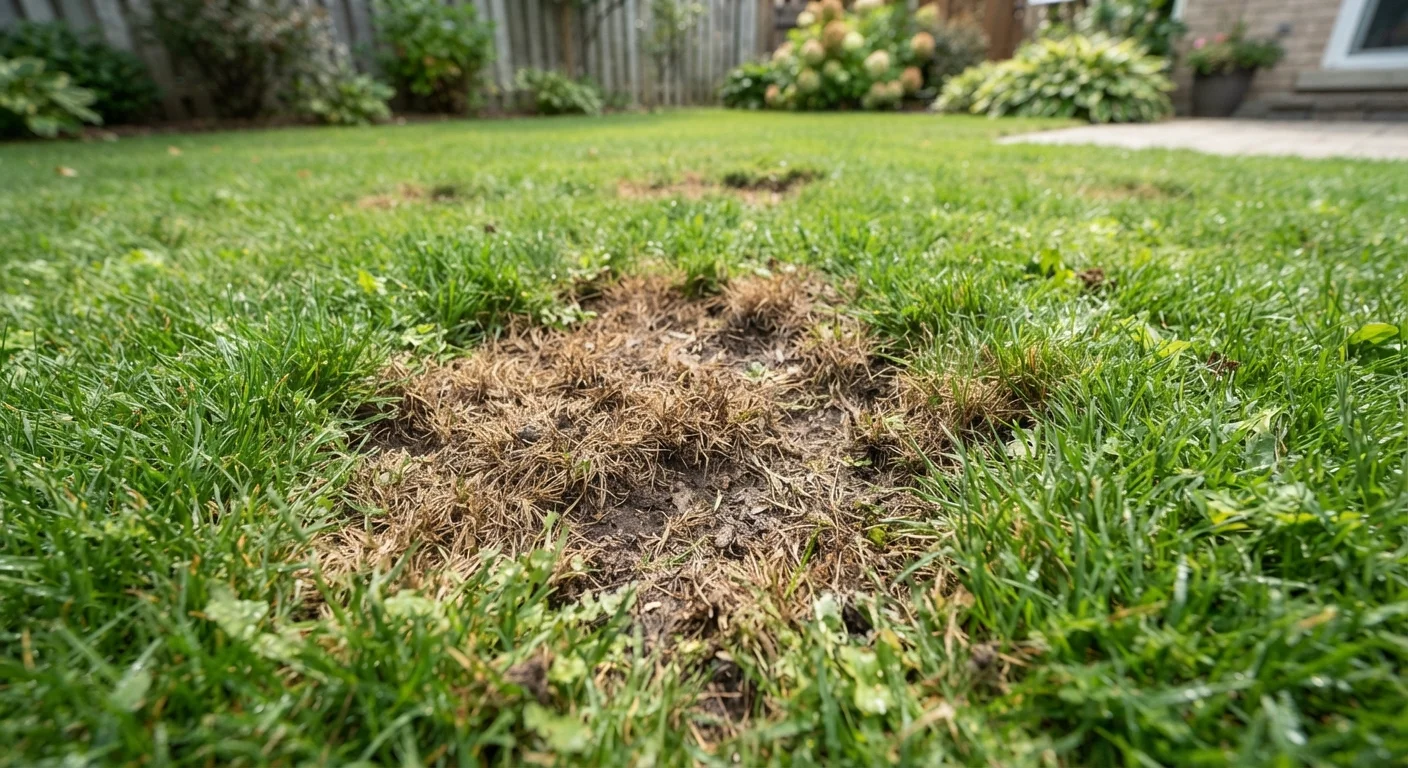
The shape, color, and location of bare or brown patches carry diagnostic information. Circular patches with a dark green border usually point to dog urine or a fungal issue like brown patch disease. Irregular patches in compacted high-traffic zones suggest root suffocation. Patches that peel away cleanly from the soil, like a loose rug, almost always mean grub activity below the surface.
Before treating anything, walk the affected area at different times of day. Check whether the soil is wet or bone dry. Look for visible insects, mushrooms, or discoloration patterns. Understanding what you are seeing determines whether the fix involves water management, pest control, aeration, or simple reseeding. You can also cross-check against the common gardening myths article to rule out misapplied advice that may be contributing to the problem.
Common causes and how to address each one
Most patchy lawns trace back to one of a handful of causes. The mistakes below cover the ones that send grass into visible decline most often.
Overwatering or watering at the wrong time of day, which creates conditions where fungal diseases take hold and grass roots suffocate.
Why it happens: Many homeowners water on a fixed schedule without adjusting for rainfall or season, and evening watering is a common habit that leaves turf wet overnight.
Ignoring soil compaction, which blocks oxygen and water from reaching grass roots and causes thinning patches in high-traffic areas.
Why it happens: Compaction builds gradually and is invisible from the surface, so it rarely gets noticed until patches appear in walkways or play areas.
Mowing too short and scalping the lawn, which stresses grass and leaves it vulnerable to heat, drought, and disease.
Why it happens: Shorter grass looks neat longer between cuts, so many people set blades low thinking they are saving time.
Overlooking grub infestations under patchy, spongy turf that peels back easily from the soil surface.
Why it happens: Grubs feed on roots underground and the damage looks identical to drought stress from above, so homeowners often water more instead of investigating further.
Reseeding bare patches without correcting the original problem, so new grass dies in the same spot within one season.
Why it happens: Bare dirt looks like an obvious repair target, and overseeding feels like a complete fix without requiring a diagnosis.
Dismissing dog urine spots as a generic lawn problem rather than treating the soil chemistry directly.
Why it happens: The circular brown patch with a ring of dark green grass at the edge is not always recognized as a urine burn pattern.
Soil pH is another factor worth testing. Grass that grows poorly despite good watering and mowing habits may be sitting in soil that is too acidic or too alkaline for nutrients to absorb. A simple soil test, available through hardware stores or cooperative extension offices, reveals pH and major nutrient levels. Lime raises pH in acidic soil; sulfur lowers it in alkaline conditions. These adjustments take several months to show results, so patience and follow-up testing matter.
Repairing bare patches that won't recover on their own
Misdiagnosis makes patches worse
Applying the wrong treatment can deepen the problem. Fungicide applied to grub damage does nothing, and pesticide applied to a fungal lawn will not help either. Spend time identifying the cause before buying any product or starting any repair. If you are unsure, a county cooperative extension office can test soil or turf samples.
Once the underlying cause is resolved, bare spots need active help to fill in. Scratch the soil surface lightly with a rake to break any crust, spread a thin layer of compost, then broadcast grass seed matched to your existing lawn type. Warm-season grasses like Bermuda and zoysia spread naturally through stolons and rhizomes, so small patches may fill in without seeding if the surrounding turf is healthy. Cool-season grasses such as tall fescue do not self-repair as aggressively and need overseeding.
Keep newly seeded areas consistently moist until germination, which typically takes 7 to 21 days depending on grass variety and temperature. Avoid foot traffic on those areas until the new grass reaches mowing height. For lawns prone to bare spots in shaded areas, consider whether the grass variety is shade-tolerant or whether a ground cover or mulched bed is a more realistic long-term choice for that zone. Improving overall soil health through organic matter also helps new grass establish faster; the cover crops guide offers useful background on building soil structure between growing seasons.