

Key Takeaways
- Companion planting uses plant chemistry to deter pests without sprays or chemicals.
- Physical barriers like row covers and copper tape stop many pests before they reach plants.
- Beneficial insects such as ladybugs and ground beetles naturally reduce pest populations.
- Healthy soil and proper watering habits make plants more resistant to pest pressure.
- Removing pest habitat through good garden hygiene prevents infestations from taking hold.
Why non-chemical pest management makes sense
Chemical pesticides work quickly, but they rarely solve the underlying conditions that invite pests in the first place. Many broad-spectrum products kill beneficial insects alongside the target pests, which removes the garden's natural defenses and can lead to worse infestations the following season. Non-chemical approaches focus on prevention first and intervention second, which is generally more stable over time.
This does not mean ignoring a pest problem until it destroys a crop. It means working with the garden's own systems rather than against them. The methods below cover a range of situations, from early-season prevention to managing active infestations. Most can be combined, and some work better together than alone. If you are also thinking about common gardening myths, you may find that some widely repeated pest advice is less effective than the practices described here.
Companion planting
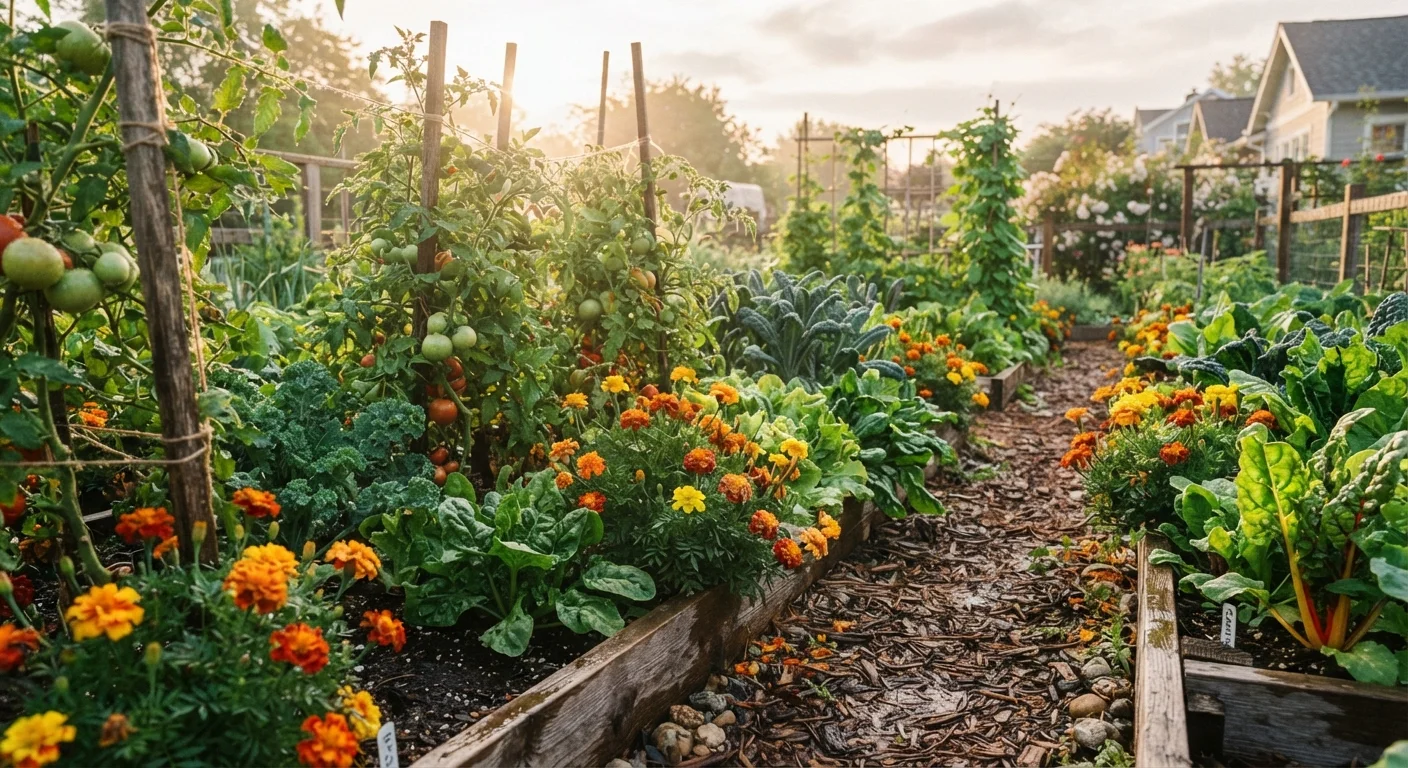
Certain plants produce compounds that confuse, repel, or trap common garden pests. Marigolds (Tagetes species) release a scent that deters aphids and whiteflies. Basil planted near tomatoes is widely reported to reduce thrips and aphid pressure, though results vary by garden conditions. Nasturtiums attract aphids away from vegetables, acting as a sacrificial crop you can then remove.
The basic principle is to mix plant families rather than growing large blocks of the same crop. Monocultures make it easy for a specialist pest to spread unchecked. Interspersing flowering herbs and aromatic plants throughout beds disrupts that spread and draws in predatory insects that feed on pests. See our article on native plants in the home garden for species that also support beneficial insect habitat.
Monocultures make it easy for a specialist pest to spread unchecked through a bed.
Physical barriers
A physical barrier stops pests mechanically, with no chemistry involved. Floating row cover (a lightweight spun fabric) draped over transplants excludes moths, beetles, and flies before they lay eggs. Secure the edges with soil or clips so pests cannot crawl underneath. Remove covers temporarily when plants need pollination, or choose self-pollinating varieties.
Copper tape around raised beds or pots deters slugs and snails; contact with copper produces a mild electrical reaction that causes them to retreat. Sticky yellow traps catch fungus gnats and whiteflies. Collars made from cardboard tubes placed around the base of seedlings block cutworms from reaching the stem at soil level. These approaches work best when installed at planting time rather than after an infestation is already under way.
Physical barriers installed at planting time prevent infestations far more reliably than reactive treatments.
Encouraging beneficial insects
Predatory and parasitic insects do much of the pest management work in a healthy garden. Ladybugs and their larvae consume large numbers of aphids. Ground beetles eat slug eggs and soil-dwelling grubs. Parasitic wasps (tiny, non-stinging species) lay eggs inside caterpillars and aphids, eliminating them from the inside.
To draw these insects in, provide what they need: nectar and pollen from flowering plants, undisturbed areas like a patch of leaf litter or a small brush pile, and water. Avoid broad-spectrum pesticides even when they are labeled as organic. Pyrethrin, spinosad, and similar approved materials can still harm beneficial insects if applied carelessly. The goal is a balanced garden system where predator populations keep pace with pest pressure.
Parasitic wasps, ground beetles, and ladybugs can reduce pest pressure without any intervention beyond habitat.
Building soil and plant health
Stressed plants attract pests. A plant struggling from compacted soil, nutrient deficiency, or irregular watering sends out chemical signals that many insects can detect. Well-nourished plants with strong cell walls are more difficult for piercing insects like aphids to feed on and recover faster from minor pest damage.
Adding compost to garden beds improves drainage, water retention, and microbial activity. Consistent watering also matters. Our watering schedules for backyard gardens article covers how to calibrate timing and depth for different plants. Avoid excess nitrogen fertilizer, which produces soft, lush growth that aphids find particularly attractive.
Excess nitrogen fertilizer produces soft growth that aphids find particularly attractive.
Garden hygiene and habitat removal
Many pests overwinter or breed in garden debris. Spent plant material left on the ground through fall gives insects like squash vine borers and leaf miners a place to pupate. Removing and composting (or bagging) infected plant matter at season's end reduces the number of pests that emerge the following spring.
Turning soil in fall exposes overwintering larvae and pupae to birds and cold temperatures. Check out fall garden prep tasks for a practical checklist of end-of-season steps that limit next year's pest load. Weeds also harbor pests and should be pulled before they set seed, since many act as a bridge between one crop and the next.
Removing infected plant material in fall reduces the pest population that emerges the following spring.
Targeted organic sprays as a last resort
When pest pressure is high and other methods have not kept damage acceptable, some organic-approved sprays can address specific problems without the broad toxicity of synthetic pesticides. Insecticidal soap disrupts the cell membranes of soft-bodied insects like aphids and mealybugs on contact. Neem oil, pressed from the seeds of the neem tree, interferes with insect molting and egg-laying cycles. Diatomaceous earth (food-grade), dusted around the base of plants, damages the outer layer of crawling insects.
Each of these works only on contact or in targeted conditions, so correct identification of the pest matters before you apply anything. Misidentifying a problem, then spraying broadly, can harm beneficial insects and does not address the root cause. Use the smallest effective amount and apply in the evening when pollinators are less active.
Correct pest identification before applying any spray prevents harm to beneficial insects in the garden.
Putting it together in your garden
No single method controls every pest. The most consistent results come from layering approaches: healthy soil supports strong plants, companion planting reduces attractant signals, physical barriers block access, and beneficial insects handle the rest. Targeted sprays can step in when a specific pest overwhelms those layers.
"Organic" does not always mean harmless
Products approved for organic gardening, such as pyrethrin and spinosad, are derived from natural sources but can still harm beneficial insects, aquatic life, or pollinators when misused. Always read the label, apply only to affected areas, and follow timing recommendations. The term 'organic' describes the origin of the ingredient, not its safety profile in every context.
Good record-keeping helps over multiple seasons. Note which pests appeared, when, and on which plants. That pattern often points to a gap in your prevention strategy, whether that is a soil nutrition issue, a missing barrier, or a planting timing problem. Our cover crops guide is worth reading alongside these methods, since off-season soil management directly affects next year's pest pressure.