

Key Takeaways
- Cosmetic repairs and basic maintenance tasks are generally safe for homeowners to handle without a license.
- Electrical, gas, and structural work typically requires a licensed professional and often a permit.
- Skipping a permit on regulated work can affect your homeowner's insurance and complicate a future home sale.
- Renters should review their lease before attempting any repair, even a minor one.
- When in doubt about safety or code compliance, getting a professional assessment costs less than fixing a mistake.
Our Verdict
Most homeowners can safely handle cosmetic updates, basic plumbing fixtures, and routine maintenance without professional help. Work involving the electrical panel, gas lines, structural elements, or anything that requires a permit should go to a licensed contractor. The cost of a professional is almost always lower than the cost of correcting an unsafe or unpermitted repair.
| Best for | Recommended |
|---|---|
| Homeowners comfortable with basic tools | DIY |
| Any work touching gas, main electrical, or load-bearing structures | Licensed professional |
| Renters unsure of their responsibilities | Consult landlord first |
| Jobs requiring a permit or inspection | Licensed professional |
How to size up any repair before you start
Before picking up a tool, ask three questions: Could this repair injure someone if done incorrectly? Does local code require a permit or a licensed trade? And, if something goes wrong, will your homeowner's or renter's insurance cover the damage?
If the answer to any of those is yes or unclear, the job is a strong candidate for a professional. For everything else, skill level and comfort with the task are the deciding factors. A seasonal maintenance checklist can help you spot which tasks recur regularly so you can build skills over time rather than facing each one cold.
Start with the circuit breaker, always
Before touching any electrical fixture, switch off the relevant breaker and use a non-contact voltage tester to confirm the circuit is dead. Do not rely on a switch position alone. This single habit prevents the vast majority of DIY electrical injuries.
Tasks most homeowners can handle safely
General rule: if the work is cosmetic, involves replacing a fixture with a like-for-like swap, or requires no connection to gas or the main electrical panel, it is usually within reach.
- Patching drywall holes up to about six inches across
- Painting interior walls and trim
- Replacing faucet aerators, showerheads, and toilet flappers
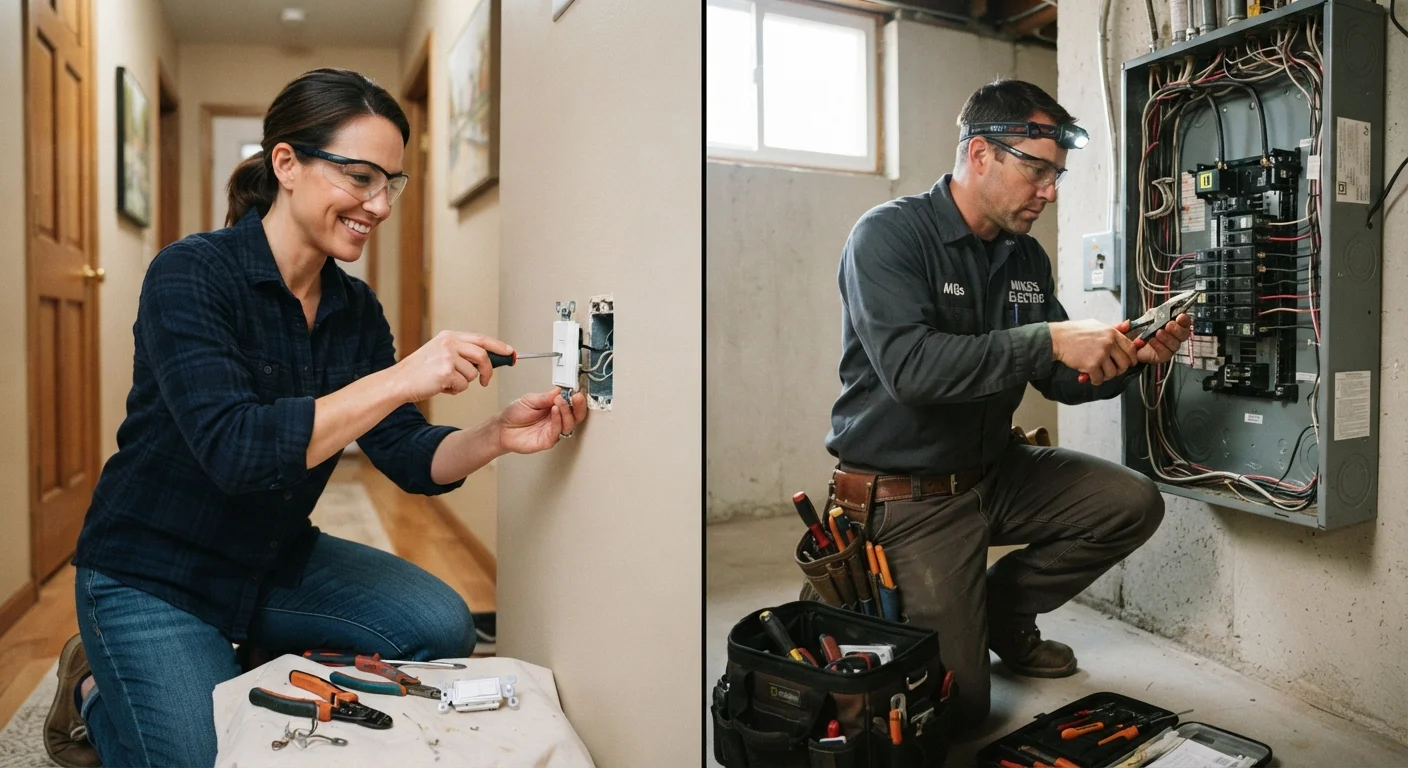
- Swapping out light switches, outlets, and light fixtures (on a circuit you have confirmed is off at the breaker)
- Installing a ceiling fan on an existing ceiling box rated for fan use
- Caulking around tubs, sinks, windows, and doors (see our guide on caulking windows and doors for proper technique)
- Cleaning gutters, replacing gutter spikes with screws, and patching minor gutter gaps
- Basic deck upkeep such as tightening loose boards and applying a fresh coat of sealant
Renters face an additional layer: even small repairs may require landlord approval under a lease. The article on home maintenance responsibilities for renters breaks down what typically falls to the tenant versus the landlord.
| Task type | DIY | Licensed professional | |
|---|---|---|---|
| Painting and cosmetic work | Yes, suitable | Not needed | |
| Fixture swaps (faucets, toilets) | Yes, suitable | Not needed | |
| Electrical panel work | Not safe | Required | |
| Gas line repairs | Not safe | Required by law | |
| Structural wall removal | Not safe | Required | |
| Permit-required projects | Risk of violations | Handles compliance | |
| Caulking and weatherstripping | Yes, suitable | Not needed | |
| Main sewer or drain line work | Not recommended | Required |
Work that requires a licensed professional
Certain categories of work carry real risk of fire, structural failure, gas leaks, or electrocution when done without training. Most jurisdictions also require a permit for this work, meaning an unlicensed repair can void insurance coverage and trigger costly corrections when you sell the home.
- Electrical panel work: Adding circuits, replacing the main panel, or any work inside the breaker box belongs to a licensed electrician.
- Gas lines: Connecting, extending, or repairing gas supply lines is regulated in every US state. A gas leak is immediately life-threatening.
- Structural modifications: Removing or altering walls (especially load-bearing ones), adding a room, or changing roofline geometry requires an engineer's sign-off and typically a permit.
- Main drain and sewer work: Clearing a simple clog with a plunger is fine, but opening walls to access supply or drain lines, or working on the main sewer lateral, requires a licensed plumber.
- Roofing beyond surface patches: Full roof replacement, flashing repair around chimneys, and any structural decking work involve fall hazards and waterproofing details that call for professional execution.
These jobs also tend to carry hidden costs that catch homeowners off guard, so budgeting for professional labor up front is more practical than absorbing a corrective repair later.
The permit question: why it matters
A building permit is not just paperwork. It triggers an inspection, which is an independent check that the work meets local safety codes. Work done without a required permit can create problems in several ways:
- Homeowner's insurance may deny a claim if unpermitted work contributed to the damage.
- A home sale can stall or fall through when an inspector flags unpermitted additions or alterations.
- You may be required to tear out finished work so an inspector can verify the underlying structure or wiring.
Permit requirements vary by municipality, so check with your local building department before starting any project larger than routine maintenance. For outdoor projects like decks, your deck and porch maintenance guide notes when structural changes typically cross the permit threshold.
Evaluating cost: DIY savings versus professional reliability
DIY work saves money on labor, but the calculation shifts when a mistake leads to water damage, an electrical fire, or a failed inspection. A general framework:
- If rework would cost more than the original professional fee, hire out the first time.
- If the materials alone are inexpensive and a do-over is straightforward, the learning curve is worth it.
- Factor in tool rental or purchase costs for jobs you will only do once.
Managing these decisions consistently also connects to broader everyday money habits. Knowing which repairs to budget for professionally rather than attempting yourself prevents the larger unplanned expenses that disrupt a household budget. The yard and garden section of this site covers outdoor maintenance tasks that are generally accessible to homeowners without professional help, which is another area where DIY effort pays off reliably.
This article provides general home maintenance information for educational purposes only. Local building codes, permit requirements, and insurance terms vary. Consult a licensed contractor or your local building department before beginning any regulated repair or renovation.