

What distracted driving laws actually cover
Distracted driving laws in the US do not follow a single national standard. Each state sets its own rules, which means what is legal in one state may carry a fine or points against your license in another. Most laws fall into three categories: bans on handheld phone use, bans on texting while driving, and broader prohibitions on any activity that impairs attention.
Handheld phone bans are the most common form. These prohibit drivers from holding a phone to make calls, browse, or use apps while the vehicle is in motion. Hands-free use via Bluetooth or a mounted device is generally permitted under these laws. Texting bans, which appeared earlier, are now in effect in most states and apply to composing, sending, or reading text messages while driving.
Some states go further with distracted driving statutes that cover any manual, visual, or cognitive distraction, including eating, grooming, or adjusting in-vehicle systems. These broader laws are harder to enforce consistently and are often applied as secondary offenses.
How enforcement works and what penalties look like
Laws are enforced as either primary or secondary offenses. A primary offense means an officer can pull a driver over solely for the prohibited behavior. A secondary offense means the driver can only be cited for distracted driving if stopped for another violation first.
Handheld phone bans are increasingly treated as primary offenses, which makes them more likely to result in actual citations. Fines range from around $20 in some states to several hundred dollars in others for a first offense. Repeat violations in certain states carry steeper fines, license points, or mandatory traffic school.
A small number of states have implemented graduated penalties: fines increase with each subsequent offense, and some attach surcharges to auto insurance eligibility assessments, though insurers set their own underwriting rules independently of state fine schedules. Like drowsy driving, distracted driving citations can affect how insurers assess risk at renewal.
Law enforcement agencies increasingly use high-visibility enforcement campaigns, where officers are positioned specifically to observe phone use, particularly at intersections. Some jurisdictions use camera-based detection systems, though their legal admissibility varies by state.
Common exceptions and special rules
Most state laws include specific exceptions. Calling 911 or other emergency services is generally permitted even under strict handheld bans. Law enforcement officers, firefighters, and other emergency responders are typically exempt while performing official duties.
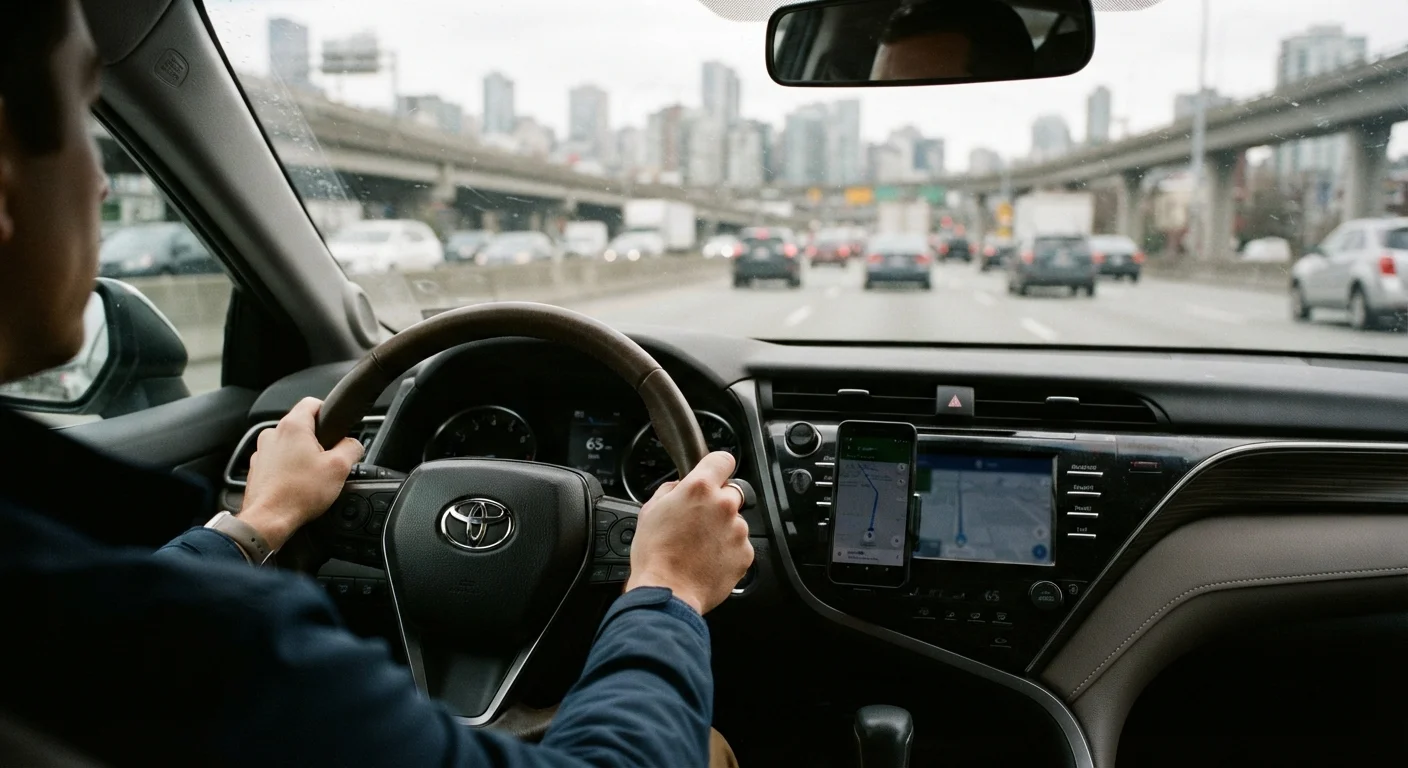
GPS use sits in a gray area. Many hands-free laws allow a driver to use a mounted device for navigation, but physically interacting with the screen while moving may still violate the law. Some states explicitly permit a single tap or swipe to activate a navigation function; others do not draw that distinction.
Stationary vehicles complicate the picture further. Several states allow handheld phone use when a vehicle is stopped at a red light, since the car is not technically in motion. Others apply the ban any time the engine is running, regardless of whether the car is moving.
Commercial drivers operating vehicles that require a commercial driver's license (CDL) face federal regulations through the Federal Motor Carrier Safety Administration (FMCSA), which prohibit handheld mobile device use outright with penalties for both drivers and employers. These federal rules apply on top of, not instead of, state law.
What varies most from state to state
The clearest variation is in who is covered. Some states apply handheld bans only to drivers under a certain age, typically under 18 or drivers on a learner's permit. Others apply the same rules to all drivers regardless of age or experience level.
School and construction zones sometimes carry additional restrictions or doubled fines even in states with otherwise moderate penalties. A handful of states have no statewide handheld phone ban at all for adult drivers, though local ordinances in cities or counties may fill part of that gap.
Passive listening to audio or music through a phone placed in a cupholder without touching it is rarely addressed directly by statute, but anything that requires a driver to look at or physically interact with a device while moving is likely to fall under at least the texting ban or a general distraction statute in most jurisdictions.
Drivers who cross state lines regularly should check the specific rules for each state they drive through. State motor vehicle agency websites and the Governors Highway Safety Association (GHSA) publish current summaries of distracted driving statutes by state.